
At the 2026 Aichi-Nagoya Asian Games, South Korea won gold medals in both baseball and football, but remarks and actions by some athletes after their victories sparked controversy. In response, Korean Sport & Olympic Committee (KSOC) President Lee Kee-heung stated that he hopes athletes will continue to be mindful of their words and actions even after achieving success, and that relevant education for national team athletes will be further strengthened.
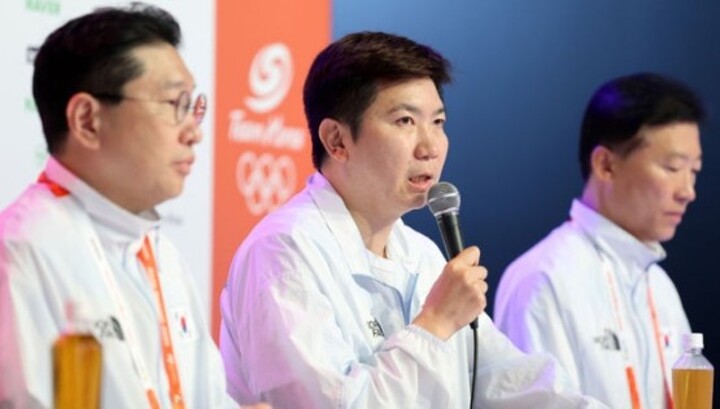
The Asian Games officially concluded on October 4 at 6 p.m. Although South Korea's performance in traditional strongholds like archery and swimming did not fully meet expectations, fencing and shooting achieved good results, and high-profile team sports like baseball and football successfully claimed gold.
However, post-game comments by some athletes sparked discussion across South Korean society.
If a South Korean athlete wins an Asian Games gold medal, they can receive special military service exemptions. Consequently, some observers believe that certain athletes' words and actions suggest a greater focus on personal military service benefits rather than fully embodying the sense of responsibility that comes with wearing the national team uniform.
When asked if he was bothered by outside criticism after winning the gold medal, Noh Si-hwan, captain of the South Korean baseball team and a Hanwha Eagles player, replied, "Honestly, I don't care."
He then added comments suggesting "I don't think the process matters at all; the gold medal is the most important thing, no matter what," which further fueled the controversy.
In football, South Korea captain Lee Ki-hyuk, a Gangwon FC player, said in a TV interview after the match, "I don't have to go to the army now." These remarks also drew public attention.
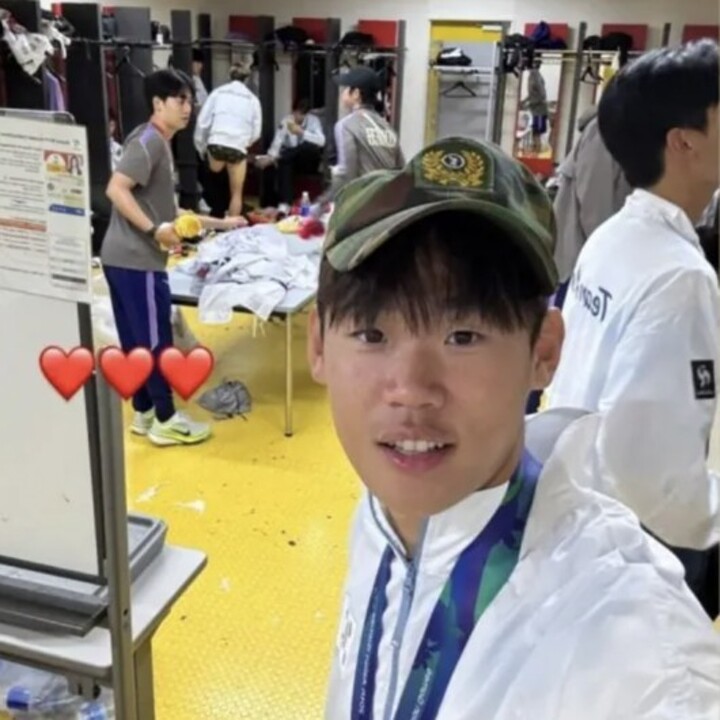
Additionally, South Korean youth player Park Seung-soo, a Newcastle United academy player, posted a selfie on his personal social media wearing a pre-prepared military discharge cap, which also drew considerable criticism.
Regarding the athletes' remarks and actions after winning gold at the Asian Games, Lee Kee-heung stated at a press conference summarizing the Asian Games that the Korean side has been conducting relevant education in the Athletes' Village.
"We conducted extensive education in the Athletes' Village, including training on athlete conduct, social media use, and interview skills," he said.
However, Lee Kee-heung also acknowledged that it is unrealistic to control the specific statements of every athlete.
"It's actually very difficult to control every single word spoken by every athlete. Baseball players do not stay in the Athletes' Village, so there are some limitations in managing them individually," he explained.
Although Lee Kee-heung primarily mentioned baseball players in his remarks, the South Korean football team also did not stay in the Athletes' Village, so this issue extends to the football program as well.
Lee Kee-heung stated that while athletes are entitled to their own personalities, some expressions need to consider their social impact.
"These can also be seen as expressions of an athlete's personality, but on the other hand, remarks that do not align with public sentiment may emerge. I hope the athletes will control their words, actions, and emotions," he said.
He further added, "We cannot control athletes' words or actions in advance, but we will further strengthen education for athletes in the future, including the attitude expected of national team athletes, communication methods, and social media usage."
Lee Kee-heung also emphasized that while respecting athletes' individuality, he hopes they recognize the responsibility that comes with being a national team member.
"We will respect the individuality of each athlete, and at the same time, we will continue to provide relevant education and support to help them develop the attitude and character befitting a national team athlete," he stated.
This controversy arose after South Korea's baseball and football teams won gold medals at the Asian Games. For athletes, winning means athletic success and changes in military service treatment, but Lee Kee-heung also hopes that athletes can realize that being a national team athlete entails taking on corresponding responsibilities both on and off the field, beyond competitive achievement alone.
The Korean Sport & Olympic Committee stated that it will further strengthen education for national team athletes on conduct, communication, and social media use in the future. While respecting athletes' individuality, it aims to help them engage with the public in a manner more befitting their national team status.
AF's PC site is now live! Browse full news, comments, match details and stats on your computer. Visit: www.allfootballapp.com
 Korea Republic U23
 Newcastle United U21
 Seung-soo Park
Todos os comentários