
Zaragoza, in an interview with AS, discussed his experience at Bayern Munich and the favorites for the Ballon d'Or. He stated that his poor performance at Bayern was due to being unprepared, and believes this year's Ballon d'Or should go to a Spanish player.
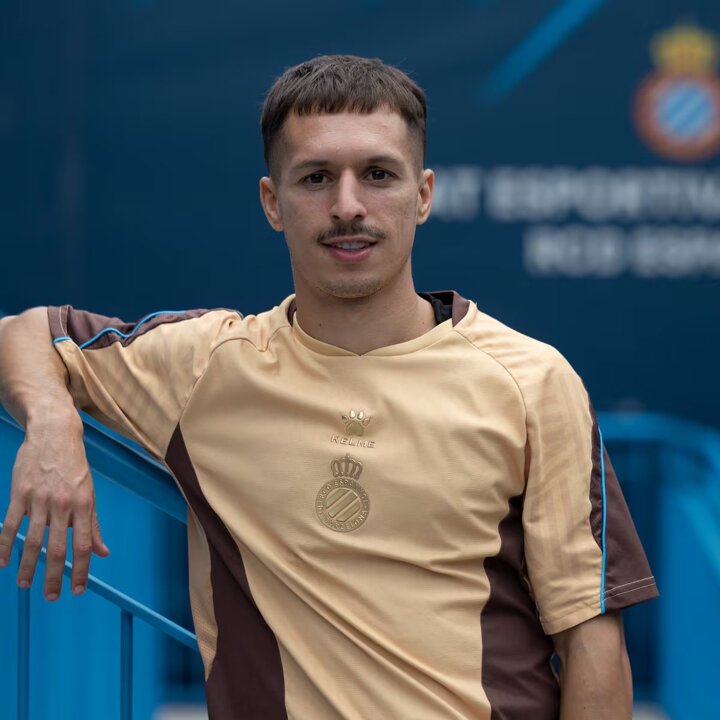
After two consecutive losses and dismal performances, how will the team process and adjust during the three-week break?
Of course, we'd prefer to win, get points, or at least put on a better performance against Elche; that was a tough match. However, these three weeks of rest will be very helpful for us: to make the team stronger, for players to support each other, train hard, and boost morale.
Manolo González said Espanyol needs to "return to basics" and regain competitive edge. Will this be a focus in training?
Exactly, there are clearly some areas that need adjustment, which is often the case in a season. But I don't think the overall playing style will change drastically; it will only be fine-tuned in details. Ultimately, the team must stick to its own style and continue with this approach.
So, how far are we from seeing Zaragoza at his best?
Soon. I had a significant fitness deficit when I arrived because I didn't participate in preseason training. I had a knee injury from my time in Rome, so I couldn't train with the team in Germany. I've been officially playing for about a month now, but I haven't reached my peak level yet. So this three-week break is perfect for me to adjust, and by the time the league resumes, I should be almost 100% recovered.
So, was the root cause of being benched at Bayern Munich an injury?
Firstly, it was the injury; I hadn't fully recovered when preseason started. I wasn't in good physical condition, and the club wanted me to regain my fitness first. When I was finally ready to play, the opportunity to transfer to Espanyol came up, along with offers from other teams. They told me that my departure process was largely finalized, and I wouldn't be reintegrated into first-team training.
You said you had other options at the time, why did you ultimately choose Espanyol?
Because the plan they outlined for me seemed ideal. I knew exactly where I wanted to go. I spoke with Manolo and Monchi. Honestly, they instilled a sense of trust and excitement in me; this project deeply moved me, so I decided to join.
What kind of plan did they offer you?
They discussed a long-term plan with me, hoping I would stay at Espanyol for an extended period. I really liked that, and I also want to play here. I believe I have already demonstrated through my actions that I put in a lot of effort to join Espanyol. I believe this is where I belong, and I hope to play here for a long time.
Without a preseason, was the initial adjustment period at Espanyol difficult?
Many people think football is simple, but it's not. Spending a month and a half alone in a hotel in Germany, injured, unable to train or play with the team, with an uncertain future – that period was not easy. For a young player, it's very tough, but I handled it pretty well. I've joined the team I wanted to join, and I'm gradually integrating into the squad; I've adapted now.
Did your time in Germany make you feel particularly depressed?
Yes. The last two weeks in Germany, staying in a hotel, away from family, unable to train or play football – playing football is what makes me happy. Actually, if I had wanted to leave, I could have departed in the first week; I already had offers then. But I wanted to go to a team where I could feel happy.
So, if the conditions aren't met in the end and Espanyol can't exercise the buyout clause, and you have to return to Munich, would you be disappointed?
If the goal isn't achieved, or if the club decides not to activate the buyout, then of course I'd have to go back to Germany. That would definitely be frustrating, as I said, I came here wanting to establish myself long-term.
Why do you think you didn't succeed at Bayern Munich?
There were many reasons. I was only 20 when I joined Bayern, which, if not the best in the world, is a top club. In my position, there was Musiala, who I thought was the best in the world at the time, as well as Sané, Gnabry, Coman... I could list many more names. I had only played in the Segunda División before, and only 10 official La Liga matches, then I directly joined Bayern. It was too difficult: the language, the climate, the food, leaving my comfort zone... I don't think it was my footballing ability that was lacking, but more the surrounding environment. My career took too big a step when I wasn't ready.
But this experience was also a valuable learning opportunity for you...
Of course. Both personally and in terms of my football understanding, in every aspect, it was a huge experience, the one from which I gained the most.
Looking back, do you regret joining Bayern Munich so early?
Never. I will never regret making that decision. When such a big club comes calling, you can't say no. A young player hearing "you're going to play for Bayern" wouldn't hesitate at all. Before that, I was just a substitute in the Segunda División, only becoming a regular in the last six games, then moving up to La Liga, and after just 10 matches, Bayern signed me. Such an opportunity is rare. Moreover, this transfer changed my life and my family's, so I have even less reason to regret it.
However, moving between Osasuna, Celta de Vigo, and Roma in less than two years, and frequently relocating, probably drained a lot of your energy.
Indeed, that was one of the reasons for my fatigue. My previous transfers involved my own mistakes, but last year was different: I wanted to achieve goals that I couldn't at Celta de Vigo.
Was it to make it to the World Cup?
The World Cup was my goal, but I also meant other team goals. In fact, I believe if I had stayed at Celta de Vigo, I could have been selected for the World Cup squad.
Have you settled into accommodation in Barcelona yet?
Yes, I settled in a month ago. I live with my wife and son, and our second child is on the way. With my family by my side, I'm comfortable and happy.
Next week, you'll return with Espanyol to your footballing origins: Malaga.
I never played for Malaga, but as a child, I often went to watch matches. I have vivid memories of Isco and Joaquín playing for the team and competing in the Champions League. My formative football years were spent there, so returning is a blessing. Almost all my friends and family are Malaga fans; I have great respect and affection for this team, but our goal for this trip is to fight for a win.
Speaking of Isco and Joaquín, who were your childhood idols?
Yes. Messi is the best in the world in my eyes, and Neymar is also a player I greatly admire.
By the way, you have a cousin making a name for himself in the Malaga youth academy, right?
Yes. The kid is very talented, and he needs to train hard. He's good with both feet and has excellent ball control, but he's still young.
You belong to the last generation of street footballers, and there are fewer and fewer players like that.
That's right, that sense of freedom from playing in the streets has disappeared. There are fewer and fewer players like that; now everyone focuses more on physical fitness. Today's youth academies are full of restrictions, everything has to follow the coach's instructions: two touches, do this, do that... If you look on the streets, fewer and fewer kids are playing football.
Many parks even prohibit playing football.
There are signs in parks prohibiting football. But I don't think that's the only reason. When I was a kid, I often kicked the ball into neighbors' windows, and my mom would scold me, but the next day I'd go play again. It's more that kids prefer tablets and phones. I mentioned my cousin earlier; one good thing about him is that he'll go out and play with a ball on the street, even if he encounters 15-year-olds, he's not afraid to challenge them. In that process, he learns things, and he has a liveliness on the field that kids his age don't.
Tamudo, the greatest player in Espanyol's history, often said that he developed his ball control by dribbling against grandmothers in Santa Coloma...
Ultimately, that's what football is all about. Whether you're 34 or 25, the streets are where you hone that cunning and agility on the pitch; you learn both good and bad.
Speaking of which, among your companions from playing in the neighborhood, did anyone give up football along the way?
Wow, I could tell many stories about street football. I was the last one from our group to make it; I never entered a formal youth academy. Back then, my friends went for trials at Malaga, Sevilla, Betis, Real Madrid, but I never got the chance. Still, I didn't stop, I never gave up. If an opportunity arose, I'd seize it, and if not, I'd keep playing because football makes me happy. In the second-to-last year of the national league youth division, the opportunity finally came. I had trials at Betis, Valladolid, and finally signed with Granada.
Did none of your other friends manage to stick with it?
Out of everyone who went for trials back then, no one reached the level I'm at now. Some friends who used to play for Malaga have now moved on to other careers. I didn't even get the chance to join those club academies back then, but I refused to give up, I kept going, and I ended up being the one who went the furthest from our group.
Besides talent, why do you think you persevered when others didn't make it this far?
There are many factors; luck is also very important, and you need to genuinely love football. You must be highly disciplined; just playing isn't enough. Football requires good rest, proper diet, staying focused, saying no to many temptations, leaving family, and living far away in another place. Many people can't handle these things and prefer to stay in their hometowns, even giving up football rather than moving hundreds or thousands of kilometers away. I know some kids who left home young to join clubs, only to return home a month later. The path in football is difficult, and to succeed, many conditions must be met. Few people manage to establish themselves and succeed at their local team.
Are all these sacrifices worth it?
Worth it, absolutely worth it. Football has many beautiful moments, but recently there have been a lot of unpleasant things. For example, more and more people in the industry don't want their children to be players, and there are also people with bad conduct in football. But I still think it's worth it. Which little boy doesn't dream of becoming a professional footballer!
Now that you're a father, would it be harder to decide to go play abroad again?
No. My son was with me when I was in Rome, so family hasn't been an obstacle, though of course I'd prefer to stay in Spain.
Having played for clubs in Spain, Italy, and Germany, what are the main differences you've noticed?
There are huge differences, especially in competitive quality. I think people often underestimate the ability of Spanish players. Perhaps after winning the European Championship and World Cup, we slowly realized how strong the Spanish national team is. Outside of Spain, physical combat is the primary factor; the intensity is extremely exaggerated. So playing in Italy and Germany was very challenging for me; they prioritize physicality over technique. Spanish football is exactly the opposite.
So, for your street football style, Spain is the ideal setting...
I think so too. The place where I perform best and feel most comfortable playing is Spain; the football style here suits me best.
You mentioned the European Championship and the World Cup. When the Spanish national team won those titles, you were just a step away from being selected. While happy for your teammates, do you have any lingering regrets?
How to put it, I've worked with all the players who won those titles, and I'm genuinely happy for them. But there's definitely a thorn in my side, some regret. In life, you make wrong choices, leaving one team and joining another. However, I believe there will be many more opportunities in the future, and one day I'll be able to join the national team and win honors.
When you first received a national team call-up, Luis de la Fuente told you to just be yourself.
Luis is a very candid coach, like a friend. He'll tell you directly: you made the national team because of your playing style; he won't ask you to change it. That makes him very special, a natural leader.
Does Manolo González have similarities to him?
Yes, he does. When I first joined, he said something similar to me: be yourself, play your football, be brave in one-on-one situations... Manolo didn't just get to this position out of nowhere; his journey has been difficult, with a long and arduous career, and that's precisely why he's so genuine and down-to-earth.
Was Manolo key in convincing you to join Espanyol?
Yes, absolutely crucial.
Why?
When I talked to him, he gave me a strong sense of trust. It's not often you feel both confidence and excitement at the same time.
Speaking of excitement, if you were to vote, who would you give the Ballon d'Or to?
It ties back to what I just said, the outside world consistently underestimates Spanish players. I think the Ballon d'Or should rightfully go to a Spanish player; I can't imagine anyone else winning it. If not Yamal, Fabbian... The only other person I could accept is Kane. But honestly, the Ballon d'Or should belong to a Spanish player.
You're good friends with Yamal. During your time at Granada and Osasuna, you always performed well against Barcelona. You must know: if you continue this performance at Espanyol, the Espanyol fans will build a statue for you, right?
(Laughs) Don't worry, we'll give our all, and we're preparing for it.
AF's PC site is now live! Browse full news, comments, match details and stats on your computer. Visit: www.allfootballapp.com
 Santos
 Bayern München
 Barcelona
 Espanyol
 Celta de Vigo
 Espanha
 Lionel Messi
 Neymar
 Harry Kane
 Luis de la Fuente
 Manolo González
 Inter Miami
 Bryan Zaragoza
 Lamine Yamal
Todos os comentários (2)