
According to Adam Crafton, a journalist at The Athletic, the controversy surrounding Manchester City has transcended football after an independent Premier League commission ruled that the club had repeatedly breached financial regulations over the past decade. Manchester City's close economic and political ties to Abu Dhabi, UAE, have placed British Prime Minister Andy Burnham in a difficult position: on one hand, Manchester City's investors have brought significant capital and development opportunities to the city; on the other hand, the British government must uphold the integrity of Premier League regulations to avoid the impression that large-scale foreign investment can influence football regulatory decisions.
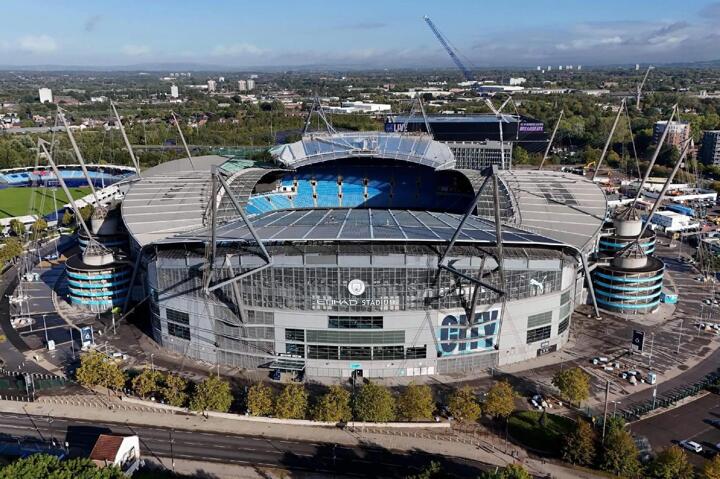
For Britain, the UAE is not a diplomatically isolated country.
A source close to several ruling Labour Party politicians told The Athletic that while British parliamentarians may disagree with some UAE actions regarding the Russia-Ukraine war, and many are concerned about UAE activities in Sudan, overall relations between Britain and the UAE are considered vital in areas such as national security, investment, and trade.
The situation is further complicated by the fact that Manchester City chairman Khaldoon Al Mubarak effectively serves as an official representative of Abu Dhabi.
In April this year, then-Prime Minister Keir Starmer visited Abu Dhabi for consultations regarding maritime security in the Strait of Hormuz. With ongoing tensions between the US, Israel, and Iran at the time, it was Al Mubarak who met Starmer at the airport. All indicators suggested he was acting in an official capacity for the UAE government.
Al Mubarak is also the UAE President's Special Envoy for China. According to Mubadala's official website, he represents the UAE on matters concerning several important nations.
His personal English-language biography, spanning 723 words, also notes that Al Mubarak received an Order of the British Empire (OBE) in 2013 and was granted the honour of Freeman of the City of London in 2021.
Last Friday, a representative of the City of London Corporation clarified to The Athletic that Al Mubarak was bestowed this honour in recognition of strong trade relations between Britain and the UAE, as well as his leadership role at Mubadala.
Recently, Sir Geoff Hurst, who scored a hat-trick in the 1966 World Cup final that brought England victory, also received the same honour.
This tradition dates back to the 13th century. Originally, holders of this title could trade in London and even had the right to drive sheep across London Bridge. Today, the honour has become a symbolic recognition.
Last Thursday, it emerged that according to a list published on the British government website, Al Mubarak was granted diplomatic immunity by Britain six years ago. This could further complicate any future civil or criminal proceedings involving Manchester City.
Christopher M. Davidson, author of "Abu Dhabi: Oil and Beyond", stated: "For many years, he has effectively functioned as the Prime Minister of Abu Dhabi. He wields considerable influence across many key areas of Abu Dhabi's state economic system, holding a very powerful position".
"He is the economic architect of Abu Dhabi and a key adviser to ruler MBZ. Their relationship spans decades. For both Sheikh Mansour and Abu Dhabi's ruler himself, it would be difficult to find a more trusted and close adviser than Al Mubarak".
The sensitive position of the British government is evident from the scale of economic exchange between the two countries.
According to the UAE Ministry of Foreign Affairs, bilateral trade between Britain and the UAE exceeds £25 billion annually.
The UK-UAE Sovereign Investment Partnership, launched by both sides in 2021 and initially targeting £10 billion in investments over five years, has now committed to investing nearly £30 billion across more than 50 direct investment projects.
The UAE states that these investments have supported 48,000 jobs in Britain and are expected to create a further 280,000 jobs by 2030.
Earlier this year, Britain also concluded a free trade agreement with the Gulf Cooperation Council, an organization comprising six Arabian Peninsula nations, one of which is the UAE.
Additionally, an estimated 250,000 British citizens reside in the UAE, many in Dubai. Meanwhile, Britain provides air defence support to its Gulf partners amid ongoing tensions with Iran.
This interdependence, combined with Burnham's previous statements, has led some football fans to fear that political factors may ultimately influence the Premier League's resolve to punish Manchester City.
After all, this case involves not unnamed Emirati officials, but figures directly connected to the highest levels of Abu Dhabi's power structure.
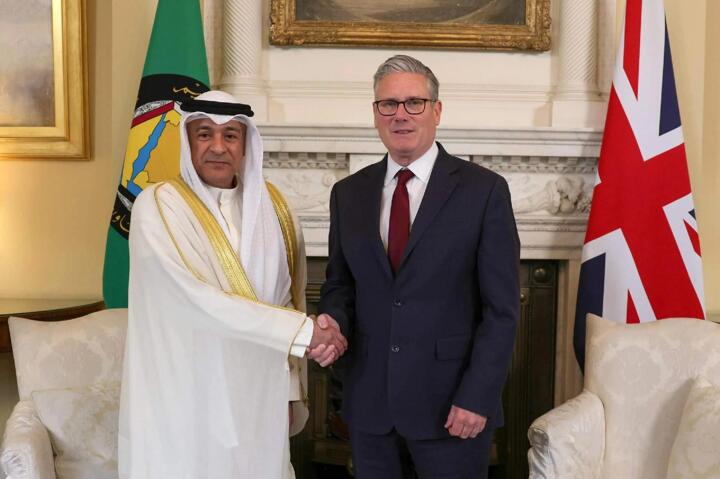
Manchester City's owners have previously signed land development agreements with Manchester City Council.
For Burnham, his relationship with Abu Dhabi also has a more direct local political dimension.
From 2017 to 2026, Burnham served as Mayor of Greater Manchester. Before taking office, Manchester City's current ownership group had already been active in the area for nearly a decade. During this period, Manchester City Council sold significant tracts of land to Sheikh Mansour's private investment fund.
Last year, the British publication Manchester Mill reported that Manchester City Council signed a ten-year partnership agreement with Mansour's Abu Dhabi United Group in December 2015.
A contract obtained through a freedom of information request revealed that the council granted the company right of first refusal on all council-owned land in designated areas.
Previously, academics from the University of Sheffield also criticized Manchester City Council for entering into overly favourable agreements with Abu Dhabi investors, arguing that these deals disproportionately benefited the investors.
However, a Manchester City Council representative previously disputed the findings of the relevant reports.
The council emphasized that all relevant land was independently valued, and given the very limited market interest in the area at that time, this was the best available deal.
In the council's view, Manchester City's owners' investments have helped revitalize long-neglected areas of East Manchester.
At the time, the Conservative government was cutting public investment, so local authorities believed some concessions were necessary to attract private capital.
Jonathan Reynolds, Britain's Shadow Secretary of State for Business, Innovation and Skills, expressed similar views in a previous interview with The Athletic.
Reynolds stated: "If you look at the New Islington area in Manchester, there used to be social housing, many houses were abandoned, and people simply didn't want to live there".
"Now it has become one of the most popular residential areas, with many families and young professionals moving in. People living in the city also bring various benefits to the local economy".
"It was these investments that made these places attractive. Before, they simply didn't have that appeal".
However, disputes over urban renewal and gentrification are not unique to Manchester.
Similar transformations often drive economic growth but can also lead to rising rents. For those who lived in the area before the luxury residential developments, urban regeneration does not necessarily mean sufficient employment opportunities or affordable housing for them.
The Sunday Times previously described Manchester as a city that "sold itself" to Abu Dhabi.
The Guardian's criticism was more direct, arguing that Manchester sold itself to Abu Dhabi's elite and didn't even get a good price for it.
However, Reynolds, who has lived in Manchester for over 20 years, said he finds these conclusions somewhat implausible.
Переведено ИИ.
Сайт AF теперь доступен! Читайте полные новости, комментарии, детали матчей и статистику на компьютере. Посетите: www.allfootballapp.com
 Manchester City
Todos os comentários