
According to La Gazzetta dello Sport, the controversy surrounding the eligibility to register FIGC President Gabriele Gravina as a candidate remains unresolved, and the Italian Football Federation could potentially be placed under special administration. Currently, approximately two-thirds of the Italian National Olympic Committee's executive council members appear to support Gravina, but numerous questions persist—particularly why sports prosecutor Ugo Taucer did not file an objection earlier, and whether Gravina's failure to complete the registration process truly constitutes a "serious violation" warranting a takeover of the federation.
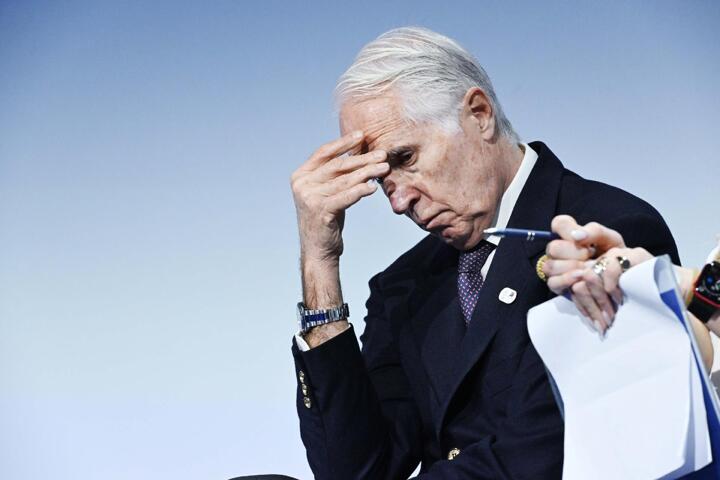
Now, all eyes are on the executive council meeting, where a moderator and 16 more or less supportive council members will gather. The fate of Giovanni Malagò and the Italian Football Federation rests with the CONI executive council, which was elected over a year ago. Luciano Buonfiglio, president of the Italian Olympic Committee, chairs the executive council, alongside two vice presidents: Diana Bianchedi—who also served as interim president during the previous delegation head incident—and Marco Di Paola from the Italian Equestrian Federation.
The executive council also includes sports administrators, athletes, coaches, representatives from regional and local committees, sports promotion organizations, Secretary General Carlo Mornati, and two International Olympic Committee members: Federica Pellegrini and Malagò himself.
Malagò has spent 12 years in this environment and knows the people and issues intimately. Among those who will ultimately decide whether to appoint a special administrator to take over the FIGC, he maintains close relationships with many—some could even be called friendships. Yet just two days ago, Malagò himself, referring primarily to Buonfiglio, stated: "I've been attacked by friendly forces."
Rather than focus on these relationships, let's examine the crux of this extraordinarily complex matter. Currently, approximately two-thirds of the executive council appear to support Malagò. It's worth noting that the possibility of appointing a special administrator to oversee the FIGC stems from an earlier letter by sports prosecutor Ugo Taucer to the Italian Olympic Committee, stating that the FIGC violated the fundamental principles of the Olympic Committee and therefore may constitute what relevant regulations call "the governing body of a sports organization that has confirmed a serious violation of sporting order"—one of the conditions for special administration of a sports association.
Many Questions Remain
Beyond personal relationships, many CONI executive council members believe that the repeated interpretations of registration requirements—specifically Article 29, paragraph 1 of the FIGC bylaws—by FIGC prosecutor Giuseppe Chinè should not be dismissed. Crucially, they also understand that Taucer believes candidates must have the proper registration status to be eligible and elected, and that this status ensures a person genuinely belongs to the area they wish to represent.
However, in the FIGC case, this affiliation was already secured by requiring candidates to obtain formal support from at least 50% plus one member of a constituent body when submitting their candidacy.
Here Too, Common Sense Applies
Even if FIGC Secretary General Marco Brunelli erred in confirming Malagò's eligibility to run—because he didn't explicitly state the federation's interpretation of this regulation, an interpretation that had long been accepted within the federation, with at least two relevant precedents, including the 2021 case involving the Lombardy Committee of the National Amateur Football League—is it an overreaction to place the entire Italian Football Federation under special administration for this reason?
Is this violation truly "serious," as required by the CONI bylaws for special administration?
Why Wasn't Action Taken Earlier?
Many also ask: why didn't anyone act sooner? More specifically, why wasn't an objection raised to Malagò's candidacy within the seven-day window following its announcement, as stipulated by CONI bylaws?
An excluded candidate can file an objection, as can a qualified candidate. The FIGC prosecution body also has the right to object. Chinè's inaction is understandable, as he has consistently maintained throughout the incident that approving Malagò's candidacy was correct.
But the issue centers on Taucer. He later drafted a strongly worded report on the FIGC, stating that the proper registration status was clearly required. So why didn't he initiate the objection procedure himself at that time?
Had that been done then, the matter could have been resolved within the prescribed timeframe, and no one would have been able to suggest this incident was being used as a tool, as some allege today.
Executive Council Members Face Pressure
It's clear that CONI executive council members now feel pressured, and the situation could still shift. Italian Sports Minister Andrea Abodi said from the outset that he was a "careful observer" of this matter, while emphasizing: "Everyone is aware of sporting rules, regardless of any margin for interpretation."
Additionally, lawyer Renato Miele sent a formal cease-and-desist letter. Miele's earlier exclusion from the FIGC presidential election triggered this entire incident. In his letter, he reminded those deciding Malagò's fate that they are "people invested with public service functions."
Clearly, tension exists before any potential vote takes place.
Final Decision Likely in Early October
So when will this crucial executive council meeting regarding the appointment of a special administrator to oversee the Italian Football Federation take place? Buonfiglio has tasked a team of "renowned legal experts" with conducting a thorough investigation into the entire matter.
These legal experts appear to have begun their work. As Buonfiglio himself stated during Tuesday's executive council meeting: "I hope to communicate the results of the thorough legal study as soon as possible."
Current information suggests all decisions will likely be made in the first week of October, probably after the Italian national team completes its final Nations League match against Turkey on October 5. However, emotions could intensify sharply in the week before the official meeting, starting when the meeting notice is published. Of course, everyone hopes the Italian national team won't be disrupted by this and will focus solely on performing well in their match.
Traduit par IA.
Le site web d'AF est désormais en ligne ! Actualités complètes, commentaires, détails des matchs et statistiques sur votre ordinateur. Visitez : www.allfootballapp.com
 Италия
Все комментарии