
According to AS, since returning to Real Madrid, Mourinho's responsibilities are no longer limited to coaching the first team. He is also involved in the club's external communications, relations between the youth academy and first team, personnel management at the Valdebebas training complex, and transfer strategy formulation. His role at Real Madrid now resembles that of Alex Ferguson at Manchester United or Arsène Wenger at Arsenal.

Upon his return, Mourinho stated: "I am here to do things for Real Madrid, not just to hold a position at Real Madrid."
Speaking about his responsibilities, Mourinho said: "For me, the job is not just about training and matches. I believe a coach's work involves a broader scope, with greater impact on a club's development... Here, that refers to Real Madrid's football affairs. A coach's job is not just conducting training, deciding who plays, managing matches, and making substitutions... For me, that is not enough; it is only the most basic part."
Among all Real Madrid head coaches, Mourinho now holds exceptionally prominent power and responsibilities, an arrangement supported by club president Florentino Pérez. Florentino has led Real Madrid for a total of 23 years, and Mourinho is the only coach he has never fired. In 2013, after three seasons, Mourinho negotiated to leave the club; he could have continued coaching but chose to depart.
Transfer Strategy
Since Mourinho's return, Real Madrid's transfer philosophy has undergone significant changes. In previous seasons, it was difficult to imagine the club investing in players approaching 30 years old. However, the recruitment of Denzel Dumfries (30), Konaté (27), Cucurella (28), and Bernardo Silva (32) this season reflects this shift.
Mourinho believes the current squad lacks fighting spirit, competitiveness, and match experience. Players like Mastantuono, Endrick, Arda Güler, Álvaro Carreras, and Hato have promising futures, but their immediate impact is still insufficient. Therefore, he aims to complement the potential of these young players by recruiting experienced players this season who can contribute immediately.
External Communications
Mourinho has always been skilled at delivering messages. Currently, he speaks more calmly with fewer exaggerated gestures, but his stance remains clear. Florentino has found someone who can clearly articulate the club's long-term position. The report links this approach to the Negreira case, noting that related obligations remain unclear.
In the Madrid derby, two controversial actions by Lee Kang-in and Cuti Romero were not deemed red card offenses by the referee and VAR. These decisions tested Mourinho's public response. Real Madrid has given him full authority over external communications; since his return, he has regularly conducted pre-match and post-match interviews. He had stopped doing so for every match during his previous tenure at Benfica.
Connecting the Youth Academy and First Team
Despite having a residence in Madrid, Mourinho frequently spends evenings at Valdebebas. This has strengthened his relationship with La Fábrica, Real Madrid's youth academy: he not only interacts regularly with youth staff but also knows academy players and communicates with them in his daily work.
During his first three seasons as Real Madrid coach, Mourinho gave first-team debuts to nearly 30 academy players, with 17 of them appearing in official matches; some played only briefly. Players given opportunities included Juan Carlos, D. Llorente, Adán, Saravia, Álex Fernández, Mejías, Jesús Fernández, Joselu, Jesé, M. Casado, Cheryshev, Mendes, Pablo Gil, and Mascarell. Nacho and Morata eventually established themselves in the first team and became key players.
Currently, Mourinho praises the work of Real Madrid's youth academy director, Manuel Fernández Pitarch, and his predecessor Gonzalo, who have overseen first-team promotions. Additionally, Real Madrid generated over 200 million euros from academy player sales in the last transfer window.
Mourinho works closely with Manuel Fernández Pitarch. Regarding young player promotion, his philosophy is that there is no point giving young players only two or three minutes of playing time if they are not given further opportunities afterward. Speaking about such arrangements, Mourinho stated: "This kind of setup must have continuity."
Personnel Management at Valdebebas
Mourinho frequently attends Real Madrid's training complex and maintains close contact with staff. He aims to foster a more dedicated atmosphere at Valdebebas by implementing regulations: requiring first-team players to arrive at training earlier, improving habits related to nutrition management and injury treatment, and imposing penalties for lateness. These measures are designed to increase the team's competitiveness while ensuring all squad players adhere to the same standards.
Mourinho's adjustments affect nearly every aspect surrounding the players. He fosters closer relationships, a better working environment, and stronger team cohesion, hoping this will help the squad achieve its objectives.
During his first tenure, Mourinho led Real Madrid to three consecutive Champions League semifinals. Since his departure in 2013, Real Madrid has won the Champions League six more times. Florentino sees Mourinho's impact in the areas mentioned above as part of the reason for the club's subsequent success. Speaking about their past relationship, Mourinho said: "Every time we achieved success, the president would call me..." Now, in his second stint at Real Madrid, he has been granted broader authority.
Diterjemahkan oleh AI.
Situs web AF kini hadir! Lihat berita lengkap, komentar, detail pertandingan, dan statistik di komputer Anda. Kunjungi: www.allfootballapp.com
 Реал Мадрид
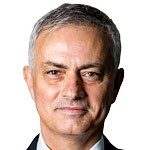 Жозе Моуринью
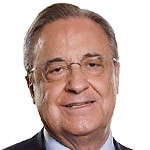 Флорентино Перес
Все комментарии