
Few Premier League clubs have boasted a range of coaches quite like Tottenham. But which Spurs managers have done the best and worst jobs since 1992?
Under their finest coaches, Spurs qualified for the Champions League and achieved some memorable results against some of Europe’s biggest clubs. Under their worst? Genuine relegation battles, one ongoing.
Here’s how we’ve rated their 19 full-time managers since the start of the first Premier League season.
David Pleat had spent much of the 2003-04 season in temporary charge at White Hart Lane as Spurs spent 10 months searching for the right manager to end their long period of mediocrity.
Daniel Levy was confident Santini, the France manager who it was announced in June 2004 would take over after the European Championship, was that man.
“We haven’t had success for such a long time. It’s a credit to Tottenham we can attract this type of manager,” Levy said.
“I said some time ago that we would make the right appointment – a big name to take the club forward.”
As it turned out, Santini lasted only 13 games before resigning, reportedly due to a falling-out with Director of Football Frank Arnesen. After witnessing just six goals in 11 league games, Spurs fans weren’t too disappointed.
A complete disaster of an appointment who just couldn’t have been less suited to the job. Not least because of an obvious fondness for Arsenal that he was simply incapable of keeping to himself.
Small-timed the job to a humiliating degree, playing for goalless draws in fixtures as diverse as Chelsea at home and Brentford away in a fashion that was never going to sit right with Tottenham fans.
Spurs took an ungodly amount of time to realise what the inevitable result of keeping Frank in the job was going to be, coming an arse hair away from leaving it too late to act. Especially when their initial choice was to chuck in Igor Tudor for six weeks for some reason.
The entire Premier League era has been a banter era for Tottenham. Even when they were genuinely very good indeed, they still ended up the butt of the joke thanks to finishing third in a two-horse race and ‘putting the pressure’ on Chelsea.
Among recent managers there’s a trend for managers to depart with their own words adding to the bantergeddon feel to the place. From Conte’s rant, to Ange Postecoglou’s ‘Tottenham does crazy things to people’.
Into that proud tradition must now go Thomas Frank’s ‘We will lose football matches’. He spent his short, inglorious reign proving that more right than surely even he dared to dream.
Joins Santini and Frank as the true wooden-spoon contenders, but the former Wolves boss just edged ahead, owing to the fact that he did actually win five of his 10 league games in charge even though it definitely doesn’t feel like that.
Still, some of the football was dire and that thumping at the hands of a bang-average Arsenal side was a low point before he signed his P45 with a miserable capitulation in El Sackico against Ole Gunnar Solskjaer’s Manchester United.
Gross was appointed in November 1997 with Spurs in the relegation zone on the back of a 4-0 thrashing at Liverpool in their previous game.
Alarm bells should have rung when he arrived late for his first press conference holding a tube ticket with ”my ticket to the dreams” written on it, and a 6-1 home defeat to Chelsea in Gross’ third game in charge did little to quell the feeling he was a man out of his depth.
The return of Jurgen Klinsmann in December was enough to steer the club clear of relegation – the German top-scored with nine goals in the Premier League as Spurs finished 14th – but John Scales later revealed Gross was “ridiculed by the players behind closed doors”.
His eccentricity was a dream for the press but certainly not the club, and the only surprise was that he started the following season in charge before the traditional disastrous start saw him sacked.
It may very well be a tad harsh that the second-last manager to actually win silverware in charge of Spurs is ranked as their third-worst manager of the past 26 years, but that 2008 League Cup win was simply a thin spreading of butter in a sh*t sandwich.
In fairness, he steered the team from 18th to 11th after taking over from Martin Jol in October 2007, but a year later he was sacked with the side in an even worse position than the one he had inherited: bottom, four points adrift, and infamously with two points from eight games.
His reign ended following an apparent dressing room revolt, with his assistant Gus Poyet and sporting director Damien Comolli also sacked in an admission of a very expensive mistake by Daniel Levy.
Ramos was, however, the man in charge when Luka Modric was brought to the club, so it wasn’t all bad.
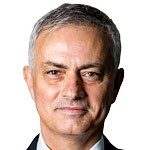
If we’re going on stats and win rate and all that jazz, then Mourinho shouldn’t be this far down. After taking over from Mauricio Pochettino in November 2019, the Portuguese boss led Spurs to sixth and Europa League qualification.
What we’ll never get over, though, is how miserable it all was. The constant complaints, the dour, defensive football. Mourinho’s reign was about as joyful as watching Morrissey lead a funeral procession wearing a suit made out of old copies of the Daily Mail.
The only seasons where Spurs failed to get top four between 2015-16 and 2021-22 were the two with Mourinho in charge.
He even managed to make getting Gareth Bale back on loan underwhelming. A disastrous mood hoover who set a standard later matched by Conte for just constantly slagging the club off.
Spurs finished a dismal 15th in Ossie’s first season, but nobody really remembers that season, one that was hampered significantly by Teddy Sheringham’s injury problems. He managed only 17 Premier League starts in what was back then a 42-game season, but still topped the club’s scoring charts with 13 goals in those games.
But it’s Ardiles’ Angeball-on-steroids approach to the start of the 1994-95 season that lives long in the memory. If not always for the right reasons.
The signing of Jurgen Klinsmann clearly convinced Ardiles he could make his ultra-attacking philosophy work, and briefly it looked like that might be the case.
Spurs won three of their first four league games, with Klinsmann scoring five goals and his attacking team-mates Sheringham, Darren Anderton, Nick Barmby and another new signing Ilie Dumitrescu all also on target.
But it soon started to go wrong. Spurs lost their next three games in increasingly bleak fashion: 2-1 to Southampton, 3-1 to Leicester, and 4-1 to Nottingham Forest. By the time Ardiles left to be eventually replaced by steadier, more dour hand of Gerry Francis, Spurs had shipped 24 in 12 games and then immediately went down to a 5-2 defeat at Man City under the caretaker charge of Steve Perryman.
READ: A celebration of Jurgen Klinsmann & a signing that changed English football
Where, precisely, De Zerbi ends up on this list when the dust settles is impossible to say. But should things end soon as currently looks extremely likely, he will sink somewhere near the foot of the table with Spurs spiralling towards relegation having spent an eye-watering amount of money meeting his long list of transfer demands.
Money that, at this time, appears to have been entirely spaffed down the sh*tter. But he did also save them from what was starting to look like near certain relegation at the back end of last season. And at this time we simply cannot rule out that something just clicks after the international break and it all turns out to be fine. Unlikely, obviously. But not impossible.
Graham was unpopular when he got the job having previously managed Arsenal, and unpopular when he left having leaked confidential information to the press.
His style of play didn’t win him too many fans in the interim period either, though he did lead them to League Cup victory in 1999. Finishing 11th and 10th hardly helped matters.
Spurs had failed to finish higher than 10th for five seasons when Hoddle took charge in 2001, so a ninth-placed finish and run to the League Cup final was a clear step in the right direction in his first campaign.
Unfortunately, the exciting new era fans had hoped for under the legendary player failed to materialise as they dropped back to 10th the following season before Hoddle was sacked in September 2003 following one win and four defeats from the opening six league games.
The style of football was certainly more palatable than his predecessor George Graham’s, but actual success rarely looked likely under the former England manager.
Spurs finished eighth in the inaugural Premier League season under the joint management of Livermore of Clemence, a vast improvement on 15th the year before.
The signings of Teddy Sheringham and Darren Anderton would benefit the club for several years, but an FA Cup semi-final defeat to Arsenal stung, and it came as no surprise to anyone when Spurs looked to add some excitement in the form of Ardilles.
Having finished 15th under Ardilles in 1993-94, Spurs were struggling again the following season when the Argentine was sacked and replaced by Francis.
They eventually finished seventh, their best finish for five years, and reached the semi-finals of the FA Cup, with Jurgen Klinsmann scoring 30 goals in a very entertaining, very Spurs season.
Unfortunately, Francis couldn’t keep it up once Klinsmann left as Spurs finished eighth and then 10th before Francis resigned in November 1997 with the team in the relegation zone.
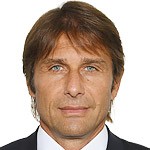
There’s still an argument the Italian should place highly, if you take a look at his tenure with a clear head.
Spurs played some wonderful football to pip Arsenal to Champions League qualification last season, beating Mikel Arteta’s Gunners 3-0, and he had them comfortably as a top-four side before it all went wrong in his second season. Albeit what now constitutes a disastrous Spurs season looks rather different now than it did three years ago.
But ultimately, having been billed as a proven winner, Conte’s stint will be remembered as a disappointment, not least for the pathetically meek nature of their eliminations in the FA Cup and Champions League.
We can safely assume that the legacy he’ll leave in north London is the parting shot of his press conference, in which – as the actual Tottenham manager – he echoed both Sir Alex Ferguson’s ‘Lads, it’s Tottenham’ and Giorgio Chiellini’s ‘the history of the Tottenham’ all in one. Ouch.
If we were ranking these managers on their Premier League win percentage, Sherwood would be No.1. As he memorably said himself, a 59% win ratio is “second to none”.
Unfortunately for Tim, it was comments like that, combined with rumours that he got the job in an underhand way – and then some strange tactical decisions once he did – which prevented Spurs fans from really taking to him.
Still, he took the team from seventh to sixth in his half-season in charge while promoting youth and, in case you didn’t know, giving Harry Kane his first Premier League start. He wasn’t all bad.
Taking over from Redknapp after Spurs had finished fourth but been denied a Champions League place courtesy of Chelsea winning the competition, Villas-Boas got his own taste of misfortune in his only full season in charge as a then-record Premier League points tally still wasn’t enough to get them into the top four.
Their 72 points in 2012-13 was actually more than Spurs managed when finishing third under Pochettino three years later, and though the Portuguese manager undoubtedly benefitted from Gareth Bale’s incredible form, it was a hugely entertaining season.
It’s also worth pointing out Hugo Lloris, Jan Vertonghen, Mousa Dembele and Christian Eriksen were all signed during his time in charge. There are plenty of Spurs managers who deserve their figure-of-fun status. AVB isn’t one of them.
Jol had initially been appointed as First Assistant Coach to Santini in the summer of 2004, but it only took 12 games before he was thrust into the hotseat himself.
In fairness, it was not difficult to be more popular than Santini, but Jol’s personality quickly endeared him to Spurs supporters – and more importantly, so did the team’s improvement under his stewardship.
After finishing ninth in that 2004-05 season, five places higher than the previous year, Jol steered Spurs to fifth twice in a row, then their best placing of the Premier League era, including in 2006 when they were fourth going into the final game only for a dodgy lasagna to famously wreck their preparations.
READ: Remembering lasagnagate when Spurs were on for fourth but got the sh*ts
Revealing in its own way that a man whose final act as Spurs manager was a 4-1 home defeat to Brighton that ensured they would finish a previously unthinkable 17th in the Premier League still comfortably makes the top three of this list.
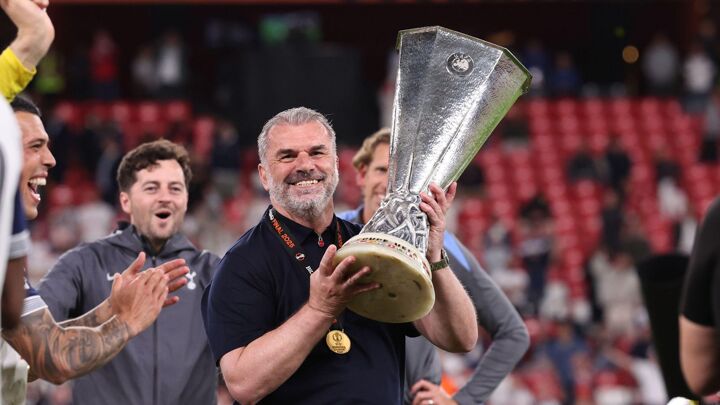
Winning the Europa League in 2025 was a genuinely impressive achievement and should have been the start of something big for Spurs, freed at last from the shackles of that trophy drought. Instead, it now appears like something of a deal with the devil.
How much of Spurs’ current woes can be traced back directly to the normalising of Premier League defeats that was allowed to happen during the second half of that Europa-focused second season under Ange is hard to know for sure, but it definitely isn’t ‘none’.
But as well as the Europa triumph – and can you imagine how even more miserable things would feel at Spurs right now if they’d not won that knife-edge final? – it would be wrong to completely forget just how thrilling those first few months of Angeball really were.
Completely misleading, obviously, but thrilling. Given how bad a Premier League team Spurs have been for every other part of the post-Kane reality, those first two games under Ange that yielded eight wins and two draws feel like a fever dream. And not only because of goodprocessgate.
‘Arry has always been a figure of fun for some people, incapable of turning on a computer or actually bothering with any, yer know, actual tactics.
But he certainly got the best out of the Spurs squad during his near-four seasons in charge, taking over a team that had suffered the club’s worst-ever start to a season and steering them to eighth and the League Cup final before leading them to fourth in two of his other three years in charge.
There was also that memorable run to the Champions League quarter-finals in 2010-11. Football is as much about memories as it is results, and Redknapp created plenty of those.
Spurs reaching a Champions League final seemed unthinkable when Pochettino replaced Tim Sherwood. But Pochettino managed that and came pretty close to leading Spurs to a league title.
The decision not to back – and eventually to sack – the Argentinian coach looks a bigger mistake with every passing year. It still seems certain that at some point both club and manager will accept the inevitable and get back together. It will almost certainly be a disaster.
 Арсенал
 Тоттенхэм Хотспур
 Бавария Мюнхен
 Реал Мадрид
 Микель Артета
 Гарет Бэйл
 Почеттино, Маурисио
 Антонио Конте
 Жозе Моуринью
 H. Kane
Все комментарии