
On September 28, Sweden's national team defeated Poland 3-1 at home in the UEFA Nations League group stage return fixture, securing their second consecutive victory in the tournament. Following their win against Romania in the opening match, Sweden earned another three points and currently lead the group with 6 points. After the match, Sweden captain Viktor Lindelof stated in an interview that the victory was crucial for the team, and a clear tactical plan combined with strong squad depth helped them maintain competitiveness despite the absence of key players.
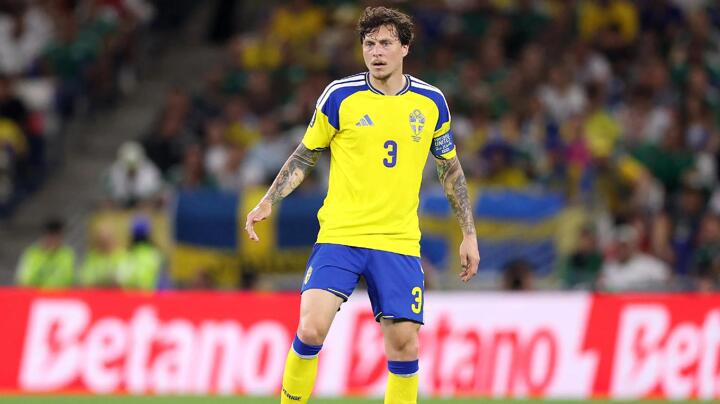
Lindelof said in his post-match interview: "We've secured two wins, and it feels great to achieve consecutive victories in the Nations League. We need to try to maintain this momentum in the upcoming matches."
The match took place in Solna, near Stockholm. Sweden made a bright start, taking the lead through a set piece in the 8th minute. Nilsson-Lindelof flicked the ball back at the near post from a corner, and it reached Benjamin Nygren, who headed home to give Sweden a 1-0 lead.
However, Poland gradually found their rhythm. As the match progressed, the visitors took control of possession and created several chances around Sweden's penalty area. Swedish goalkeeper Viktor Johansson made an important save, but Sweden conceded before half-time. Sebastian Szymanski ran into the box and scored to level the match at 1-1.
During the half-time break, Sweden needed to adjust their approach. Head coach Graham Potter acknowledged after the match that his team had struggled in the first half and made tactical adjustments during the interval.
Potter said: "I'm very satisfied. It was a difficult match, and the opposition is a very tough team to play against. We had some difficulties in the first half, so we made some adjustments at half-time."
Sweden's performance in the second half showed a clear improvement. The team regained control of the match and became more proactive in attack. In the 63rd minute, Yassine Ayari received a short corner from a teammate, beat Matty Cash's defensive positioning, and delivered the ball to the near post to restore Sweden's lead.
Nine minutes later, Sweden scored again. Wålemark broke down the right wing and delivered a cross, and Gyökeres arrived perfectly to strike a volley from distance into the far corner, extending the lead to 3-1. The score remained unchanged until the final whistle, securing Sweden's second victory. UEFA's post-match statistics showed that Wålemark registered an assist, and Gyökeres scored in his second consecutive international match.
Regarding Sweden's journey from taking the lead to being equalized and then regaining the advantage, Lindelof believes the team's ability to regain composure during difficult moments was key to the victory.
"It was a good match. We had a good start, then struggled a bit. But we played very well in the second half and scored two goals," Lindelof said in an interview with TV4.
As captain of Sweden's national team, Lindelof emphasized the importance of the team's current tactical approach. He believes that maintaining cohesion despite personnel changes is linked to having clear tactical requirements.
"This means a lot to us. We have a clear tactical plan and clear playing principles," Lindelof said.
He believes that when a team has a clear tactical framework, even when some players are unavailable through injury, replacement players can adapt to the team more quickly.
"This makes it easier for all new players coming into the team because they know exactly what they need to do."
In fact, before this match, Sweden's national team was affected by several player injuries. Alexander Isak withdrew from the international camp due to injury, and Emil Holm was also unavailable. Additionally, Antony Elanga did not participate in this match.
In this situation, Potter had to adjust his lineup. Compared to the previous match against Romania, Sweden made a total of five personnel changes, with Wålemark making his first appearance for the national team and Benjamin Nygren replacing Isak in the striker position.
Lindelof believes that the team's ability to continue winning despite ongoing personnel changes also demonstrates that Sweden has sufficient squad depth.
"This also means we have good squad depth and many quality players in the team."
Potter also acknowledged this point. Sweden's head coach stated after the match that the team was able to adjust during difficult moments and deliver a completely different performance in the second half.
"I think our second-half performance was excellent. Truthfully, we played well both with and without the ball. We played bravely and scored two beautiful goals."
For Potter, the significance of this match goes beyond just winning. Despite the continuous absence of important players, Sweden managed to maintain their tactical framework through personnel adjustments and ultimately defeated Poland 3-1, which is also a reflection of the team's current state.
From the flow of the match, Sweden endured a relatively long period of passivity in the first half. Poland gained some advantage after equalizing, and Sweden also showed some vulnerability in their defensive ball-handling. However, following the half-time adjustments, the team significantly reduced their mistakes and applied renewed pressure on Poland's defense through more direct attacking play.
Lindelof believes the team needs to stay calm.
"It's always good to have a favorable start, but we still have many matches to play," he said.
Sweden currently has 6 points and temporarily lead the group, but Lindelof does not believe the team has achieved a decisive advantage from two consecutive victories. For the captain, what matters now is maintaining the current style of play and continuing to implement the tactical principles the team has established.
Website AF đã ra mắt! Xem tin tức đầy đủ, bình luận, chi tiết trận đấu và thống kê trên máy tính. Truy cập: www.allfootballapp.com
 Астон Вилла
 Швеция
 V. Lindelöf
Все комментарии