
On October 8th, The Times reported that Chelsea's director shortlist has been compressed from 5 to 3 candidates, with Lawrence Stewart departing the club.
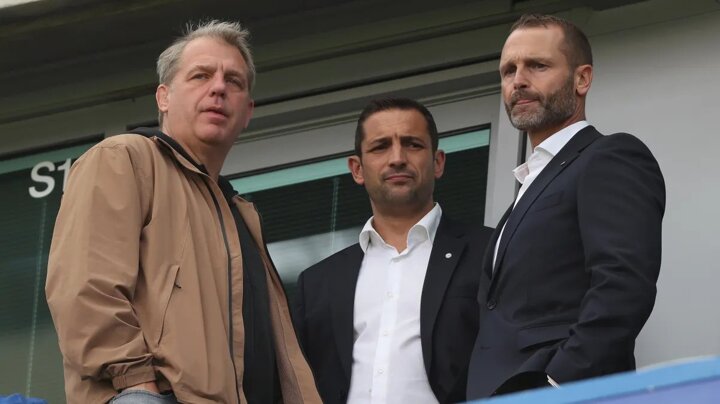
Over the past four years, Chelsea's squad-building efforts have been closely associated with Paul Winstanley and Lawrence Stewart. The two sporting directors have frequently operated behind the scenes as key football figures within the BlueCo project. As primary architects of the squad, they invested over £1.5 billion in first-team signings, focusing exclusively on players under 25. However, during this period, the team qualified for the Champions League only once.
They rarely appeared in public, and while their names occasionally featured in management announcements, they were far from unknown figures. Last November, Dave Brailsford, from Liverpool's backroom staff, joined Chelsea to expand the club's sports management team. However, Winstanley and Stewart's roles as key decision-makers were always emphasized, and their influence was evident in fan criticism. The two first met as young analysts at Hull City and Wigan Athletic two decades ago. Early in their collaboration at Chelsea, they were consistently praised for their strong partnership, reinforced by the fact that they shared an office at the Cobham training ground.
The dissolution of this partnership therefore carries symbolic weight, even if it does not represent a complete break with the past. Stewart departed Chelsea by mutual agreement. Rather than seeking a direct replacement, the club is transitioning to a leaner football management structure, with Sam Juels and Shad Forsythe promoted to positions equal to Winstanley.
This represents another significant shift at Stamford Bridge in recent weeks, as reports indicate the club is "recalibrating" its operating model and moving in a different direction. This is the direction Behdad Eghbali first outlined at a business conference in Los Angeles last April. Enzo Maresca's role has been defined as "manager," and the club's transfer strategy has also been adjusted—now signing players over 25 again. Subsequently, there have been changes in club ownership: chairman Todd Boehly and his longtime partner Mark Walter sold their stake to Eghbali's Clearlake Capital.
Stewart's departure is unrelated to board-level personnel changes and was internally anticipated. Although like his four fellow sporting director colleagues, his contract—signed after Chelsea's Club World Cup triumph last year—still had five years remaining.
His responsibilities at age 40—overseeing data usage, coordinating budget planning, and liaising with medical staff—are gradually being transferred to others. Chelsea has increased investment in data applications and continues to integrate data into player scouting and recruitment. Forsythe and Juels now shoulder greater responsibility in these two areas.
Forsythe, previously responsible for academy and player development pathways, has seen his authority progressively expand to resemble a technical director role. Juels, originally titled "Global Football Recruitment Director," has worked closely with Strasbourg within BlueCo's multi-club structure. Now the two jointly lead talent identification, player recruitment, and squad building while maintaining close collaboration with Maresca, Eghbali, and Winstanley. The responsibilities of these latter three include transfer negotiations, player contract negotiations, and overall management of the club's medical, athletic performance, player welfare, and operational support teams.
The reduction from five sporting directors to three, along with the promotions of Forsythe and Juels, reflects how Chelsea has operated since this summer and even before. Brailsford, a senior scout from Liverpool, Manchester City, and Newcastle United, will continue to support the leadership team, but his role will transition to a more flexible advisory capacity, while the remaining three manage daily operations, oversee specific departments, and collaborate with the head coach and club ownership.
Chelsea's football management structure has been streamlined, and Boehly's departure further simplifies matters. He maintains a partnership with Clearlake while ending external uncertainty surrounding the BlueCo consortium's future. This series of changes adds another layer to the major restructuring following last season's failures. Chelsea finished 10th last season, and while Enzo Maresca's resignation caught them off guard, the club remains under intense scrutiny regarding the appointment of Mauricio Pochettino and the failure of his tenure after just 104 days.
Following Pochettino's departure, the club announced it would enter a period of "self-reflection." Although this personnel change is not a direct result of that reflection (sources indicate Stewart's departure was amicable and he was well-liked at the training ground), the fundamental reason for his exit lies in the recalibration of his job responsibilities. He initially joined as a "technical director with a global football focus" and became co-sporting director alongside Winstanley in February 2023, shortly after technical director Christopher Vivell departed after just seven months. The club is now moving in an entirely new direction.
Chelsea sources describe these changes as a "gradual adjustment" rather than a complete overhaul, but regardless of terminology, supporters are likely to view this as a positive sign.
AI 번역.
AF PC사이트가 오픈했습니다! 컴퓨터에서 전체 뉴스, 댓글, 경기 상세 정보와 데이터를 확인하세요. 방문하기: www.allfootballapp.com
 Челси
Челси
 Лоренс Стюарт
 Пол Уинстенли
Все комментарии