
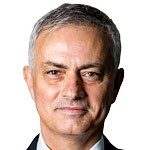
José Mourinho, coach of Real Madrid, spoke with Yefhen Kraghen, host of the "Bet It Drives" program in Madrid. He discussed his reasons for returning to Real Madrid, how to work with elite players, and his understanding of trust, discipline, and tactical intuition. This article is the first part of an exclusive interview.

José, thank you for joining us to record this program today.
My pleasure.
We feel honored and delighted to have you on the show.
Thank you.
We're in Madrid now, which could be considered your second home. You've just returned to Real Madrid. Can you tell us why you came back and what drove this decision?
I came back because the club wanted me to return, and the way they approached me. I believe I left Real Madrid in 2013, and since then we've stayed in close contact. When I departed that year, my relationship with the club, the president, and the board remained strong. So we've always stayed close.
At the end of last season, the greatest club in the world faced difficulties over two seasons—poor form and atmosphere—and there was some tension with the fans.
The club contacted me and said: "We know you, and you know us. You know the club, our culture, and the people here, and we know how you work." They said, "We want you to rebuild the team. We want you. We want you to start fresh and lead the club to another decade of glory. We want someone with your qualities."
I was very happy at Benfica and content in Portugal. I've been away from home for many years, and returning to Benfica was good, but Real Madrid is Real Madrid. Everyone at the club understands that returning to Real Madrid is a great opportunity for me. So this time we left Portugal on good terms as well. I'm very happy and motivated right now.
Speaking of Portugal, your birthplace—we'll be back in Lisbon in late September for a major conference. As a Portuguese person, can you recommend interesting places for our viewers? Perhaps places tourists don't usually go?
I often say Portugal is a country that is "small but great." Small because the territory isn't very large and the population is only about ten million. Great because it's a wonderful country. Not only does it have beautiful landscapes, but it also has many talented people across various fields. We welcome foreigners with open arms, so visitors usually feel welcomed and respected when they arrive in Portugal.
If you go to Lisbon, you can explore the city and its surroundings, which are excellent areas. If you head north toward Porto, this city has a different character from Lisbon, but it's beautiful with many wonderful places in the north around Porto. Portugal is a small but excellent country. You'll enjoy a two-day stay, and you'll still enjoy a twenty-day stay because there are so many experiences to have here.
You mentioned that Real Madrid's invitation to return involves a deep relationship between the two parties. You've had various experiences working with players, investors, and different clubs. What does an ideal partnership look like for you?
I like realistic goals. I don't like partnerships that set goals too low just for security. I like to be ambitious about big goals, but those goals must be realistic. When I've worked at certain clubs, I felt the goals they proposed weren't realistic.
I want to achieve goals that exceed what was set, and I don't want goals set too low. But goals must be realistic. Because I've achieved very ambitious goals throughout my career, sometimes people look at me and think that as long as I'm there, they can set unrealistic goals.
There are no miracles in football, and I believe there are no miracles in other fields either. You need capability, teamwork, ambition, and empathy. You must act with ambition, but this ambition must be grounded in reality. Real Madrid's goals are certainly the highest. At the same time, the club's capabilities and management conditions match those goals.
José, football is one of the oldest sports, yet people still love it, and its popularity may be growing even more.
Then please don't change it too much. You say it's an old sport and people still love it, which concerns me a little.
Exactly right.
Don't change it too much. Small modifications can help football reach new generations and use new technology to make it more modern and credible. But if something is already nearly perfect, don't change it too much. Otherwise you might ruin a very good product for nothing.
For you as a coach, are there still things you don't know in football? Does it still offer you new experiences and inspiration to move forward?
I learn every day. I learn from difficult times and from the people I work with, especially players. Because I've worked in elite football for many years, many things seem familiar: this happened before, and that happened before. But the charm of football also lies in its unpredictability.
It's still just a game.
It's still a game. Still a game. Ultimately, those ninety minutes of the match are the result of all the hard work we've put in throughout the week for those ninety minutes. Sometimes I feel people want to know too much about what happens before and after the game, but keeping certain things private is also part of football's charm.
When a good film comes out, the creators usually release a trailer, but they don't let you follow the entire filming process from start to finish. At Hollywood or elsewhere where films are made, they don't open the doors and let everyone see everything every day, every minute.
Football is similar. We understand the times have changed. We understand social media and the need to capture people's attention. So we gradually open the dressing room and training ground. But during certain parts of training, I have to tell the cameraman, "Please leave first. No cameras now." I think that's normal.
So it's still a sport where people interact. When it comes to players, you've said communication with them never stops. Have you learned anything from your players?
Always. In football, I always learn from them because I like to communicate fully with my players. Many times I tell them, "This is what I think about this game. This is the strategy my assistant and I have developed after analysis. And this is how we want to play."
But more important than how I want the team to play is how they feel: Do you think you can help me meet these demands? Do you think you can execute what I'm asking you to do? If not, please tell me what you think.
So we always explore together. I've called this "guided discovery." We seek the ideal condition together where the coach is comfortable and the players are comfortable too. I don't think it's effective to make players do things they don't believe in. So the relationship between the leader and those who implement their ideas on the pitch is very important.
This empathy is especially important when working with players who have already achieved great success. Finding room for further improvement in them can be difficult. I think your uniqueness is the ability to find common ground with elite players, and that's part of coaching ability.
I think the first thing to do is build a team without interfering too much with the elite players you already have.
To win, we must work together, play for each other, and sacrifice for each other. That's one thing. Constantly telling players what they're doing wrong and what they should do is another thing.
I won't teach players at this level how to kick a ball or head it. When coaching them, the focus is more on overall teamwork than repeated individual technical advice. Coaching the best players is completely different from coaching regular players.
แปลโดย AI
เว็บไซต์ AF เปิดตัวแล้ว! ดูข่าว ความคิดเห็น รายละเอียดแมตช์ และสถิติครบถ้วนบนคอมพิวเตอร์ของคุณ เยี่ยมชม: www.allfootballapp.com
 เรอัล มาดริด
 โชเซ มูรีนโย
ความคิดเห็นทั้งหมด