
In a lengthy article, The Athletic's Art de Roché discusses why Merino consistently helps his team in various positions and roles – his core strengths are his understanding of how football works as a whole, and the understated leadership that stems from it.
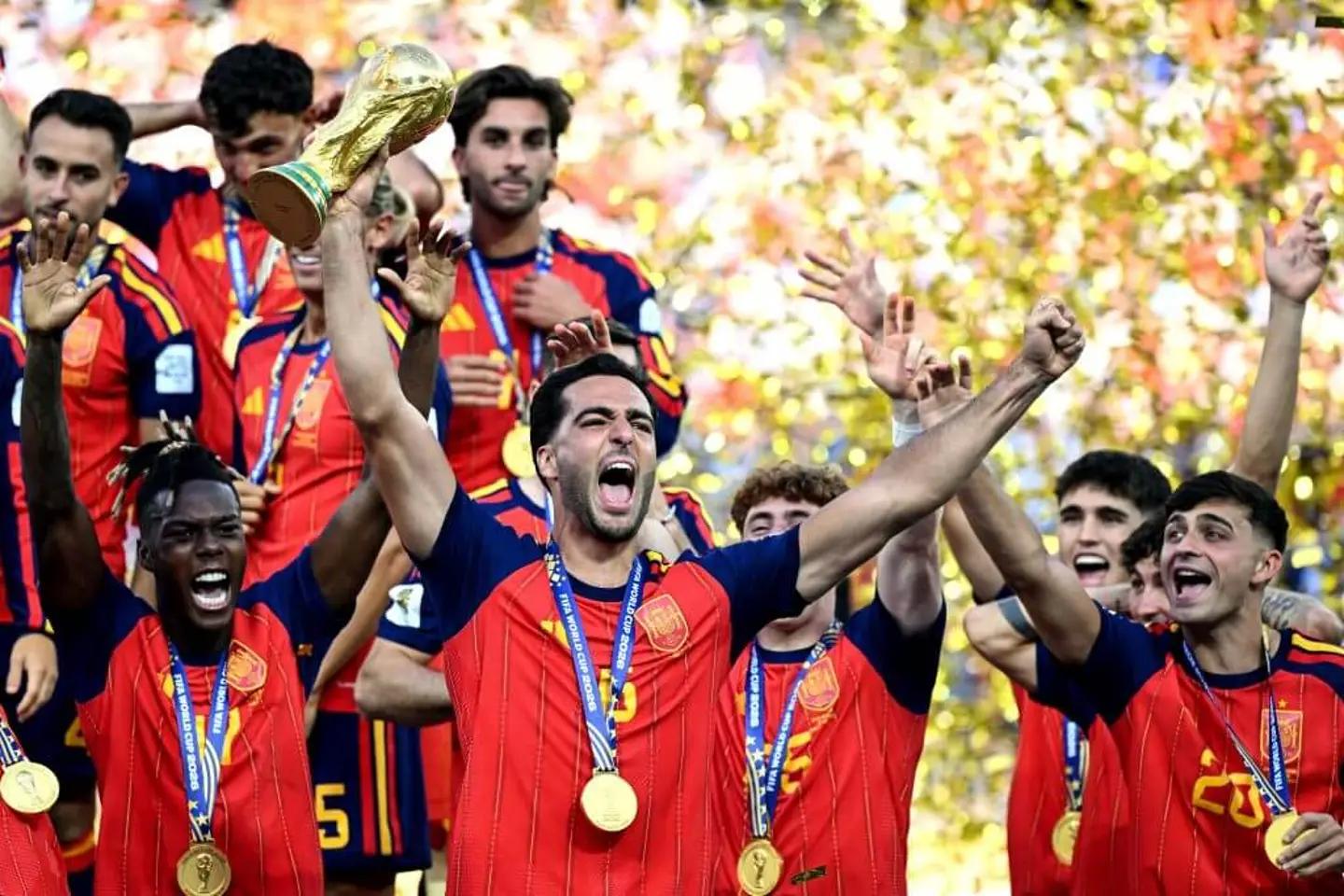
What comes to mind when you hear the name Mikel Merino?
Is it his brace against Leicester City in February 2025, which marked his emergence as a central striker for Arsenal? Or his clinical finish in the 3-0 second-leg victory over Real Madrid in the Champions League quarterfinals two months later? Or perhaps his exuberant celebration after heading in an extra-time goal against Germany in the Euro 2024 quarterfinals, helping Spain advance to the semifinals?
Or is it the now 30-year-old's several substitute appearances at this summer's European Championship? He scored decisive goals in the Round of 16 against Portugal and the quarterfinals against Belgium, playing a total of just nine minutes across both matches yet helping his team progress.
However, for those who truly know Merino, his name is often the first mentioned when asked, "Which players do you think will become coaches in the future?"
This month, Arsenal manager Mikel Arteta provided one reason. At Arsenal, Merino is an indispensable member of the team, even though he rarely starts.
Arteta said of his Spanish compatriot: "Merino is one of the smartest players I have ever seen and worked with. He thinks about everything and everyone."
"Not only that, he also possesses some very unique qualities in football and within our team. He is able to be in the right place at the right time for the ball, occupy different spaces, play in different positions, and link up with teammates."
This deep understanding of the game was embedded in Merino's football philosophy long before he became a key goal-scorer for club and country. Now, he has been called up to the Spanish squad for Saturday's Nations League group stage opener against England at Wembley.
In 2018, when 22-year-old Merino joined Real Sociedad, he suggested to the club's sporting director, Roberto Olabe, that training should become more intense. Merino, who had previously played for Newcastle in England and Dortmund in Germany, believed that increasing training intensity was key to helping his new club become more competitive.
In 2023, Kieran Tierney joined Real Sociedad on loan from Arsenal. As Merino was already proficient in English, he proactively helped the Scottish defender adapt to life in Spain. Merino played a similar role for fellow Basque player Martín Zubimendi. The following year, Zubimendi followed Merino's path, moving from San Sebastián to Arsenal in North London, and the two even live in adjacent neighborhoods today.
Additionally, Merino often chats with Eze in the sauna, with conversations extending beyond football.

These personal qualities are also one of the reasons why Arteta first gave Merino the captain's armband in October last year, just 14 months after he joined the club.
Two weeks ago, Merino captained the team in the 4-2 League Cup victory over Ipswich. When asked by reporters after the match about Arteta's earlier comments – "he thinks about everything and everyone" – Merino replied:
"It's just how I understand football. I don't see football as an individual Sport. I know some players only focus on what's happening around them. But there are 11 players on the field, and sometimes I have to adjust based on my teammates' situations.
"It's a team Sport, not an individual Sport. What I mean is, when I'm on the field, I don't just focus on my own position. I observe every position and think about what I need to do to make the whole team work. I don't know how to explain it precisely, but to me, football is a whole, a collective Sport."
Merino's football philosophy is closely related to his career experiences. He has played as a central defender in both three-man and four-man defensive systems, as well as a defensive midfielder, box-to-box midfielder, and attacking midfielder, and in recent seasons, he has even tried different central forward roles.
His frequent runs into the box make him one of Arsenal's most adept players at scoring crucial goals, and this performance naturally attracts the most attention—10 of his 11 Premier League goals (91%) either gave his team the lead or equalized the score. His deployment in a "false nine" position has also helped Arsenal break down opponents' defenses.
These experiences in different positions and roles have all been important lessons in Merino's development. However, the most profound experience for him dates back to his childhood.
Merino's father, Ángel Merino, had a 17-year professional playing career starting in 1986, reaching his peak from 1988 to 1994 with Osasuna. Mikel was born in 1996 and took his first steps in professional football at the Osasuna youth academy, where his father was the director from 2004 to 2013.
After every goal, Merino pays tribute to his father, mimicking his father's now well-known celebration of running around the corner flag. Coincidentally, father and son have performed this celebration in the same stadium: more than 30 years apart, they both ran to the corner flag to celebrate goals at the MHP Arena in Stuttgart, Germany.
In the Euro 2024 match against Germany, Mikel Merino celebrated his goal by running around the corner flag, paying tribute to his father, Ángel, who had scored in the same stadium 33 years earlier and performed the exact same celebration.
Having spent so much time with his father during his formative years, it's natural for Merino to credit his father when asked about the origins of his football philosophy.
"My father," he said. "My father was a player, and then he became a coach. I remember when I was 13 or 14, he was coaching at the Osasuna academy. I would sit on the sidelines with him, watch him analyze opponents, and listen to him explain why things happened in a game. From then on, I've always enjoyed trying to understand the logic of football, the tactics, and how I can influence opponents on the field. Even just moving 10 meters, you can destabilize an opponent's defense."
It is this understanding of how subtle movements can impact opponents and the team that has made Merino's substitute appearances particularly impressive this season. He has come off the bench in Arsenal's opening league matches, with his best performance coming at Villa Park at the end of August.
Against Aston Villa, with 19 minutes remaining, Merino came on as a substitute to help the team hold onto their lead. His intelligent movement made it difficult for the home side to pose a sustained threat, and Arsenal ultimately secured an important 1-0 victory. He demonstrated the same composure two weeks later when he captained the team against Ipswich.
Both Arsenal and the Spanish national team have more celebrated players than Merino, but both teams have proven one thing: a player who understands his teammates' roles and what he needs to do can make a significant impact, even when coming off the bench.
Tomorrow, England will face the reigning European and world champions in a new tournament cycle. For England manager Thomas Tuchel, this might also be a detail worth noting.
AF's PC site is now live! Browse full news, comments, match details and stats on your computer. Visit: www.allfootballapp.com
 Arsenal
 Tây Ban Nha
 Mikel Merino
Tất cả bình luận (3)