
Cristiano Ronaldo has broken his silence over his Portugal walkout in a lengthy statement in which he declares himself available for the national team.

The 41-year-old, who had raised doubts over his international future, accused Portugal head coach Jorge Jesus of broken promises when explaining his reasons for leaving the camp.
Ronaldo also apologised to his team-mates and the Portuguese people over his departure from the squad and said he will accept whatever punishment is handed down to him by the Portuguese Football Federation.
FULL statement:
As I promised, I have decided to give a direct, first-hand account of the circumstances surrounding the National Team’s latest training camp. After the 2026 World Cup, I prepared a letter to the Portuguese people, which I still have, with the words I want to share with them when I leave our team for good. At the end of the competition, on the flight back from the United States, the President of the Federation asked me, and insisted, that I reconsider my decision to leave because the FPF wanted me to stay.
Immediately afterwards, he asked for my opinion on the current national team coach, whom he was considering alongside other names he did not disclose. I told the President of the Federation that, in my opinion, he would be the right choice. That is why, on the day the current coach was unveiled, I was genuinely happy with the appointment. It was the right choice, as the results continue to show. A few days later, the new national team coach contacted me for the first time, saying he would like to meet me in person. I agreed, and we arranged to meet at the end of my holiday. We met at Cidade do Futebol, where my club was holding its pre-season training camp.
That day, the coach told me he was counting on me and that my presence was essential to his plans. He presented me, right there and then, with a plan for my involvement. He told me I would play the first and last matches and that, to manage the players’ fitness, he would always make three or four changes per match. At that point, he suggested that I might not travel with the team to Norway and Denmark. He proposed that I play the first match and stay in Portugal, then rejoin the squad before the match at the Dragão. I immediately rejected this proposal. It seemed obvious to me that I could not accept it. Not playing the matches abroad was no reason to stop captaining our team. The privilege of staying in Portugal would not set a good example. The coach eventually agreed with my assessment. Simão Coutinho, Al Nassr’s sporting director, was present for this conversation. He was the person the current coach reported to throughout last season and one of those responsible for bringing him to the club in 2025. The day before the training camp began, the coach came to my home in Lisbon for another conversation, at his request. The conversation was calm, and all the arrangements agreed in August remained in place. I played the match at Alvalade and, although I was substituted, I made no fuss. I put the captain’s armband on Bruno Fernandes myself, never imagining that I might be taking my final steps as a player and captain of the National Team.
What mattered to me that day was our victory. Winning is always good; winning in Portugal and for my country is even better. At lunchtime on the day of the match in Norway, one of the coach’s assistants came to the table where the squad was eating and told me the coach wanted to speak to me. To my complete surprise, the coach asked whether I was fit enough to play 30 minutes. I was fully focused on my physical recovery, part of the group as always, and expecting not to play that day. I had no problem with that. This request was outside my recovery and training plan—because I was only due to play on the 4th at the Dragão—but, of course, I said yes. He replied that I should be ready because I would play 30 minutes. Everyone knows the rest. I warmed up from half-time onwards, watched the minutes go by, and was not called on. The coach had broken his word to me. At the end of the match, all I wanted was for it to finish with a win and to be alone. I did not go over to acknowledge the fans. That was a mistake for which I alone am responsible, and it should not have happened. I apologise to the Portuguese people who supported us so passionately there, I apologise to the fans, and I apologise to anyone who, without being Portuguese, may have come there to see me and whom I may have disappointed. Forty-eight hours later, the coach, Simão Coutinho and I had a conversation, as Simão had been present for our conversations in August.
It was a profound, very frank conversation, with no filter whatsoever. We agreed that there was only one way to put this “case” to rest: for the coach to repeat what he had just told me privately, in Simão Coutinho’s presence, but in the press room. What we agreed was simple: the coach would open the press conference with this topic, seeking to close the matter by telling the truth. He would say that I had never asked to play any minutes, that it was the coach and no one else who had proposed my plan for this training camp, that it was a mistake to have me warm up without bringing me on, and that he would not do it again in the same circumstances. We ended that meeting with the coach asking me for a hug, promising that he would say at the press conference what he had just said to me, and that we would move past the matter. I would not play in Denmark, and I would play the match at the Dragão. All of this took place in Simão Coutinho’s presence. At the coach’s request, a video meeting then took place between him, Simão Coutinho and Tiago Craveiro, summarising what we had discussed.
A short document was drawn up, which I personally approved and which, with my knowledge, was given to the coach, as he had requested. Everyone knows what happened at the press conference: his demeanour bore no resemblance to our meeting. I heard remarks and aggression that I believe I did not deserve, an attitude of ‘I’m in charge and what I say goes’ that he had never shown me, not even remotely, in private the day before. The notes I approved were as follows: “I think it is important, not least because it is the truth, to clarify a few things before talking about Denmark:
1. I personally, with no one else involved, proposed a plan to Cristiano for this season with the National Team. It was a long and very good conversation.
2. I know how much the National Team means to him and how much he loves it, and the standing he has around the world. More importantly, I know the standing and positive influence he has had within the National Team for 24 consecutive years.
3. The plan I proposed to Cristiano was accepted.
4. He never questioned my choices. He was exemplary, loyal and professional.
5. The plan I drew up for him did not include the Norway match. However, I felt he had managed to recover physically from the first match and told him I might need to use him. Cristiano agreed.
6. I made a mistake by having someone of Pelé’s or Maradona’s stature warm up and then not bringing him on. If it were today, I would not do it.
7. To close the matter: I want Cristiano in the National Team. In fact, I don’t just want him a little; I want him very much. Fortunately, he believes in me too. He believed in me at Al Nassr, and he does here too.
8. As for not acknowledging the fans, we have already spoken about that. Someone who has played more than 230 matches for the National Team does not need lessons from me about loving Portugal. It was a moment of frustration that takes nothing away from what he has done. He is the player who signs the most autographs, takes the most selfies and shows the most affection towards the fans. Let’s not invent problems where none exist. When we are unhappy, we react. That was all.”
None of these notes, therefore, even called for the coach to apologise to me. It was the second time he had broken his word to me. I decided to leave the training camp rather than wait for another broken promise. For me, truth is still the most important thing in relationships between people.
However much it hurts, tell me the truth. In fact, during a conversation I had with the President of the FPF and the coach on the morning of that press conference, as they can certainly confirm, I reiterated that if they did not want me there, they should tell me. They only needed to be honest with me. I would accept it, and I promised we would arrange something special, as I dream of doing, and no one would be upset. I remember it as if it were today. They both said no in unison. They said my place was in the National Team.
Never, at any point in almost 25 years of my career, have I interfered in any technical or tactical decision made by any club or national team coach. I may accept what I am asked to do more or less readily. I respect the decision, and when someone breaks their word to me, I feel that I no longer belong there. I also owe my national teammates an apology for leaving the training camp. Despite the complete loss of trust in the coach’s word, as those who witnessed these conversations can attest, I should not have done it.
The responsibility is mine alone. I apologise to the Portuguese people once again, but for me, a broken promise has a decisive impact. I felt that, from that point onwards, my staying would only harm the squad, and I did what I have always said I would do if I no longer felt useful: I packed my bags and left. My actions must be assessed and punished by the Portuguese Football Federation. I believe there should be no mitigating circumstances in determining the punishment. I am not just any player; I am the team captain, and that is an aggravating factor. I have already apologised, but I know actions must have consequences. Anyone who has been in football as I have knows that, regardless of anyone’s status, the rules are the same for everyone.
On this subject, I have heard a lot of talk about farewell matches, about how I must have a fitting farewell and how the Federation wants to give me that opportunity. I learned in life, often hungry and with nothing to eat, that no one gives anyone anything. I can promise all my fans, and naturally the Portuguese people in particular, that we will have one or more farewell matches. There will be time for that. But when I think about the national team, what I really think about is competing. That was what I thought about on the day I was told my father had died. I was at our national team’s training camp, and I decided to stay until after the following day’s match. I therefore did something for my country that I would never do for any club.
So, if I am physically fit, playing for my club and hopefully scoring goals, once I have served whatever suspension is imposed on me, I will be available, as I always have been until today, to compete and win for our National Team.
Believe me, this is the absolute truth.
 Bồ Đào Nha
 Al Nassr
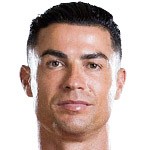 Cristiano Ronaldo
Tất cả bình luận (157)