
According to The Athletic, the first international break of the season has been extended to four matches, resulting in several Premier League players returning with injuries. National team coaches from multiple countries have publicly expressed their dissatisfaction, and the extensive travel combined with a congested schedule has sparked widespread criticism.
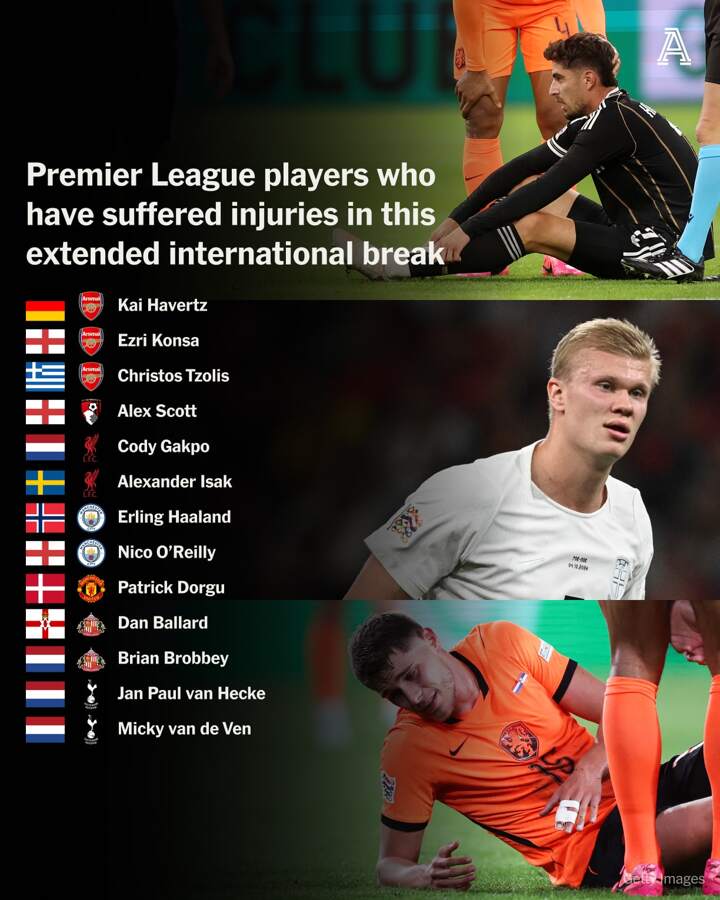
What do Haaland, Isak, Gakpo, Scott, O'Reilly, Ezri Ngoyo, Jan Paul van Hecke, Micky van de Ven, Kai Havertz, Patric Dorgu, Brian Brobbey, Dan Ballard, and Christos Tzolis have in common?
If you answered "they're all Premier League players," you're halfway there. But if you answered "they're all Premier League players who returned to their clubs with various injuries after the season's first international break," then congratulations—you're completely correct and deserve full marks!
It's quite a long injury list, with some minor injuries allowing players to return by the weekend, while others will sideline key players for extended periods. Scott is expected to miss two months with a quadriceps issue, Gakpo suffered a hamstring injury with an uncertain prognosis, Brobbey suffered an Achilles injury, while Dorgu, Havertz, and Tzolis also have Achilles issues of varying severity.
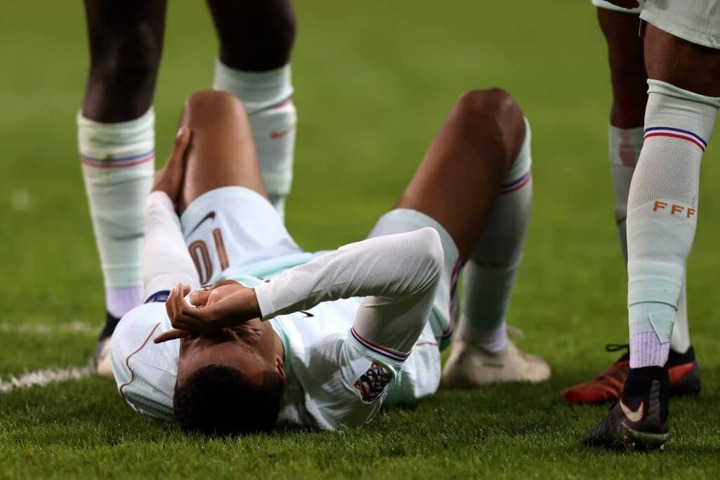
Additionally, Raphinha suffered a hamstring injury while training with Brazil's national team, and Kylian Mbappé left France's training camp due to a knee problem.
Injuries are unavoidable, but a wave of injuries like this makes the case for extending the international break much harder to defend. Previously, there was one international break each in September, October, and November annually, with two matches each. However, this year's schedule extended the September break to four matches, while the November break was shortened.
This is an intense period of international football, and while it cannot be confirmed whether it directly caused this injury wave, it's difficult to absolve it of all responsibility.
Clubs will not be happy, and most national team coaches don't seem to like it either.
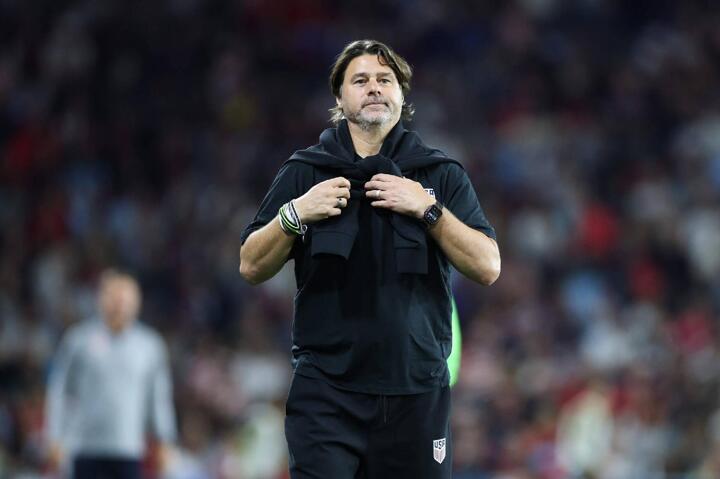
"It's a very difficult period to have four matches," said U.S. national team coach Mauricio Pochettino. "So much travel, long flights. (We need to) send a message to the clubs that we care about the players, and we need to be careful, consider every situation and not take risks... We need to be responsible."
Pochettino is not the only coach expressing reservations.
Thomas Tuchel was skeptical at the start of this international break, and while he found some positives by the end, he still prefers the old schedule.
"Initially I didn't like it. After a long tournament, having such a long period... staying in a training camp for such an extended tournament," he told media before England's 3-0 win over the Czech Republic on Tuesday.
"There are also positives: more consecutive training sessions, more meetings, you can see progress. We organized this training camp very well, but I would prefer three camps, which would give more players opportunities to impress themselves between camps. As it is now, we've maximized what we have."
Others are more direct. "I really like it, and I think the players do too, but playing four matches in such a short period is too much, especially for them," said Italy coach Roberto Mancini.
"Nobody contacted me to ask my opinion, that's for sure," said Spain coach Luis de la Fuente, who led Spain to World Cup victory. "Nobody consults us. We have four matches in 11 days; accounting for travel and everything else, it's extremely demanding. We're very happy to play all the matches, but this is not the most suitable arrangement."
And new Netherlands coach Xavi Hernández was even more critical. "Terrible schedule," he said in a press conference. "Not good for national teams, and also not good for clubs who sometimes see players return injured. Organizing such a congested schedule just three months after the World Cup is asking for trouble. There's also training, travel, post-match recovery, and so on. It's odd to have an international break like this at this stage of the season."
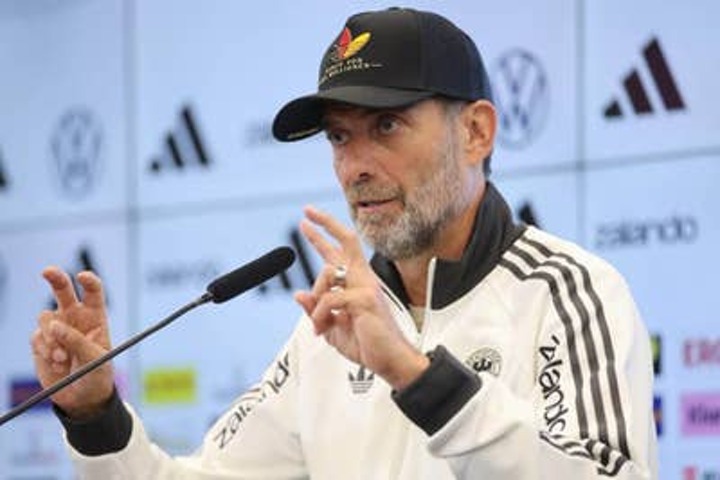
Not everything is negative. Some coaches have been creative with it: Jürgen Klopp effectively fielded two squads for Germany, giving players who might not otherwise be called up a chance to prove themselves.
Canceling the October international break actually added a week to the domestic league schedule. In theory, it also reduced the travel burden for some players: South American and African players based in Europe only have to make one long round trip to play for their country, instead of two.
But in reality, does it actually reduce player travel? Pochettino highlighted the U.S. team's travel distances: Atlanta to Orlando, Orlando back to Atlanta, Atlanta to St. Louis, then St. Louis to Arizona. Nearly 2,500 miles of flying in just over two weeks.
While European teams cover shorter distances, there's still considerable travel in a short period: England first hosted Spain at home, then traveled to the Czech Republic, then to Croatia, and finally returned to London, all within 11 days. Italy played at home first, then traveled to Turkey, then to France, and finally home. Spain's schedule was relatively lighter, but still required a trip to England, returning home for two matches, then traveling to Croatia.
Africa's schedule may be even more absurd, with most countries playing two 2027 Africa Cup of Nations qualifying matches before filling the calendar with meaningless friendlies. Most matches were played in Africa, and many countries arranged friendlies at relatively convenient locations, but Benin played qualifiers in Burkina Faso and Ivory Coast, then flew to Argentina for Messi's farewell match.
Even worse, countries like Brazil used the break to travel to Australia for two matches, then to India for one. Uruguay went to Japan, then South Korea, then India. Colombia and Chile traveled to the United States and Canada for a series of friendlies.
This is a period with no competitive international matches for South America, as all CONMEBOL teams automatically advance past Copa América qualifying, and World Cup qualifying is still some time away. The extended break left plenty of time to fill with matches, and FIFA should have known these football federations would fill it as lucrative as possible, much like clubs do with pre- and post-season tours to distant locations. Brazil reportedly received $4 million (£3 million) to play in India.
They might still undertake these trips during a standard, shorter international break, but they wouldn't be as congested or demanding.
Things may be different next year when this extended break doesn't occur immediately after the longest World Cup ever. But a significant gap has appeared in the domestic football calendar, clearly for the benefit of international football. If players are continuously injured, some end up traveling more, and virtually no national team coach likes it, then it seems a problem has been solved in a way that satisfies no one.
Website AF đã ra mắt! Xem tin tức đầy đủ, bình luận, chi tiết trận đấu và thống kê trên máy tính. Truy cập: www.allfootballapp.com
 Arsenal
 MU
MU
 Liverpool
 Man City
 Sunderland
 Bournemouth
 Isak
Isak
 Ezri Konsa
 Havertz
 Erling Haaland
 Cody Gakpo
 Brian Brobbey
 Christos Tzolis
 Alex Scott
 Patrick Dorgu
Tất cả bình luận