
On October 10, Beijing time (CET), James Sharpe, a renowned journalist from the Daily Mail, published a column analyzing the reasons behind the significant drop in set-piece goals in the new Premier League season. He pointed out that stricter enforcement of rules by referees against holding and blocking in the box is changing teams' set-piece tactics, presenting new challenges for Arsenal, which previously scored frequently from corners.
Column Article
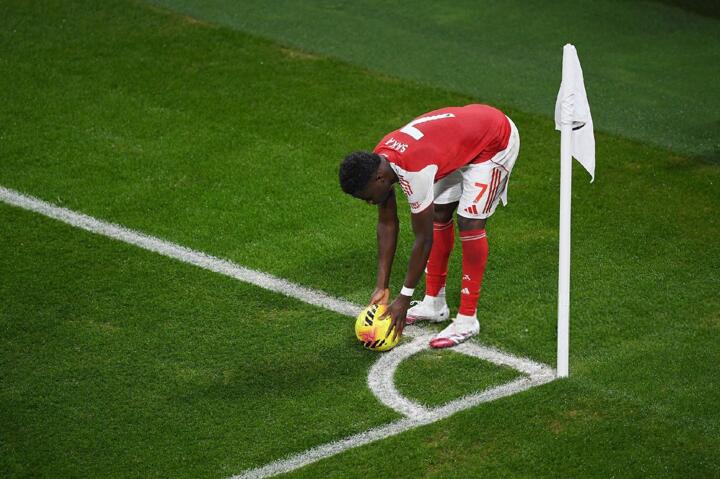
Remember when set pieces were considered something that was "ruining football"? Remember when Arsenal scored so many goals from corners that set-piece coach Nicolas Jover's portrait was painted on a mural outside Emirates Stadium? Remember when set-piece attacks were so important that Chelsea paid a release clause to take set-piece specialist Austin MacPhee from Aston Villa, as if he were a superstar striker?
Can you blame them? Last season, despite often lacking creativity in open play, the Gunners scored a record 19 goals from corners, reclaiming the Premier League title after 22 years. Tottenham Hotspur also scored 18 goals from corners, helping the team narrowly avoid relegation.
But has football really come to this point? Packing as many tall players as possible into the penalty box, letting them grab each other like in a wrestling match, and seeing who reaches the ball first?
At this summer's World Cup, FIFA's analysis found that in more than 40% of corner attacks, attacking players attempted to block or interfere with opponents. Four years ago at the Qatar World Cup, that figure was less than a quarter. This means that at the 2026 World Cup, more than half of corner goals benefited from blocking and obstruction by players.
Turning our attention to England. Two summers ago, head of referees Howard Webb promised to crack down on holding and pulling, but that enforcement quickly seemed to be forgotten. "You have the feeling now that referees really don't want to get involved in these things," said Everton manager David Moyes last season. Now, the crackdown has truly begun, with referees instructed to penalize any "pulling action that has a clear material impact." After just five weeks of the new season, the change is quite evident.
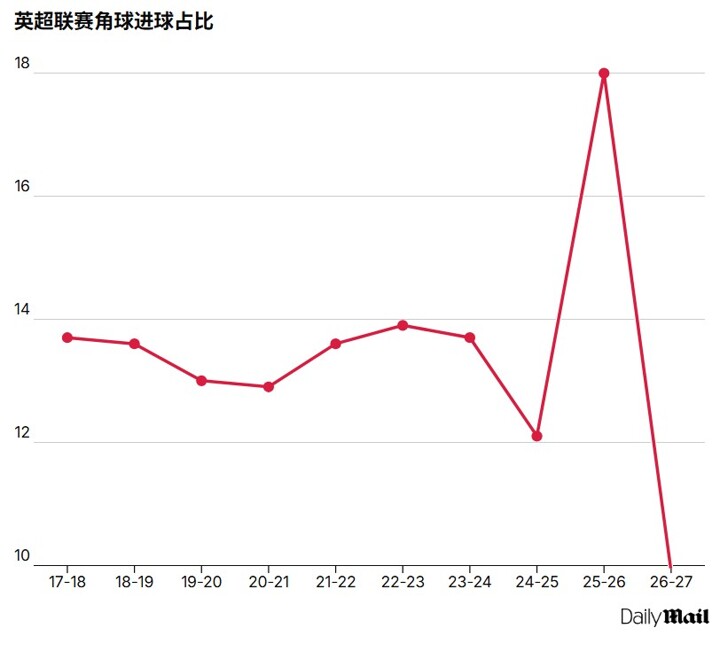
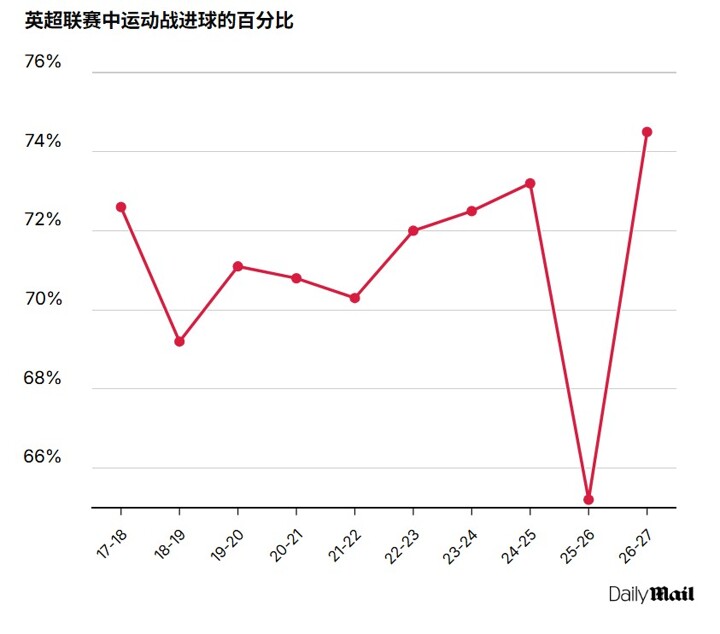
Last season, a record 18% of Premier League goals came from corners. In the eight previous seasons, the proportion of open-play goals hovered around 70% to 73%, but last season it fell to 65%. Following the implementation of the new rules, open-play goals now account for nearly three-quarters of the 141 goals scored so far this Premier League season. Corner goals represent only 9.9% of this season's total, the second lowest in Premier League history.
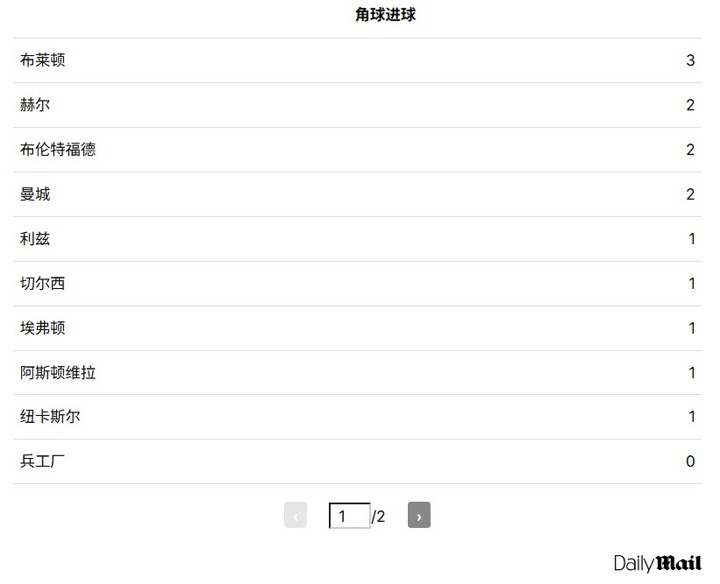
Currently, more than half of the league's teams have not scored from corners, including Arsenal, which was previously a specialist in this area, and Tottenham is no exception. Brighton, on the other hand, has reaped rewards in two ways: not only have they scored three corner goals, but they also lead the Premier League in open-play expected goals (xG).
How much of the reduction in set-piece goals can be attributed to stricter refereeing? According to Opta data, the proportion of fouls awarded within 10 seconds of a corner this season increased from 6% last season to 8.1%. Among these, fouls for holding increased from 4.1% to 5.3%. Opta defines holding as pushing an opponent, or holding and pulling an opponent's shirt.
However, none of these fouls resulted in a penalty. Last season, referees awarded a total of 21 penalties within 25 seconds of a corner. So far this season, the only penalty awarded for holding during a set piece came against Arsenal defender Ezri Ngoyo. On that occasion, after a strong long throw into the box, Ngoyo was adjudged to have fouled Sunderland player Dan Ballard, but that decision was later deemed incorrect. Minor infractions by attacking players during set pieces appear to be being clamped down on.
However, a deeper analysis of the data reveals that the impact of changes in refereeing patterns is not as significant as it appears at first glance. Expected goals from set pieces fell from 0.76 to 0.72 per game. Based on the first 50 games of the season, this change is equivalent to a reduction of roughly two goals in expected value. Expected goals from corners fell from 0.46 to 0.38 per game, equivalent to a reduction of five goals in expected value.
In fact, the number of set-piece shots has actually increased slightly. This indicates that teams are forced to deliver the ball from less favorable positions to shoot from, rather than sending it directly into the penalty box for the kind of chaos seen in the past.
So, what's wrong with Arsenal? In the last three seasons, they led the Premier League in set-piece goals. This Saturday at midday, Mikel Arteta's former "Corner King" will face Leeds United—one of the league's tallest teams on average—yet Arsenal has yet to score from a set piece this season, aside from one penalty. To break this streak, they face a far from easy opponent.
Although the proportion of corner attacks that result in fouls has increased across the Premier League, Arsenal's proportion in this regard has actually decreased. The real problem is that the Gunners are not creating as many opportunities as before. Last season, their expected goals from set pieces ranked first, and their set-piece shots ranked third. This season, both figures have dropped to ninth and fourteenth, respectively.
Even when opportunities are created, Arsenal has failed to convert them into goals. Gabriel has always been skillful at creating danger from set-piece attacks, but this season he has taken three set-piece shots without scoring. Based on the quality of chances Arsenal created from set pieces, they should have scored two to three goals.
Perhaps it is just luck returning to normal levels. Last season, Arsenal's actual set-piece goals were about five more than their expected goals.
Earlier, Arteta had already complained about the impact of another new Premier League rule: players cannot use towels to dry the ball before a throw-in. Last season, Ben White and Declan Rice frequently threw long throw-ins into the box, and Arsenal scored several goals this way. "Not being able to use the towel had a big impact," Arteta said before the season began.
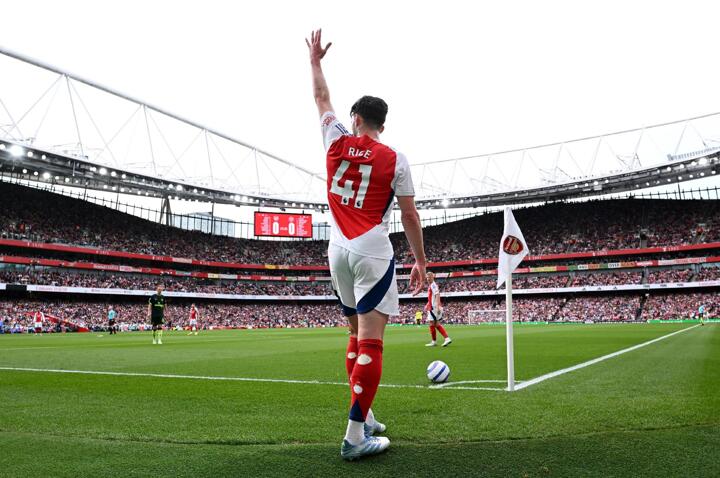
Ahead of Leeds United's visit on Saturday at midday, Arteta lamented: "You have to adapt to the rules and understand what you can and cannot do. This also opens up other spaces for us to try what we want to do. We want to score goals in different ways. Personally, I think we performed better in the first five games than last year, but we haven't scored goals. That's the reality of set pieces."
"At this time last year, we had already scored three set-piece goals, two of which didn't require much effort, and the execution we should have done wasn't done. There's an element of luck in it. I think we should have scored more goals this season, but that's not the case. If we can maintain this performance throughout the season, the final numbers will be very good."
William Saliba has missed all five league games so far. Ezri Ngoyo, who has replaced him, needs time to familiarize himself with Jover's tactical patterns and coordination. Even so, he may not be available for the match against Leeds United. Timber, like Gabriel last season, has scored three set-piece goals, including two against Leeds, but has missed three games this season through injury. Arsenal losing two important "chaos creators" at the same time is clearly not good news.
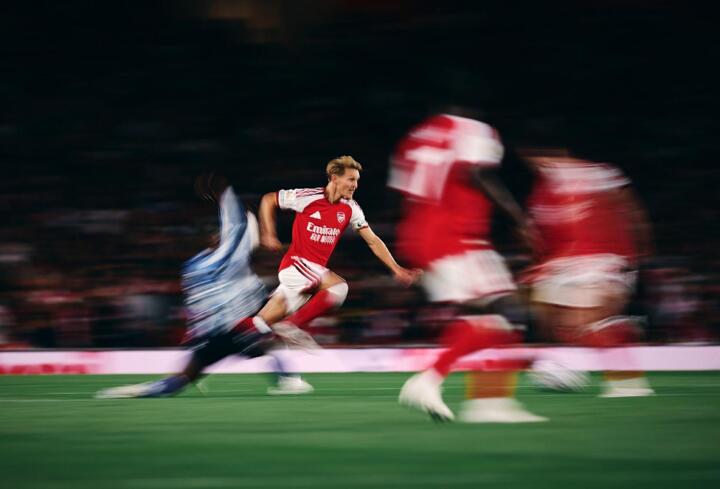
Webb's crackdown may be leading teams to change their approach. This season, teams are using tactical short corners more frequently than last season. After last season's anomaly, the proportion of open-play goals has returned to the levels of previous seasons.
Perhaps beautiful football is back after all. And this time, Arsenal can no longer rely solely on "winning ugly."
Traduzido por IA.
O site do AF já está online! Acesse notícias completas, comentários, detalhes de partidas e estatísticas no seu computador. Acesse: www.allfootballapp.com
 Arsenal
 Mikel Arteta
 Declan Rice
 Ezri Konsa
 Gabriel
 Ben White
 Saliba
 Timber
Tất cả bình luận