
According to The Daily Telegraph, Scottish football is currently going through a difficult period. Financial pressures, the continuous outflow of young talent, inconsistent player development systems, and clubs prioritizing short-term results have collectively driven Scottish football to its lowest point in recent years. The Scottish FA has begun pushing for reforms to increase playing opportunities for young local players.
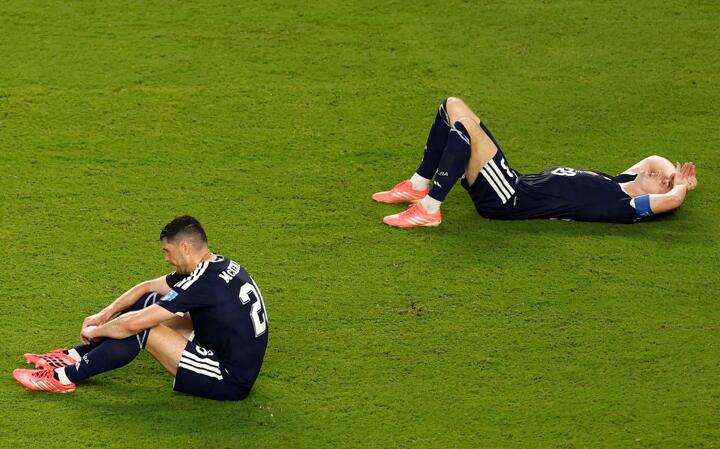
Scotland ended a 28-year World Cup absence this year, qualifying for the first time since 1998. However, after the excitement of qualification faded, they defeated only Haiti 1-0, then suffered consecutive losses to Morocco and Brazil, leading to their group-stage elimination. Scottish clubs also underperformed in European competitions, with only Celtic and Hearts reaching the league phase. Rangers, Hibernian, and Motherwell all failed to qualify.
Graeme Souness argues that this situation did not emerge suddenly but reflects a long-term accumulation of a widening financial gap between Scottish and English clubs.
Souness said: "I live on the south coast of England, and teams like Bournemouth, with only about 11,000 home fans in the Premier League, receive over £100 million from TV rights annually."
"Meanwhile, Rangers, with over 60,000 fans filling the stadium every two weeks and tens of thousands more waiting for season tickets, might receive only £4 million from TV rights."
"They simply don't have the budget to operate. Football has evolved, and they are genuinely in an unfortunate position. Signs of their decline were already visible in this year's European qualifiers. It's been a gradual process, and now it has truly reached rock bottom."
Former Celtic striker Chris Sutton believes some criticism of Scotland's World Cup performance is excessive. Scotland faced Brazil and Morocco in a highly competitive group. However, he argues the real concern is whether young Scottish players receive adequate playing time in the domestic top division.
Sutton said: "Why are all the young Scottish players moving to England, being recruited by Premier League clubs in large numbers? This is largely due to Brexit, because English clubs can no longer sign young players from the European market as they previously did."
"It's frustrating that young Scottish players are pursued by English clubs before they've even played for a Scottish club's senior team. But it's difficult to prevent because the primary factor is economic. Can you blame players and their families for making such decisions? It's a complex issue."
Sutton also compared the Scottish Premiership to the Norwegian league. He noted that reviewing Scottish Premiership starting lineups from a recent weekend, only 27% of players were Scottish, whereas the Norwegian league's local player proportion reached 64%.
In response, the Scottish FA has taken action. In September, the Scottish FA convened clubs at St Andrews and proposed new incentives and restrictions to create more playing opportunities for young Scottish players.
The first proposal for cup competitions requires clubs to field at least two Scottish players under 21 in the starting lineup, with at least one remaining on the field throughout the match.
The second proposal for the league suggests that over the entire season, players meeting the U21 requirement should average 60 minutes of playing time per match. If approved by Scottish Professional Football League clubs, these measures are intended for implementation next season.
Scotland previously introduced a new loan system for young players, allowing clubs to send youngsters to lower leagues while continuing to train and play with their parent club without using recall clauses. The Scottish FA claims this increased playing opportunities for local players by nearly 50%, though growth has been concentrated in Scottish League Two and the KDM Evolution Trophy rather than the top division.
Former Scotland international Alan Hutton also emphasizes youth development as a pressing priority. He noted that after Brexit in 2020, English clubs could no longer sign overseas youth academy players before age 18, yet young Scottish players can move to England at 16.
Hutton's data shows that between 2012 and 2020, only 35 Scottish youth players joined English clubs; after 2020, this number exceeded 80 and continues rising rapidly.
However, The Daily Telegraph notes that even if rules keep young players in Scotland, improving player quality is essential. Moreover, wealthier English and European clubs will continue pursuing genuinely talented young players.
Scottish clubs face intense pressure to deliver results. Sutton said: "Theoretically, major clubs like Celtic, Rangers, Hearts, and Hibernian should give more young Scottish players opportunities, but it's not straightforward because they face pressure to win. If you manage Celtic or Rangers and fail to win titles, supporters become very angry. The pressure is immense."
Sutton cited examples where Dundee United fielded a starting lineup without any Scottish players this season, and in St Mirren's 3-3 draw with Motherwell, only four Scottish players combined started for both teams.
He raises a fundamental question: "Is it really Scottish clubs' responsibility to develop players for the national team? The clubs themselves bear the risk."
This is the context 39-year-old Sébastien Pocognoli faces as Scotland's new manager. Pocognoli previously played for West Brom and Brighton, with coaching experience at Union Saint-Gilloise in Belgium and Monaco.
His first match managing Scotland ended in a 0-0 draw against Slovenia. The team started poorly, gradually improved, but Robbie Ure, Oli McBurnie, and Kieron Bowie all squandered good second-half scoring chances.
Hamish Husband of the Association of Tartan Army Clubs, a Scottish supporter organization, believes Scottish football's problems have existed for decades.
He said: "I think people underestimate what Steve Clarke achieved. We qualified for three consecutive major tournaments through sheer determination. We scored three brilliant goals against Denmark that night to reach the World Cup, but perhaps that masked underlying problems."
"In these three tournaments, we won only one match—against Haiti—and drew two others. I'm old enough to remember the glory days of the 1960s and 70s. Back then, we had players capable of competing for top English clubs or Celtic and Rangers."
"That's no longer the case, and this situation has persisted for years. In 1967, Celtic won the European Cup; Rangers lost to Bayern Munich in extra time in the Cup Winners' Cup; Kilmarnock reached the Inter-Cities Fairs Cup semifinals. Look at us now."
Husband believes Scottish football's historical failure to prioritize youth development contributed to the current talent shortage.
He said: "Looking back at the Craig Brown and Andy Roxburgh eras, the latter was an excellent coach. They told us what we needed to do: focus on developing young players, training them on small pitches, completing thousands of passes."
"But we didn't listen, and Walter Smith later acknowledged that. We assumed players like Kenny Dalglish and Graeme Souness would keep emerging. We fell behind in coach development and never recovered."
In Husband's view, even a quota system for local players would hardly immediately resolve the tension between quality and results. For short-term success, Scottish Premiership clubs may continue signing experienced foreign players, leaving Scotland's new manager with a limited pool of top-level options.
He said: "He doesn't have a large pool of elite players to choose from. He's done considerable preparation in a short time and will give young players opportunities. Berti Vogts attempted something similar starting in 2002, but it ultimately failed. Now some players compete in the Championship, where the standard may exceed the Scottish Premiership. We'll see what happens next."
AF's PC site is now live! Browse full news, comments, match details and stats on your computer. Visit: www.allfootballapp.com
 苏格兰
苏格兰
 赫顿
赫顿
 克里斯-萨顿
 索内斯
索内斯
全部评论