
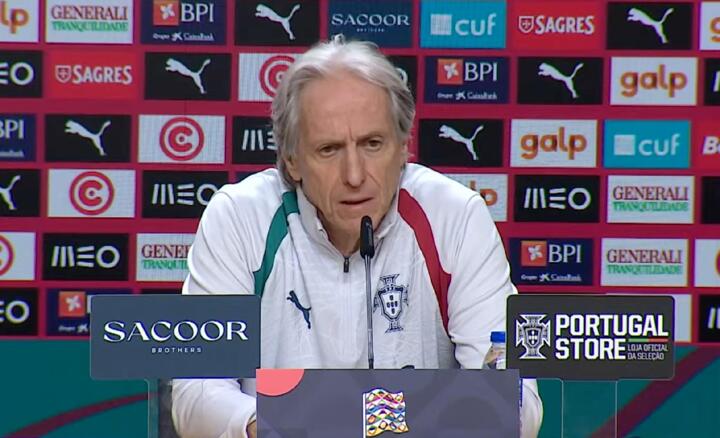
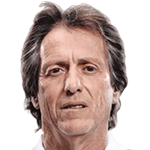
Portugal will host Norway in the fourth round of the UEFA Nations League. Ahead of the match, head coach Jorge Jesus attended a press conference and discussed topics including Ronaldo, player fitness, and preparation for the Norway match. This is part two of the press conference.
First part of the press conference
Reporter A Bola: Of the three opponents you've faced so far, Norway is the team that best handles Portugal's pressing, both with Martin Ødegaard dropping into midfield to receive the ball and with centre-backs carrying the ball forward. I'd like to ask: what adjustments are you planning for your pressing against Norway's build-up from the back? Also, how important is it to have midfielders with sufficient physical capabilities to match Norway's midfield movement and rotations?
Yes, we have advantages in some aspects and disadvantages in others, depending on different phases of the game. We're at a disadvantage in terms of physical contact and individual ball-winning ability. Of the players they're fielding, five of them are between 1.88 and 1.90 metres tall.
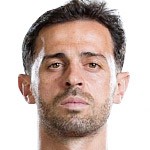
But we also have advantages. Our players aren't as tall, but they're more technically skilled and faster. So that creates a balance, doesn't it? We build our advantage through these qualities as well. Our midfielders—Bernardo Silva, Vitinha, and Neves—are all around 1.70 to 1.75 metres. But when the ball is at their feet, you'll have a very hard time stopping them.
So we need to follow this logic, exploit our players' characteristics, and bring our strengths into the game, just as we did against Denmark. Of course, tomorrow the Norway coach, like me, will have a deeper understanding of Portugal. Previously, facing a new coach, he didn't know the coach's ideas. Now he's seen our first match and watched the video, so it may be more difficult this time.
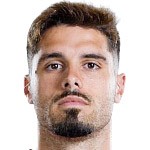
Reporter TSF: Looking from midfield forward, the only player who has consistently been a starter is Pedro Neto. I'd like to ask: aside from tactical factors, from a fitness perspective, is he in better condition than other players, which is why he's always started so far?
Yes, what he's shown in these three matches indicates that. Also, we're missing Conceição, aren't we? So that's also given him some advantages in terms of playing time. But tomorrow will be the fourth match, and his body is starting to send warning signals. We'll see—let's see how today's training goes.
Reporter Mais Futebol: You spoke about taking risks late in the Denmark match. Bringing that up for tomorrow's match, Portugal is currently in a good position to qualify and play at home. Will the team be more cautious in assessing risks when the score is level or when you're ahead? In any case, Norway is probably the team that's troubled Portugal most, with more expected goals, shots, and chances. Of course, the two teams have already played once, and now they understand each other better. Norway also has players like Nusa, Haaland, and Sørloth from midfield forward.
Indeed, I agree with everything you've said, including those statistics. Post-match statistics are facts. Norway is a very strong team. About five years ago... I also told my players that five, ten years ago, the players we saw in Norway were tall, blonde, and physically strong, but not very technically skilled.
Now it's different. They're still tall and strong, and at the same time, they've improved technically. So we respect these players. But we won't change anything. Neither I nor my players will change our mindset. We'll fight to win as always, and we'll take risks. My defensive philosophy inherently involves the team taking risks, and that will be the same tomorrow.
Reporter TNT Brasil: I'll also ask in Portuguese, but with a slightly different accent. Coach, Portugal did what Brazil couldn't do against Norway—you won, right? This victory caused quite a stir in Brazil. I don't know if you've used Brazil's match against Norway in the World Cup as a reference to prepare for these two matches, or if you had the chance to watch that match back then. What did Brazil do in that match to beat Norway that you need to avoid? What's the secret to winning?
I can only speak about what Portugal should do. As for what Brazil didn't do or what they should have done, Ancelotti certainly has a different perspective now, since that match is in the past. The strategy we developed after analysis is to limit Norway's performance in certain aspects of the game. I won't say specifically which ones, but our strategy is to restrict at least three or four of their strengths.
This refers to their performance with the ball, which is Norway's strong point. We did that, to a certain extent, and that's why we won.
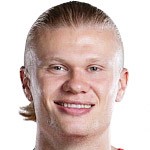
Reporter Norway: Like Portugal, Norway also has a star player who shines brighter than the rest of the team. Portugal has Ronaldo, and Norway has Haaland. What's the challenge of coaching a team with such a player, whose status is clearly higher than his teammates? Can you speak about that?
Spokesman: We're not going to answer questions about Ronaldo, understood?
Reporter: This isn't a question about Ronaldo.
Spokesman: I've already said that. You can ask a different question. Would you like to? A different question about the match?
Reporter: Okay. Can you speak about how you plan to contain him? For you, is it more important to limit Haaland himself, or to cut off the supply to him by limiting Ødegaard and other players feeding him?
I understand. That's a very interesting question. Which is harder, which is more important? Limiting Haaland when he gets the ball, or intercepting the ball before it reaches him? That's also what a coach must consider. We want to do both.
We want to limit Norway's overall attack, so the ball can't easily be played to Haaland. Then, when the ball does reach Haaland, our centre-backs or the player facing him one-on-one must be as strong as he is in the challenge.
Reporter Norway: In the closing stages of the match in Oslo, Bernardo Silva made a late challenge on Martin Ødegaard. After the match, Ødegaard and the Norwegian players reacted very strongly to it. Bernardo Silva himself said: "That's football." What's your take? Is that part of football? How tense do you think the match will get tomorrow in Porto?
Well. What exactly happened between Bernardo Silva and that Norwegian player? What did you see that we Portuguese didn't?
I don't understand—I didn't see anything unusual there at that time. And Ødegaard... I think you mean Ødegaard, right? He also played in the next match against Wales. So that means there's no issue.
Reporter SNTV: Coach, you always emphasize that all focus should be on tomorrow's match against Norway. But I'd like to know: with so much happening, how difficult is it for you to stay focused on the match? Have the past few days since the end of the match against Norway in Oslo been one of the most difficult periods in your long coaching career?
Spokesman: We're back to the same topic, aren't we?
Jesus: But this is Brazilian media. I've been treated very well in Brazil. For a coach, the hardest thing is always solving problems, especially when you don't win, finding a way to keep the team close to victory from match to match.
I can say that the win in Denmark made me very proud as a coach, because my players did those things. But I can also say that at the end of the match, I was very happy, though I could have been even happier.
Diterjemahkan oleh AI.
Situs web AF kini hadir! Lihat berita lengkap, komentar, detail pertandingan, dan statistik di komputer Anda. Kunjungi: www.allfootballapp.com
 切尔西
切尔西
 曼城
曼城
 挪威
挪威
 葡萄牙
葡萄牙
 皇家马德里
皇家马德里
 利雅得胜利
利雅得胜利
 C罗
C罗
 若热-热苏斯
 伯纳多-席尔瓦
 哈兰德
哈兰德
 佩德罗-内托
全部评论