
“We have gone backwards,” David Wagner tells Sky Sports. He is reflecting on the state of German football from his position as RB Leipzig’s academy manager. “People now realise we have to change something.” Wagner is one of those trying to help change it.
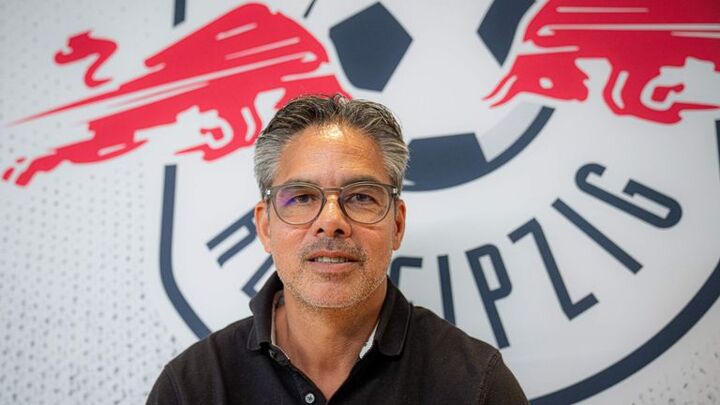
A former Premier League manager with Huddersfield Town, his current role sees his return to his roots. "I made my first steps as a youth coach at Hoffenheim." But after over a decade out of academy football, he is shocked by what he has discovered.
"I do not think a month has passed since I arrived here in Leipzig where I did not think, 'Wow, what a stupid rule that is we have here in Germany.' The rules do not fit with producing and developing talent," Wagner explains. And he has a long list of examples.
"If a 15-year-old kid gets a second yellow he is suspended for a game." Wagner's argument is that this hampers development. "If he misses a game, how can he improve if he is not allowed to play football? This is a rule for senior football. It makes no sense."
He adds: "We have a rule here where you are restricted from playing for the under-17s if you have played 50 per cent of the games for the under-16s. I do not really know why, but this is a rule in Germany. We have so many rules that just make absolutely no sense.
"Kids who are 14 or 15, their teams can get relegated. This obviously means that their coach is not focused on improving players but avoiding relegation. Their training regime throughout the week is all about getting a result. These are not rules for youth football.
"But we have hundreds of rules like this where you think what in hell are you doing here in German youth football. These are rules that were made 40 or 50 years ago but nobody sat down and thought about it. Hopefully we will now be able to change things quickly."
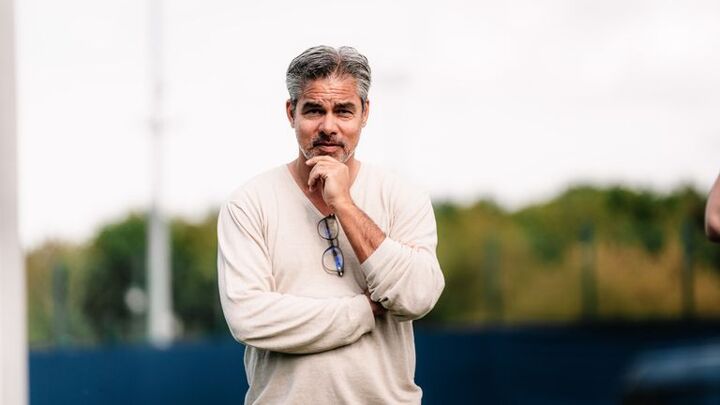
This has become a hot topic in Germany following a poor World Cup and with Jurgen Klopp, Wagner's great friend, losing to Greece in his second game in charge of the national team. "I do think it is a reflection of what is going on in our youth academies."
Wagner's argument is that Germany "did not take the right steps" over the past two decades and believes there are lessons to learn from elsewhere. Perhaps surprisingly, he points to his time in England as evidence that there is another way to develop talent.
"I was in England for nearly six years and I realised that you guys in England have done a lot of things right in the last 20 years. I do think you came to Germany and copied a lot of the things that we had in place at our academies, what the academies should look like."
The introduction of the elite player performance plan in England picked out some of the good bits and stripped out the bad bits. "German hardware with different software" as Wagner puts it. He contrasts, for example, the game programmes in the two countries.
"We do not have enough games. Our under-19 team had 30 games over the whole of last season. In England, a kid of that age would have 50 competitive games a year. Over the course of five years, this means a kid from England can play 100 games more."
He adds: "You can predict which kid probably is better educated after playing 100 more competitive games." But how to solve it? Wagner points to some progress. The federation are adding more tournaments. Leipzig are creating ones of their own. The RBL Cup has featured Liverpool, Atletico Madrid and Porto participating.
Given that he has the ear of the national-team coach, that might help too. Can he have a word with his old pal Klopp? "I will have to speak to him to change all the stupid rules," says Wagner, laughing. "Fingers crossed." In truth, he is implementing changes himself.
"I am trying to change the whole culture," he explains. Steve Weaver, an English coach, has been brought in by Wagner. "He has already brought some very good ideas. With his support, we can change the culture and the structure of our academy in the future."
While many of Wagner's peers in Germany will agree with his assessment of the grassroots game in the country, his comments are likely to raise some eyebrows given Leipzig's own challenges in developing top talent - despite their first-class facilities.
"We put ourselves on the map by signing super young first-team players, improving them and developing them into Premier League players, World Cup winners, whatever. But we have not yet found that academy player who grew up here. That is still the task."
Indeed, it is why Wagner is in the job. "This is exactly why I was hired." Leipzig have a model that works, whether it is selling Yan Diomande for a record fee or developing Dani Olmo, but producing a player from Saxony who can capture the imagination is the goal.

"It is a different scenario if someone makes a debut and plays two or three games for a few minutes. That is nice for the academy. But what we miss is someone playing 50 games, 100 games for our club, who grew up in our academy. This is the main target.
"The first team developed super quick. We are trying to close the gap. The academy is still young. But we obviously must do better. This is what an academy has to be judged on. Not on team success, but on how much value you can create through individuals."
Wagner is engaging company, full of forthright opinions but always approaching it with an energy that carries people with him. He is out to make a difference. "It is a great aim to create something that nobody has done before. The world is for the brave," he insists.
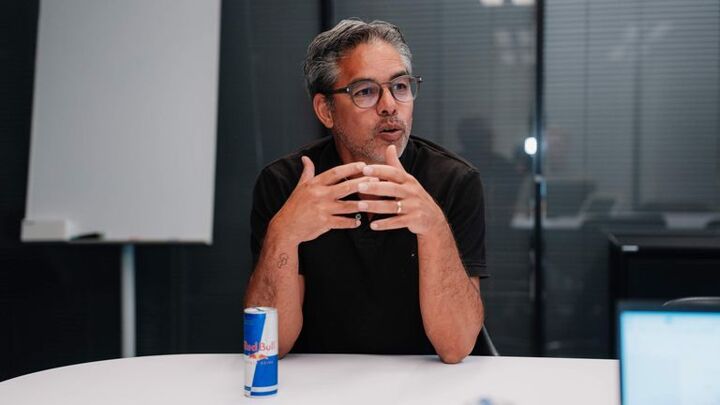
Does that responsibility bring pressure? Not at all, he insists. This is a man who has managed in the Premier League, someone once tasked with turning German giants Schalke around. "It is super stressful. But it is not pressure. This is the big difference."
He explains: "As a manager, you get the results each weekend. Here, it can take months. But there are similarities, especially to England where you are more of a manager than a head coach. You are still dealing with people, setting standards, implementing culture."
Does he miss it, the life at the sharp end? "Sometimes I am in the stands thinking what I would have done, maybe." But with so many ideas, so many plans for how to improve Leipzig's academy and German youth football as a whole, Wagner is in no rush to return.
"I do not have time to miss it. The truth is that I have so many things to do. It is not about me. It is about the academy. This means so much to everyone. The only thing I know is that we can do it. If there is a setback, we will keep going. We have a lot of work to do."
 RB莱比锡
RB莱比锡
 克洛普
克洛普
全部评论