
According to Adam Crafton of The Athletic, the controversy surrounding Manchester City has transcended football following an independent Premier League commission's decision that the club repeatedly violated financial rules over the past decade. The close economic and political ties between Manchester City and Abu Dhabi, United Arab Emirates, have placed British Prime Minister Andy Burnham in a complex position: on one hand, Manchester City's investors have brought significant capital and urban development opportunities to Manchester; on the other hand, the British government must uphold the integrity of Premier League rules to prevent the perception that major foreign investment can influence decisions by football regulatory bodies.
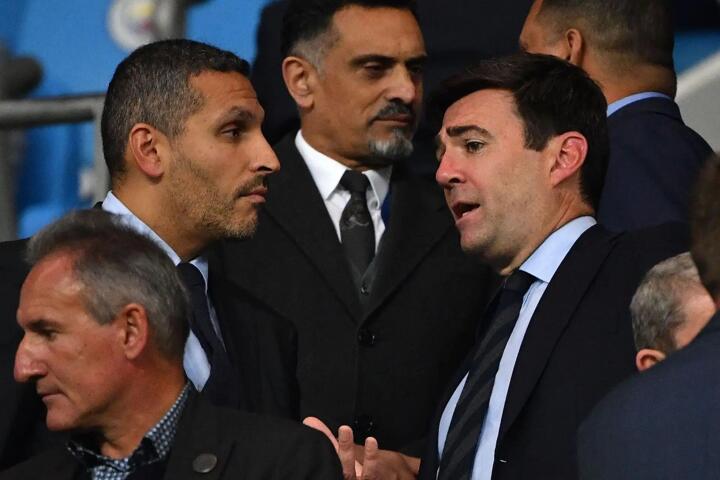
Manchester City's relationship with Abu Dhabi goes beyond football
In 2008, Sheikh Mansour acquired Manchester City. In the early days of the acquisition, there were many questions about the new owner and the capital behind him. Manchester City chairman Khaldoon Al Mubarak was interviewed by The Guardian, discussing how he wanted the club to be perceived.
Al Mubarak said at the time: "In a way, the club has almost become a personification of Abu Dhabi and of the values that Sheikh Mansour represents."
"Those values include loyalty, commitment, discipline, long-term thinking, respect and appreciation for history. We know that the way we conduct this project sends an important message about who we are to the world."
He continued: "This is showing the world the true essence of Abu Dhabi and what Abu Dhabi truly represents."
Today, Manchester City faces a drastically different situation. Last week's decision concluded that the club violated financial rules over the past decade. If, as Al Mubarak suggested at the time, Manchester City is seen as a personification of Abu Dhabi's values, then the Premier League's decision on Manchester City, in a sense, also amounts to a judgment on Abu Dhabi.
For a long time, Manchester City has attempted to emphasize to the media that the club is not directly owned by the UAE state.
Legally speaking, this statement is accurate.
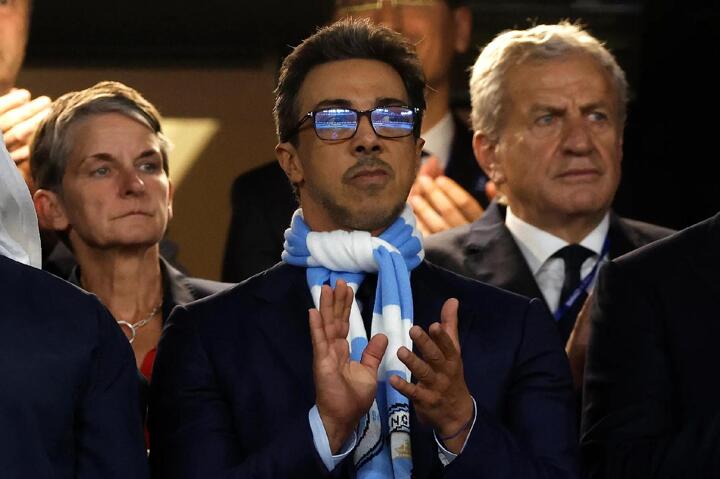
Although Sheikh Mansour bin Zayed Al Nahyan is a member of the UAE royal family, serving as Vice Prime Minister and Vice President of the UAE and half-brother to the UAE President and Ruler Mohammed bin Zayed Al Nahyan (commonly referred to as MBZ), from a capital structure perspective, Mansour holds a majority stake in Manchester City through Newton Investment and Development.
Although this company may be registered in Abu Dhabi, it is legally and entirely Mansour's private property.
However, both through royal connections and in the court of public opinion, Manchester City and Abu Dhabi are nearly inseparable.
Manchester City's kit, stadium and academy sponsors include Etihad Airways, an Emirates airline whose president is appointed directly by the UAE President, MBZ.
Meanwhile, Manchester City chairman Khaldoon Al Mubarak also serves as CEO of Mubadala, Abu Dhabi's sovereign wealth fund, which manages assets worth $385 billion (approximately £291 billion).
Furthermore, Al Mubarak is chairman of the board of Abu Dhabi Commercial Bank, a board member of the Abu Dhabi National Oil Company, and head of the Executive Affairs Authority, which advises the UAE President on policy.
Other Manchester City sponsors include the UAE telecommunications company Etisalat, the tourism promotion brand Experience Abu Dhabi, and the real estate company Aldar Properties, whose chairman is Al Mubarak's brother, Mohammed Khalifa.
During Manchester City's years of continued success, Abu Dhabi has also been able to share the glory and influence the club created on the pitch. However, when Manchester City faces a serious crisis, the club's actions can also bring negative consequences for the Gulf state.
This also presents a thorny problem for British Prime Minister Andy Burnham.
Burnham's public support for Manchester City's owners creates political controversy
In an attempt to balance various interests, Burnham was asked a delicate question: how would he view the outcome if Manchester City's current owners were forced to leave English football?
In an interview with the BBC, Burnham stated: "I would be really concerned if we lost them. They have been an important partner in building modern Manchester and, of course, have also helped Manchester City develop into the influential global football club it is today."
"Actually, I'm very grateful to City Football Group and the entire ownership team behind it, because their investment wasn't just in building the Etihad Stadium and its surrounding campus, but also in Manchester itself."
Reports indicate that Burnham also emphasized he should not interfere in the relevant process.
However, the question remains: even if he did not directly intervene in the penalty decision, did his public expression of such a position not place greater pressure on those responsible for determining Manchester City's punishment?
On Thursday, the UK government had to clarify Burnham's remarks twice.
A spokesperson for the Prime Minister initially stated: "As the Prime Minister has made clear, the preliminary decision is very serious, and there should be no perception that anyone is above the rules... If the violations are confirmed, those responsible must face appropriate consequences."
However, social media users quickly pointed out that the Premier League had already found Manchester City in violation.
Subsequently, Burnham's spokesperson revised the statement, adjusting the wording to: "In any case, if the violations are confirmed, those responsible must face appropriate consequences."
It should be noted that Manchester City still denies any violations and has lodged an appeal.
For Burnham, this incident appears rather embarrassing and highlights the dilemma he and the UK government face.
What is particularly striking is that after Premier League CEO Richard Masters described Manchester City's violations over the past decade as "systemic," Burnham's initial reaction was not to align with those shocked by the decision, but rather to express understanding for a club ownership group that has consistently and heavily invested in the UK.
The challenges Burnham faces involve both local interests and international relations.
Traduzido por IA.
O site do AF já está online! Acesse notícias completas, comentários, detalhes de partidas e estatísticas no seu computador. Acesse: www.allfootballapp.com
 曼城
曼城
全部评论