
Cristiano Ronaldo released a lengthy statement explaining his departure from the national team training camp. Following this, The Mirror journalist Harry Brent wrote an article calling Cristiano Ronaldo a "narcissist." In response, Ronaldo's friend Rio Ferdinand fired back.

The Mirror journalist Harry Brent published an article criticizing Cristiano Ronaldo with the headline: "Narcissist Cristiano Ronaldo should be dropped by Portugal—over 2,000 words of self-pitying rants."
In the article, Brent wrote: "Cristiano Ronaldo should be removed from the Portugal national team and never allowed to return. We will not tolerate his selfishness and narcissism."
In response, Ronaldo's friend Rio Ferdinand retweeted the article and fired back, saying: "Narcissist? A man who has given so much to football and his country deserves better language than this. Wake up, Harry Brent."
In the comments section on Ferdinand's social media, the journalist responded: "Cristiano Ronaldo is a narcissist by the book. You defended him like a book where you polished Solskjaer's shoes during difficult times. Would you like to come to my next press conference so I can explain where I'm wrong?"
Below is the full article by journalist Harry Brent.
When the power of any autocrat begins to crumble, delusion often takes over completely. For Cristiano Ronaldo, that moment arrived with a 2,000-word 'statement' that reads like the feverish dream of a dethroned king—calling on his subordinates to kneel and worship his past glories.
Missing the final act of this endless, exhausting 'Cristiano Ronaldo saga,' here's what happened: Last month, as Portugal beat Norway 2-1, the 41-year-old Ronaldo did not receive the gracious welcome he felt he deserved. So he folded up his personalized jersey, stuffed it in his luggage, and flew home on his private jet in a fury.
He didn't applaud the crowd or congratulate his sweating teammates on their victory. He walked into the tunnel with a scowl and stormed onto his private plane. For the next week, he meticulously drafted a list of demands for Portuguese coach Jorge Jesus on how to praise him at his next press conference.
When Jesus refused to treat him like a puppet, Ronaldo's fragile yet carefully maintained ego couldn't take it. He claimed he felt "betrayed"—as if a routine coaching decision had shattered some sacred, unbreakable covenant between god and man.
He complained that Jesus broke a promise to give him 30 minutes of playing time. Apparently the national team is a classroom where every student deserves a turn. This 'Ten Commandments' style list even demanded that the coach compare him to Pelé and Diego Maradona. Don't forget that.
This uncontrollable, manufactured sense of entitlement only emerges when aging Roman emperors succumbed to lead poisoning and went mad. This is a rare, decadent display of narcissism—so obvious that even the most obtuse opera director would notice.
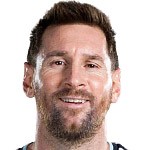
What makes this pathetic drama even sadder is the timing. Ronaldo didn't choose just any day to release this statement. He deliberately chose the day Lionel Messi was taking his final, honorable bow for Argentina.
Argentine fans gave Messi a farewell befitting his talent and character. In Buenos Aires, Messi was elevated like a piece of a benevolent, humble god. Argentina beat Benin 3-0; Messi scored, assisted twice, and departed with dignity, moving an entire nation. Meanwhile, Ronaldo paced the marble halls of his mansion, seething with nuclear-level resentment before releasing a statement aimed at forcing the world's cameras to shift from his former rival back to him.
This insecurity has reached astronomical levels. It's like an angry child who throws a tantrum at someone else's birthday party and destroys the cake to make everyone look at him instead.
Despite winning almost everything, earning hundreds of millions, and etching his name into football history, Ronaldo remains the world's most perpetually unsatisfied athlete. He cannot accept one simple, unavoidable truth: he is not the best anymore, and age will eventually catch everyone.
He couldn't accept it when Real Madrid stopped treating him like a god. He couldn't accept it when Manchester United manager Erik ten Hag asked him to run a bit more on the pitch. Now he views an unexpected 90 minutes on the bench for Portugal as a national security crisis warranting UN intervention.
For the past five years, Ronaldo has been a stone around Portugal's neck. His once-dangerous vampiric power has dimmed in recent years, but he stubbornly refuses to step aside.
When teammates like Gonçalo Ramos started playing and scoring, Ronaldo didn't celebrate the team's success—he sat on the sidelines visibly furious that the football world continued without the ball at his feet.
The most complete act of this pathetic saga came at the Qatar World Cup. He began a global 'campaign' demanding that Bruno Fernandes' goal against Uruguay be credited to him because his hair allegedly touched the ball before it entered the net.
If Portugal had lost 5-0 and Ronaldo hadn't scored, it would have been like a car breaking down on London's North Circular Road.
This—despite numerous mitigating circumstances—is neither the goal of a top player nor even comparable sporting passion. It is pure, toxic narcissism.
Everyone now sees this mask. Even his most loyal supporters—Piers Morgan, as the exception proving the rule, still scrambling to defend this latest 'royal tantrum'—can find no justification anymore.
Deep exhaustion has engulfed the watching world. Portuguese fans are completely drained, suffering from a long-term, permanent, incurable 'CR7 fatigue.'
Some believe Ronaldo deserves the grand, tearful farewell that Messi received in Buenos Aires—soft memories, synchronized applause, and emotional tributes fading into a golden sunset.
But truthfully, he deserves none of it.
A player who views his national team jersey as merely a personal marketing tool deserves no dignified farewell.
A player who abandoned his teammates during international matches over wounded pride deserves no standing ovation.
Ronaldo has repeatedly proven that the name on his back means far less to him than the name on his chest.
Portugal should finally stand firm, change the locks on the dressing room, and make the difficult decision that Ronaldo himself could never make—one so painful it would wound his enormous ego.
Drop him.
Remove his name from the national team roster and close the door permanently.
No farewell ceremony needed.
No substitute appearance in the 89th minute.
No mobile phone screens flickering with tributes in a darkened stadium.
Ronaldo once desperately wanted to write his own ending.
Instead, he should exit in shame—the final chapter of his national team career remembering him not as a hero, but as the insecure, unstable diva who could never sit on the bench.
The 'Cristiano Ronaldo circus' is officially over.
Strike the tent.
Kill the sound system.
Turn off the lights.
AI ဘာသာပြန်ဆိုသည်။
AF ၏ PC ဝဘ်ဆိုက် စတင်ထွက်ရှိပြီ! သင့်ကွန်ပျူတာမှ သတင်းများ၊ မှတ်ချက်များ၊ ပွဲစဉ်အသေးစိတ်နှင့် စာရင်းဇယားများကြည့်ရှုနိုင်သည်။ ဝင်ရောက်ရန်: www.allfootballapp.com
 阿根廷
阿根廷
 葡萄牙
葡萄牙
 利雅得胜利
利雅得胜利
 梅西
梅西
 费迪南德
费迪南德
 C罗
C罗
 若热-热苏斯
 迈阿密国际
迈阿密国际
全部评论