
Freiburg right-back Philipp Treu was interviewed by the official Bundesliga website, where he discussed the team's perfect start to the new season, Freiburg's team culture, his personal growth, and the German national team. At the time of the interview, Klopp had not yet announced the latest German national squad, but Treu was subsequently called up to the senior German national team for the first time.
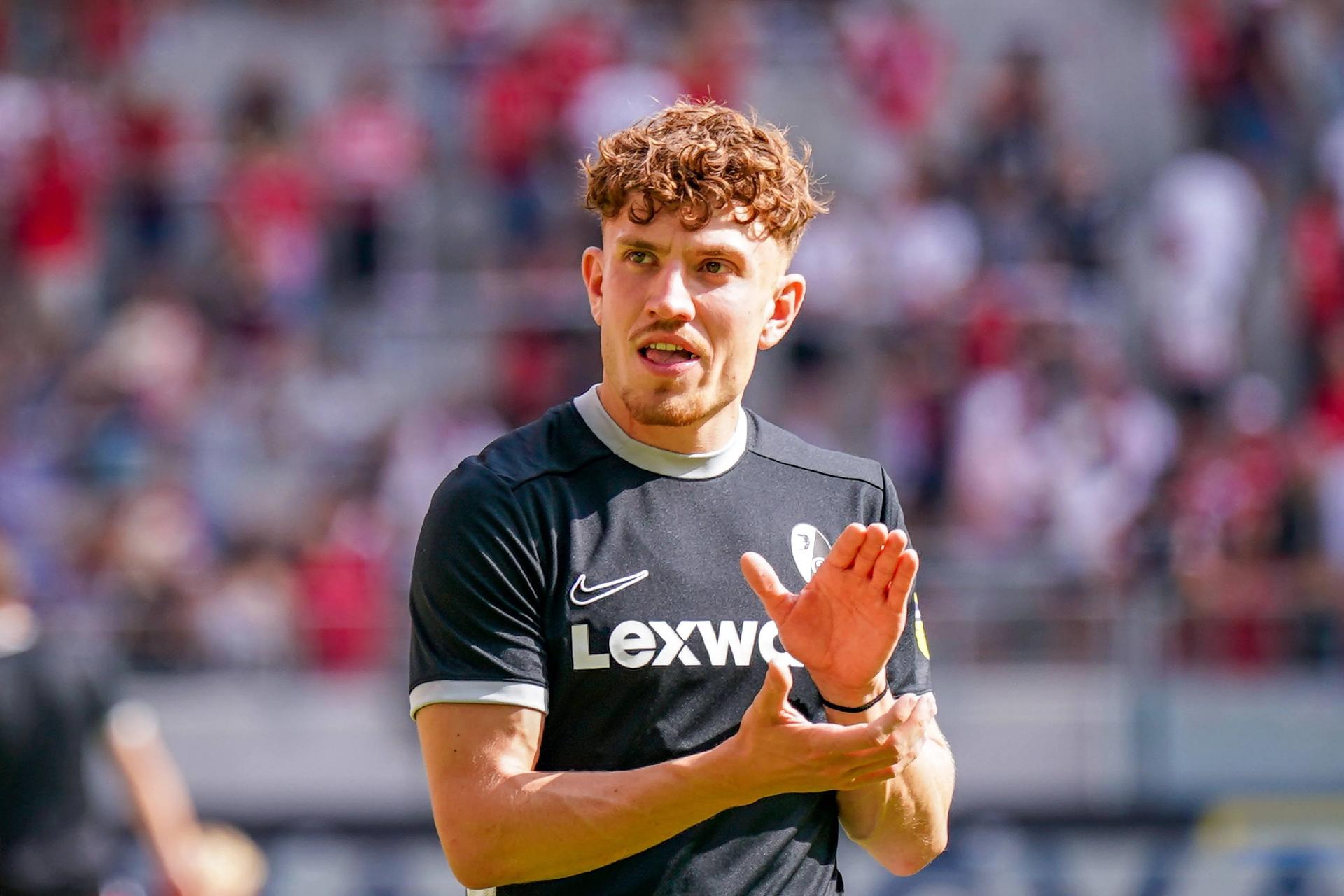
Freiburg has played 6 matches so far this season, achieving a perfect record of 6 wins in the Bundesliga, DFB-Pokal, and UEFA Europa Conference League. You are currently at the top of the Bundesliga table, having scored 10 goals and conceded only 1. How do you view the team's record-breaking start?
It's been a very positive start to the season for all of us, but that's thanks to the effort we put in during pre-season preparation. The experience of losing the Europa League final at the end of last season is still fresh in our minds, so we hope to do better this season.
I think we've continued the performance from the end of last season, and even improved upon it. Starting the first 6 games this way is certainly great, but we want to keep it going.
These statistics are very impressive, but now for a "but." Your previous opponents were Motherwell twice, a mid-table team in the Scottish league; Düsseldorf, a mid-table team in the 3. Liga; Werder Bremen had a poor start; promoted team Paderborn has not scored a goal yet; and Mönchengladbach is in deep crisis. This means that, so far, you haven't really encountered any truly strong opponents. Do you take this into account when evaluating the team's current performance?
I think all of us can view this correctly, and Freiburg has always been a club that approaches everything with humility. After the first game, sporting director Klemens Hartenbach came into the changing room and told us that we still needed to get 37 points, and that's our attitude.
First, we want to get 40 points. But now, our next task is a difficult one against Frankfurt. Playing away against Frankfurt is never easy, and they just played a very good game against Mainz, so we need to carry this momentum into that match.
Another impressive aspect of your team is the way you handle squad situations. The excellent Manzambi has left, and Engelhardt immediately stepped in to fill that void. Club record appearance holder Günter, and club top scorer V. Grifo, now play relatively minor roles in terms of playing time, while you and Ritsu Doan have done well to compensate for this. Firstly, how did you manage to assemble such a squad? Secondly, if it were any other club, veterans like Günter and V. Grifo almost constantly sitting on the bench would likely cause an uproar, but here it's very calm. How do you achieve this?
I think this is precisely what has made Freiburg different in recent years, and it's part of Freiburg's DNA. As players, when a teammate is performing well, we can be happy for him, but on the training ground, the competition between us is still very intense.
Freiburg has also developed to the point where there are two excellent players for every position. You can feel that all of us are pushing each other to constantly reach our limits. We always have to perform at our best, and I think over time, this is what allows a team to continuously improve.
As for the experienced players, they aren't unhappy about it; in fact, quite the opposite. Even if Günter and V. Grifo aren't satisfied with their situation, they still give their all in training, because they can see the bigger picture.
It's really special here, and it's something we all share. It feels great to see everything working so well right now.
To what extent does Freiburg's very special football environment, and its calm and unhurried atmosphere, help you perform at your best?
Compared to when I was in Hamburg, it's definitely completely different. When Hamburg held open training sessions, there would be seven camera crews present, while in Freiburg, you're happy if anyone comes to watch training. We can work quietly here, moving forward step by step, and slowly but steadily winning games.
It's really interesting now. When there isn't as much media attention, players don't have to think too much about it; they just have to do their job. You can perform, focus on yourself, and put everything else aside for a while. This is certainly a very good aspect of Freiburg.
You consistently perform well at right-back every week, a position that has been a topic of discussion in German football for years. In this context, what would it mean to you to be called up by the new German national team coach, Klopp?
I would certainly be very happy, because it's a dream I've had since childhood. I used to go to public viewing events with my family to watch national team matches, so let's see what happens on Thursday.
Have you already been in contact with Klopp?
Yes, we have been in contact. It's an honor for me to receive a call from the national team coach. We had a very pleasant chat and took the opportunity to get to know each other.
Among German players, besides Philipp Lahm, who else could be a role model at right-back?
Joshua Kimmich is a role model in many ways. What I find incredible is that he can play different positions, and no matter the position, he knows exactly what he needs to do. I often observe Kimmich, but of course, when I was younger, Philipp Lahm was also my role model. I wasn't a player who started as a striker and then switched to other positions; I've played right-back since I was quite young, so Philipp Lahm has always been a player I looked up to.
Among right-backs in international football, which players inspire you?
To be honest, in international football right now, I don't really have any true role models. I used to really enjoy watching Dani Alves play because he was a very passionate player. However, I don't think I can call him a role model anymore because he's been to prison, so I'm a bit more cautious in that regard. But in the past, I really liked watching him play.
What role have coaches played in your development? Especially Christian Streich and Schuster, as you have worked with both. Can you name one thing about each of them that has helped you improve or is still helping you grow?
I think what's very interesting about Freiburg is that the foundation and principles are cultivated from the youth academy stage. All coaches in the youth system understand the first team's football philosophy, so Christian Streich has undoubtedly built something remarkable here.
It's almost like a continuous thread, and now Schuster has taken it over. So if you grow up here from the youth academy, you can carry these principles with you all the way. These players know exactly what they need to do. And what Schuster is doing now is creating an environment where players can perform incredibly well.
His approach is relatively relaxed, but you can also see that he used to be the captain of this team. You can see that he knows how to observe a team and understands the players very well. I think this is what makes him stand out right now.
Isn't it also quite incredible that we can keep talking about such positive things now? It's really great to be able to talk about a career trajectory that has consistently moved upwards and seems to show no signs of stopping.
Sometimes on vacation, I have time to look back and then I even have to pinch myself to see how far I've come in the last four or five years. So far, everything has been mostly positive, but I also know what it feels like when things don't go well. I have to be prepared for that and I have to give my all every day to make sure this momentum continues.
I know where I came from, and I know that things can't always be positive, but I will keep working hard and keep believing in myself.
When you were young, how difficult was it to explain to your parents that you wanted to become a professional footballer? What resistance did you encounter? Or, how did you convince your parents to support you on this path?
My family played a crucial role in me getting to where I am today. From day one, they have always supported me and accompanied me on this journey. When I was 16, I left home to go to a boarding school in Leipzig, but at first, things didn't go well. In the U16 and U17, I was mostly a substitute. At that time, I felt that I had left home so far, and I should be able to start playing.
These were obstacles I had to overcome, but these experiences are what shaped me into who I am today. From a young age, I had to learn to accept that I couldn't play every game, and I had to learn how to deal with such situations.
Whether it was during difficult times or when making important decisions, I could always rely on my family's support. Even when we were far apart, my family always supported me immensely.
It's really great to have such a close-knit and united family. I know that I can talk to my family about any problem because they are always willing to listen to me and will always support me.
When you told your parents you wanted to be a professional footballer, did you have to convince them? For example, did your mother tell you that you should still get some education or professional qualifications first? Did your parents object? And how did you convince them?
Yes, they did have some concerns, but I told my mom to relax, because I knew I could do it. Later, there was a stage where they suggested that besides playing football, I should also do something else. I admit, it's completely normal for parents to have such worries; they would naturally wonder what else their son could do.
I also thought about these things myself, but I still had a relatively clear understanding of my abilities and what I could achieve. I knew that as long as I put all my energy into it, I could achieve this goal, so I was always able to reassure my mom with that.
Now that I'm sitting here giving an interview, my parents must be very proud.
Your former St. Pauli teammate Hauke Wahl once said that you are the most down-to-earth and optimistic guy he has ever met. It's hard to hear a better compliment than that. How has this very good character trait helped your professional football career?
It's great to hear Hauke say that, and please send him my regards. I think this down-to-earth personality comes from my parents, because both of them are still working in the medical field. When I see what they do every day, how much effort they have to put in, and what they have to face every day, it truly makes you very humble.
I can learn a lot from my parents about what real life is, and what can happen in the life of ordinary people outside the football bubble. You see what's happening in hospitals, you see how much effort the staff there have to put in, and you realize how important health really is. These things keep me grounded and make me very clear about where I come from.
I can remind myself that football is beautiful, of course, but football is not real life.
How much has your parents' work influenced you? Both of them work in the medical field at a hospital, dealing with various worries and illnesses every day, which means they need to care for others, help others, and also be very meticulous. To what extent were you influenced by these things when you were young?
Definitely a great influence. You can feel it from their stories about what they have to deal with every day, so it undoubtedly shaped me.
Did you ever go to the hospital with them before? Did you see these things firsthand? How much did that affect you?
Once I did go around the hospital with my father, but as a child, there were certainly many things you weren't allowed to touch. It felt fresh, but seeing all the worries and illnesses there also made me a little scared. So, to a certain extent, I felt I had seen enough. But I did get a glimpse into their work, so I know what happens there every day.
Thousands of children and young players who have entered the youth system eventually fail to become professional footballers. No matter how big their initial dreams were, eventually only 1% or 2% succeed. You yourself have moved through multiple regional youth systems and experienced quite a few problems. For you, what was the most difficult stage? And how did you deal with your doubts and wavering?
I left home at a very young age to go to Leipzig, and things didn't go well there at first, but I was able to slowly accept that.
This might be both a strength and a weakness of mine. I can always talk about the difficulties I've encountered with friends and family. Sometimes I also let these problems bother me in my mind for too long, but I always believed I could do it and that my abilities were enough to keep up with others in training.
I always had to deal with delayed physical development because I was very small back then. By the U17, it felt like all other players had already physically matured.
For a defender, this was very difficult for me. Because when you are small, it's almost impossible to win a duel against a tall midfielder.
However, year after year, I gradually caught up, and in terms of footballing ability, I was always able to keep up with them. I might even have been better than some people on a footballing level, just a bit behind physically, and I always felt that myself.
I always told myself that I could do it. Once I entered my growth spurt, I would surpass others. By then, I would be able to leave behind those who had already finished their physical development. In the end, that's exactly what happened.
As we said at the beginning, the opponents you've faced so far this season are not among the top teams in the league. However, now you will face a team that undoubtedly aims to compete for a top spot in the standings. How difficult will it be to play against Frankfurt? At the same time, you will also face Noah Atubolu. He grew up through the Freiburg youth system and is loved by everyone here. What kind of match will it be against a player who still has Freiburg in his heart and whom you all like very much?
This is certainly very special, because I've known him since he was a young goalkeeper, standing in front of the youth team's goal, and I've seen firsthand how he's worked his way up step by step at Freiburg to where he is today. It's an incredible story. In the Weingarten district where he lived, everyone talks about him and is happy for him, even though he's now gone to Frankfurt.
All of us are happy for him, and we're looking forward to seeing him again. Of course, we want to win this game and hope to score a few goals past him.
Will Frankfurt be your toughest test so far this season?
Yes, definitely. Playing against Frankfurt is always difficult, especially away from home. I really like their stadium, and they have fantastic fans. It will be a tough test, but we are in good form right now, so there's no need to fear the opponent.
We'll go there with full confidence and see what happens on Saturday.
AF's PC site is now live! Browse full news, comments, match details and stats on your computer. Visit: www.allfootballapp.com
 Bayern München
 Freiburg
 Alemania
 Julian Schuster
 Jürgen Klopp
 Christian Günter
 Vincenzo Grifo
 Joshua Kimmich
 Yuito Suzuki
 Yannik Engelhardt
 Philipp Treu
Todos los comentarios