
Ahead of Chelsea's Premier League matchday 5 away game against Brentford, head coach Xabi Alonso was interviewed by Sky Sports, discussing his performance since taking charge, his plans for the club, and other topics. The following is the first part of this exclusive interview.
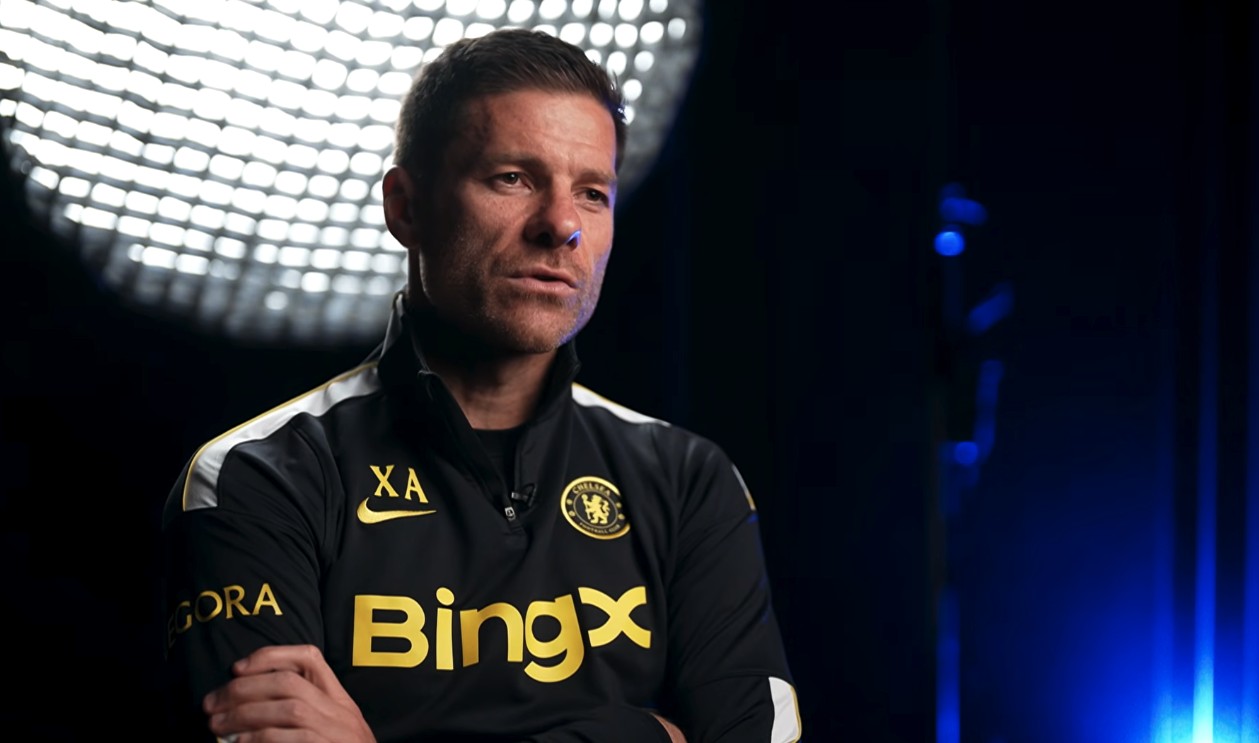
Xabi, let's start with the big official news: Clearlake Capital has now taken full control of the club. From your perspective, has this changed anything?
For the club, it's positive to have this clarity and full control over decision-making. As for me, I don't think much has changed, because my relationship with Behdad Eghbali is very close and important. He specifically came to Madrid to meet me, explained the club's grand vision, and convinced me to join. We have been working in sync and making decisions together. Now everyone knows the club still needs to take further steps at the management level and in squad building. Therefore, I want to be involved, enjoy the process, and pursue success with the ambition required.
As you said, Behdad specifically traveled to Madrid to meet with you and convinced you, and you also mentioned that you're in sync. Could you tell us what coaching and squad-building philosophy you both share?
We share the same ambition: to constantly adjust and improve our team and squad to be sufficiently competitive in all competitions. We know where we are now and how high we want to reach, and this takes time. However, we have already made important decisions about what technical qualities players need and what overall balance we're seeking to improve competitiveness. We must work hard to make this vision a reality, while clearly recognizing that we're just getting started.
Whenever a new head coach joins a club, people immediately ask: "Is this a complete overhaul, or a gradual transition?" Is there really such a thing as a "reboot" at Chelsea? Or is this simply a continuation of the club's established plan?
I don't think it's a reboot. In my view, it's more of an "upgrade and refresh"—making changes in some areas or shifting decisions in new directions. My main focus has always been on the squad and the team itself: the players we have, where they are in their careers, when we brought them in, what we currently possess, and where we can still improve. These were important decisions and analyses I needed to make before arriving. Once we reached an agreement and determined the direction, the next step was to firmly implement those decisions. Some have already been implemented, while others will follow. The crucial thing is that we all share the same vision and firmly believe in these decisions, which is vital.
It's only been two and a half months since your appointment was announced. Are you satisfied with the team's current direction and the decisions you've made?
I'm quite satisfied, even very pleased. Some decisions you can implement as you wish, while others you want to advance may not happen immediately, but that's part of football. Overall, we're very satisfied with the changes and decisions made at this stage. Now we're in the serious phase of the season; it's no longer just about discussing improvements, but about working hard and continuously improving with our current personnel, learning from mistakes, and building confidence through positive performances. We're at that stage now.
The team's obvious strength is the performance of the front three, but you're always candid and straightforward, and you've highlighted defensive issues that need addressing. What are your thoughts on the team's current defensive shortcomings?
The key is showing more consistent performance throughout the match. We need to understand that matches have different rhythms at different stages and find better balance between midfield and defense to solidify the overall defensive structure. I don't think we're far from our goal, but we must seriously examine and address these aspects.
People often discuss tactical formations, especially in English football. During your time at Leverkusen, the 3-4-3 was your preferred system and brought you great success. In an ideal scenario where the personnel here fit perfectly and everyone performed at their best, would this be the tactical approach you'd want to implement in the future?
No, I'm actually quite pragmatic; I tend to be flexible based on the players' characteristics. What I analyze and evaluate is how to combine the best players based on their strengths, build the best chemistry, and maximize their potential. It's never rigid—I don't insist on always playing 3-4-3 or 4-4-2. For me, the core is tactical philosophy, coaching principles, and the understanding between players that generates chemistry. In some aspects, our progress is very fast; in others, it takes longer to develop well-coordinated units within the system.
At Chelsea, you have talented young players and have also added experienced, ready-made players. But Leverkusen's 3-4-3 system relied heavily on wing-backs, and Chelsea's squad has many pure wingers. Will it be difficult for them to adapt to such a system, or do they need to learn to adjust?
No, I'm not just talking about wing-backs. Wingers can play as wing-backs, and full-backs can also play as wing-backs. The key is whether they can form good understanding and connection, comprehend each other's movements, and build a cohesive unit within the team. I would never force them into something uncomfortable, because if players are uncomfortable, they can't perform at a high level. What I aim for is helping them improve and adapt, but the premise is placing them in a tactical environment suited to their strengths.
AF's PC site is now live! Browse full news, comments, match details and stats on your computer. Visit: www.allfootballapp.com
 Chelsea
 Xabi Alonso
Tous les commentaires (3)