
In the early hours of September 29, 2024 (CEST), Liam Twomey, Chelsea correspondent for The Athletic, published a lengthy column discussing the future of Stamford Bridge, Chelsea's home ground, under Clear Lake Capital's sole ownership.
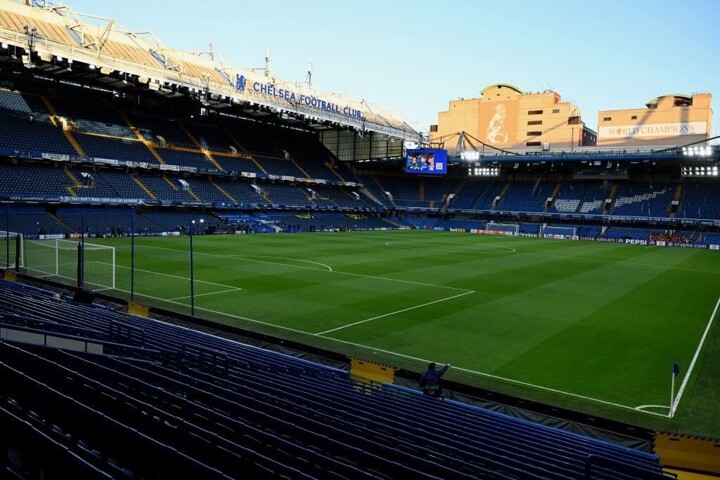
With Todd Boehly's departure, the era of Clear Lake Capital's complete control of Chelsea has officially begun. The long-awaited and awkward internal power struggle finally ended, reigniting hopes that Chelsea's owners will finally tackle the major issues facing the club's future. Based on recent reports from Stamford Bridge, infrastructure will become an increasingly important focus as Clear Lake Capital enters the next phase of managing the club.
What does this mean specifically? First, the club's Cobham training facility, built in 2004, will undergo necessary renovations. More importantly, however, there is growing urgency among all stakeholders to finally push forward with the chosen new stadium plan.
Currently, the plan may involve either completely demolishing and rebuilding Stamford Bridge on its existing site, or constructing a new stadium on alternative nearby land—realistically, a 40-acre site (the former Earls Court Exhibition Centre) less than a mile from Chelsea's current home.
Last year, The Athletic revealed that the option of phased renovations of Stamford Bridge, stand by stand, had been ruled out by the owners as impractical.
However, regardless of the final decision, any plan by Clear Lake Capital involving a temporary or permanent relocation from Stamford Bridge must clear an important hurdle: it requires approval by vote from Chelsea Pitch Owners (CPO), the fan organization that holds the freehold of the land where the current stadium stands.
This story dates back to the 1980s, when property developers attempted to force Chelsea out of Stamford Bridge, but the club "drove them away." Ken Bates, the Chelsea chairman at the time, asked lawyer Mark Taylor to create an organization to ensure such an event never happened again.
CPO was born from this, allowing fans to purchase shares in a company that owns the freehold of Stamford Bridge. In the early 1990s, when share sales were struggling, Chelsea provided CPO with funding in the form of a loan that could last up to 199 years to acquire the freehold. In return, the club secured a 199-year lease, allowing them to continue playing there at a symbolic, very low rent.
Furthermore, if anyone attempts to move the club from Stamford Bridge without CPO consent, CPO can claim ownership of the "Chelsea Football Club Ltd." name. In other words, Chelsea cannot call themselves Chelsea at any other home ground without CPO's approval. This is an extraordinary check on owner power, and its importance should not be underestimated.
The existence of CPO is also a democratic safeguard from which all fans benefit. A stadium project is never trivial—it is a generational event that can fundamentally alter a football club's character and trajectory, for better or worse. Two decades after Arsenal's painful departure from Highbury, Arsenal fans have largely embraced the Emirates Stadium as home, but can the same be said for West Ham United fans, who moved from Upton Park to the London Stadium in 2016?
These decisions cannot be made lightly. And when decisions are driven by shareholder value rather than fan sentiment, the results can easily become adversarial. CPO's existence mitigates this risk by ensuring that a portion of Chelsea's core fanbase must sign off on any stadium plan.
However, some seek to portray this power in a more sinister and malicious light.
Recently, rumors strengthened on social media that CPO is blocking Chelsea's plans to move to an alternative stadium site. In response, CPO released a video statement featuring chairman Chris Isitt. The video, taken from the organization's annual general meeting held earlier this year, reiterates the chairman's statement that the club has not yet presented a stadium proposal to CPO.
In fact, CPO has never blocked any stadium proposal in its history. Roman Abramovich's 2011 attempt to buy back the freehold, which ultimately failed, included no concrete stadium plan and no clear commitment to limiting new site exploration to the immediate vicinity. Essentially, he was asking CPO shareholders to vote to disband their organization and entrust him with complete control over the club's future based on trust alone.
Such a proposal was unlikely to secure the required 76% approval vote. By contrast, Abramovich adopted a more collaborative approach toward the Stamford Bridge redevelopment project, his proposed "Cathedral" plan. That project received planning permission in 2017 and would likely have received a very different response, but it was indefinitely shelved two years later due to visa issues between the Russian businessman and the UK government, before CPO had a chance to vote.
Therefore, any suggestion that CPO is an obstacle to Chelsea obtaining the larger, better, and more modern stadium desperately needed to maintain its status as a top club is pure speculation.
CPO's existence undoubtedly forces Chelsea's owners, eager to address the stadium issue, to consult with, listen to, and ensure that the concerns and priorities of fans—many of whom are season ticket holders and regular attendees—are central to any proposal regarding Stamford Bridge's reconstruction or relocation. Are these not reasonable requirements?
CPO also carefully reviews all share applications to ensure the integrity of its shareholder composition. This precautionary measure was established following allegations of suspicious mass stock purchases by Abramovich and associated individuals before the 2011 vote.
Nevertheless, Chelsea fans worldwide can purchase CPO shares through the club's official website, and the more shareholders there are, the more likely that any future vote outcome on a stadium proposal will represent the true majority opinion of fans.
Democracy always requires citizen participation. CPO gives Chelsea fans real say in where the club's future home will be. This is something most rival club fans can only dream of. When Clear Lake Capital officially announces its chosen stadium plan, fans who choose not to participate are effectively choosing not to participate in one of the most important decisions in the club's history.
AI翻訳。
AFのPCサイトが新登場!パソコンでニュース、コメント、試合詳細、詳細データをご覧いただけます。アクセス:www.allfootballapp.com
 Chelsea
Tous les commentaires