
Liverpool and other clubs have long expressed doubts about Manchester City, which now faces over 100alleged breaches of Premier League rules, making the club's crisis a hot topic in football. On the morning of September 29 (UK time), British publication The Telegraph published an article examining how Liverpool and rival clubs had harbored concerns about Manchester City for years.
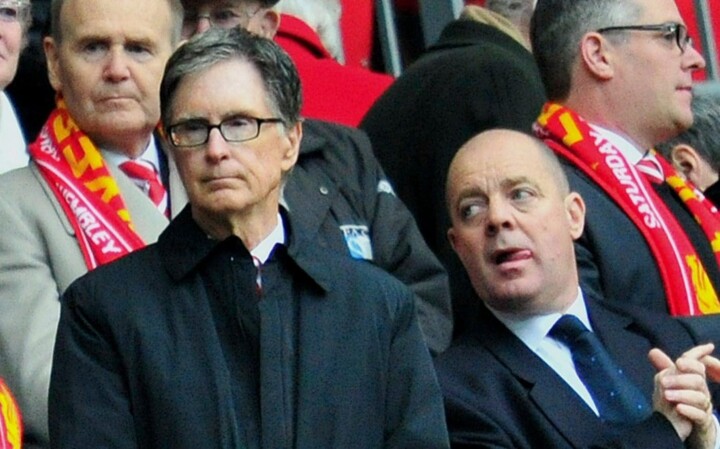
Although John W. Henry rarely speaks publicly now, there was a time when the Liverpool owner's comments generated significant attention.
July 13, 2011 was one such occasion. Henry tweeted: "Top players should cost no less than 10% of a stadium's naming rights value. Mr. Wenger said boldly what everyone was thinking."
Fifteen years later, that statement takes on far greater significance. At the time, many dismissed it as a wealthy owner frustrated by financial constraints, while Manchester City was reportedly angered by the implied criticism. But last Friday, was it confirmed that Wenger had indeed articulated what everyone was thinking?
Henry's tweet referenced a newspaper article. The day before, Wenger had expressed shock during a media gathering in Kuala Lumpur about an extraordinary moment in Premier League history that we are now grappling with.
On July 8 that year, Manchester City announced a stadium naming rights deal, then known as "Eastlands." It was a 10-year partnership worth £400 million with Etihad Airways—a figure that, by any calculation across the football world, seemed incongruous.
Admittedly, that sum may not seem enormous today. After all, Liverpool recently signed a five-year shirt sponsorship deal with Turkish Airlines beginning in 2027, worth £300 million to the Anfield club and setting a record for such partnerships.
However, in summer 2011, a £400 million stadium naming rights deal was met with skepticism from Manchester City's rivals. Wenger argued it raised "real questions about the integrity of financial fair play (FFP)" and called it "the greatest test" for then-UEFA President Michel Platini.
"For financial fair play to work, sponsorship contributions must reflect fair market value," Wenger said. "You cannot triple or quadruple the price, because that would mean we should do the same and let everyone act freely. That approach might also make sense, but since rules have been introduced, they must be respected."
For context, the largest stadium naming rights deals in 2011 were in the United States, led by the New York Mets (Citi Field, 20 years, $400 million) and the Houston Texans of the NFL (Reliant Stadium, 30 years, $300 million)—Manchester City's Etihad deal surpassed both of these sponsorships.
Henry was a committed advocate for financial fair play, and like everyone at Anfield, he viewed developments with suspicion. Two days after Wenger and Arsenal traveled to China, Liverpool arrived in Malaysia, where they were warmly received.
Ian Ayre, then the club's chief executive, had worked in Kuala Lumpur early in his career, but as everyone sat in a hotel in the city, this was no time for reminiscence. There was only one topic of discussion, and looking back at his words 15 years later reveals they have stood the test of time, proving remarkably prescient.
"These figures surprised me for several reasons," Ayre said. "First, I find them illogical. In Europe, a football club changing the name of an existing stadium and extracting real value from it has simply never happened before."
"For the past nine years it was called Manchester City Stadium, or Eastlands, but now it's changing its name, and someone has assigned it enormous value. That seems odd to me because no one has ever done this before."
"In Europe, and certainly in football, there is no precedent suggesting you can rename a stadium and extract such significant value. Someone tried—Mike Ashley attempted it at Newcastle with Sports Direct Arena—but no one calls it that, and it certainly has no such value. I find it very surprising."
"Second, when I spoke at SoccerEx earlier this year, I participated in a panel discussion on financial fair play. UEFA representatives responsible for this process stated they believe in a proper and rigorous process for related-party transactions."
"Are Etihad, Manchester City, and Sheikh Mansour related parties? If so, UEFA must make a determination. But that is not our concern. We have our own brand, and we must be accountable for it. If this deal is lawful, then it's good for Manchester City. It's good for them. But I believe UEFA should answer these questions."
He added: "The way we generate revenue at Liverpool is somewhat different from other clubs. We are selective when choosing sponsors. We seek to partner with people we believe are kindred spirits and who will treat the Liverpool brand and name in a certain way."
Henry, who led Fenway Sports Group's acquisition of Liverpool in 2010, envisioned the club's development "in a certain way" under his team's direction: data-driven decision-making, smart player recruitment, and strategic investment at opportune moments.
Had he known then that financial fair play could supposedly be circumvented and teams could strengthen their squads with players that other clubs would have to pay record transfer fees for, would he have still bought Liverpool? It is pointless to speculate.
A year later, in a private box at Fenway Park in Boston, Henry was asked why Liverpool could not buy three players for £25 million each in a single summer.
"Is UEFA genuinely committed to enforcing financial fair play?" Henry countered. "We don't know. Unchecked spending seems to be slowing nowhere, and perhaps leagues should take a closer look."
He added: "I would say from our perspective it is crucial that UEFA successfully implements financial fair play. It is a decisive factor. Roughly 50% of clubs in Europe are losing money—and I'm talking about top clubs."
"Twenty percent of them are in genuine financial distress. I believe leagues, as well as FIFA and UEFA, must consider and implement appropriate measures. The fact that UEFA has its own rules does not mean the Premier League and other leagues cannot adopt similar principles."
"I know the English Football League is implementing its own rules. That really is a vital part. Not only for Liverpool, but for football as a whole."
Manchester City maintains its innocence and has offered no comment since last Friday, nor have the Premier League or Henry on this matter. Roberto Mancini, who was Manchester City's manager at the time and now leads Italy's national team, even stated the matter "has nothing to do with him."
But the events of July 2011 clearly troubled many in football. Henry has posted nothing on his social media account since June 11, 2021. Given recent developments, it will be interesting to see whether he chooses to break his silence—and what he might say if he does.
Переведено ИИ.
Сайт AF теперь доступен! Читайте полные новости, комментарии, детали матчей и статистику на компьютере. Посетите: www.allfootballapp.com
 Liverpool
 Manchester City
 Arsène Wenger
Tous les commentaires