
In the third matchday of the UEFA Nations League A, the Netherlands drew 2-2 with Greece away from home. After the match, Netherlands coach Ronald Koeman held a press conference to answer questions from the media.
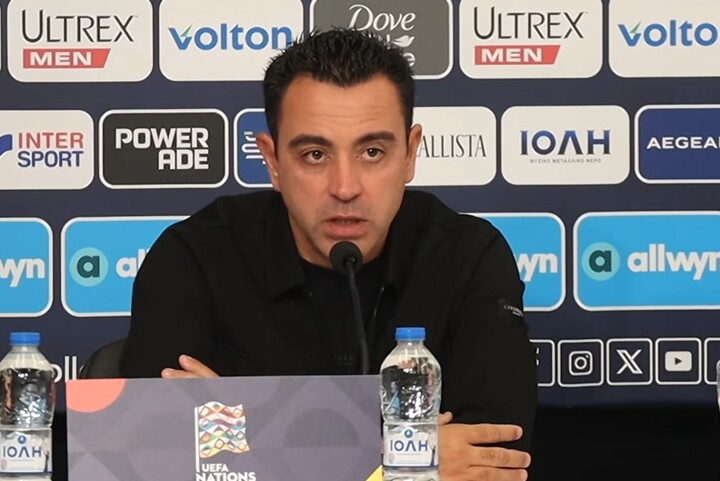
Can you tell us what exactly happened in the first half? That first half was really poor.
Yes, I agree with you. I have to be honest—I think it was my responsibility. My tactical setup in the first half was problematic. We weren't well-organized structurally, and our attacking play struggled in the first half. We absolutely didn't need two defensive midfielders in the defensive line at the same time. At halftime, I tried to reorganize our tactical structure, and we performed excellently in the second half in terms of winning mentality, desire, and passion. I think that's the right direction—an excellent response. Although it ended in a draw, based on our second-half performance, the team could absolutely have won the game. We created many chances. Yes, this team showed two completely different faces. But it was my mistake, and I take responsibility. The tactical system in the first half was clearly not how we should have played.
So in your opinion, was it more about inadequate initial setup than the effectiveness of your substitutions?
No, but in my view, it wasn't about individual players; it was about the overall structure, positioning, and our style of play in the first half. Yes, I must insist on this, and I want to be honest with you and with the players. I told them exactly the same thing: forget the first half—it was my mistake. Then we restructured our formation and played very well in the second half, attacking with much more fluidity and creating many chances. Yes, I'm more satisfied with how the team responded, and I think the players understood very clearly what we needed today.
I'm somewhat surprised. It's not very common for a head coach to admit mistakes—that doesn't happen very often.
What doesn't happen very often?
A head coach admitting his own mistakes.
Yes, I made a mistake. That's how it is.
That's quite refreshing.
Refreshing?
Yes.
No, not for me. Not for me. I have to be honest with the players. Yes, I don't like pointing fingers at the players. It's not about the players; it's about the tactical system, positioning on the field, and formation adjustments. Yes, in the second half, we had an excellent attacking performance, playing extremely well. That's the team we want to see. The two halves showed two completely different faces.
Okay, one last question. Which half has more value as a reference for you—the first half or the second half?
Which what, sorry?
For you, which half carries more weight—the first half or the second half? Which is more important to you?
No, I think both halves of today's match were important because I need to know the players better, and this is just the beginning. Yes, you know, this is an inevitable process. I think it's just a matter of time before we get the players in the right positions at the right time. But in any case, today was excellent experience and a learning opportunity for both me as a coach and the players.
Okay, perhaps I need to express myself more clearly. Tomorrow, when you speak with the players, will you focus mainly on the first half or the second half?
Both halves. Both will be discussed. I already spoke with them at halftime and after the match. But tomorrow we'll have plenty of time to go through everything in detail, including the mentality in the game. Yes, we shouldn't play with fear; we can't be afraid. Football should be enjoyed, and that's what I want the players to show on the pitch. The responsibility is mine now—that's what I want to tell the players.
Coach, did your previous understanding and assessment of the Greek team confirm itself during the match?
Yes, absolutely. They played very well. They played with a solid 4-4-2 low defensive block, very compact defensively and very aggressive. They were good at playing the ball to their two forwards, and the wingers advanced very quickly on the counter-attack. They did an excellent job with switching play, cutting inside, and quickly stretching the field. We really struggled in the first half. In the second half, we controlled the situation better and played more aggressively. But in any case, Greece is indeed a very good team.
After this match, Greece still sits at the top of the standings. Do you think that indicates they could be considered favorites for qualification? Or have your hopes diminished after this draw?
No, no, their strength is genuine—pure football. They absolutely have every chance of qualifying because they played really very well, no doubt about it.
Coach, you're very demanding of yourself, but the reality is we've seen this pattern for many years. Opponents defend in a compact formation and then, as you said, connect with one or two forwards, with wingers advancing on the counter-attack, and then the Netherlands struggles. We feel the problem is more about how the Netherlands deals with this style of play, regardless of who the coach is—the problem always repeats itself. Yet you take full responsibility.
Yes, I think it's my responsibility. What happened in the first half, and the subsequent adjustments and response, as a coach, I'm clear that I'm also responsible for the second-half performance. But the key is positioning, understanding the division of roles on the field, how we organize our attack, and defensive balance is also crucial. Of course, we conceded goals in the first half due to serious mistakes—both goals. But more importantly, we created absolutely no chances in the first half. In the second half, although I don't have exact data, you can count how many clear scoring opportunities we created. We scored four goals, two of which were disallowed. We turned things around, and we were able to do so precisely because of the restructuring of our formation and proper positioning.
Coach, you just said you made mistakes in the first half, but the team faced widespread absences of key players like Gakpo. If those absent players had been on the pitch today, do you think the first half would have been different?
No, I don't think so. Not at all. That's not an excuse, because we have many good players in our squad, and we showed our best side in the second half.
Dumfries had a goal disallowed for offside. Dumfries said it shouldn't have been offside because the Greek defender had already controlled the ball at that moment. What's your opinion on that decision?
Yes, it's difficult to judge, because, you know, Greece would certainly say it was offside, and we could say it wasn't. At this point, it's entirely at the referee's discretion, and he decided it was a continuation of the same attacking move, and the player was in an offside position when the ball was touched, so what more can you do? But we didn't draw simply because of that one decision.
So you can't judge whether it was a correct or incorrect decision?
You have to ask the referee, because he made the decision.
But you were also a player on the pitch back then—can you understand what Dumfries was thinking at that moment?
Of course, absolutely. Yes, it's a matter of subjective judgment.
Traduzido por IA.
O site do AF já está online! Acesse notícias completas, comentários, detalhes de partidas e estatísticas no seu computador. Acesse: www.allfootballapp.com
 Grecia
 Olanda
 Real Madrid
 Xavi
Xavi
 Denzel Dumfries
Tutti i commenti