
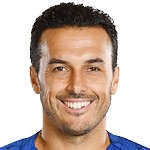
Pedro, who recently retired, gave an in-depth interview to Mundo Deportivo. In the fifth part of the interview, Pedro discusses Luis Enrique's influence on him, the difficult decision to leave Barcelona, and his subsequent experiences playing for Chelsea and in Italian football. He also speaks about the matchday atmosphere he'll miss most after retirement, his two sons' football aspirations, and the legacy he wants to leave with fans.

Related reading:
【Pedro: I always wanted to retire at a top league, never thought about dropping to a lower division】
【Pedro: I cried and begged my father to take me home; he said it was my only chance in life】
Reporter: Your years at Barcelona eventually ended with Luis Enrique as coach. He's a true "football fanatic" too, isn't he?
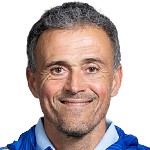
Pedro: Another brilliantly gifted coach with an amazing winning mentality. His personality is always positive and cheerful; he works with great drive, constantly striving to improve every single day, and he has enormous ambition. It's this intense ambition that pushed him to achieve such extraordinary success. As a coach, he led the team to another treble, and he brought out the best in all of us from the moment he took over. He knew me well from his time with the B team, and we worked together for a long time. He's a very demanding coach in every training session and every match, and this meticulousness drove me to transform myself every day. Seeing the outstanding achievements Luis has made coaching PSG, the national team, and other teams over the years, it was an honor to have him as my coach; he's another role model in my life. His fighting spirit, his determination, and his ability to convey his ideas to players are all perfect.
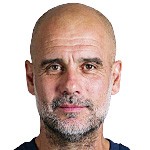
I was fortunate to witness stars like Guardiola and Luis Enrique as a fan from a young age, and then, as an adult, I had the honor of playing under them, witnessing how they perfectly continued the winning gene from their playing careers into their coaching careers. They are among the world's top tactical masters, and playing under them for years is a treasure for life. As for leaving Barcelona, it was a natural development in my career; it wasn't a unilateral decision to cast me aside, but rather the result of various interconnected factors over a long season. Although it was very difficult to leave Barcelona, which I love—because it's the club I love most in my life—I eventually decided to seek new challenges. At that time, with the arrival of many great players, my playing time at Barcelona was diminishing, and competition became very intense. After consulting with all parties involved, we made the decision that made the most sense at that time.
Reporter: That moment of departure must have been very difficult?
Pedro: It was very difficult. Because, as I said, I was very comfortable there; I loved Barcelona deeply, the fans loved me, the atmosphere in the dressing room was harmonious, and my interactions with teammates, coaches, management, and fans were all very good. Almost my entire life was rooted there: my family was there, my children were born there, and my ex-wife is also a local. To move and start a new life, to adapt to a new culture and environment, was indeed very challenging. But from the perspective of personal growth and development as a player, it was also a beautiful journey, though at the time of making the decision, it was undoubtedly one of the hardest choices in my career.
Reporter: What was your greatest gain after leaving Camp Nou?
Pedro: The greatest gain was personal mental growth. When you go to a different country and face completely different cultures and teammates, I initially spent considerable effort adapting to English football when I joined Chelsea. The game there is open, full of intense physical confrontation and end-to-end running; whereas for nearly fifteen years before that, I had been immersed in La Masia-style possession football, accustomed to controlling the tempo through prolonged spells of sustained possession. English football emphasizes quick counters, transitions, and wide box-to-box running. It took time for me to adapt to this philosophy. But once I fully integrated, for a forward, this style of play—full of open counterattack space and plenty of shooting opportunities—is actually very satisfying and enjoyable. Then, moving to Italy brought a completely different football philosophy: more defense-oriented, emphasizing tactical precision, with a relatively slower tempo, but with very limited space for forwards to operate, making scoring much harder. This is because Italian teams have excellent defensive coordination and protection, and individual defenders are very strong. Experiencing these vastly different football philosophies allowed me to develop both as a player and as a person. You can't be satisfied with the familiar possession-based style of play; if you can't actively adapt to a new environment, no matter how extraordinary your individual abilities are, it will be difficult to establish yourself in these leagues.
Reporter: The interview is almost ending. Are you starting to miss football?
Pedro: Yes, I think what I'll miss most is matchday itself. The moment when the match truly arrives, changing in the dressing room, stepping onto the pitch to fight alongside your teammates, and the urgency and pressure of competing for the highest glory—that's what I'll miss most. Daily training is fine, because that kind of training can be replaced by going to the gym, jogging, or playing tennis or padel; but the high-intensity competitive confrontation under the gaze of tens of thousands of people, the match pressure that stirs the soul—that's definitely what I'll miss most.
Reporter: I hear the new generation in your family seems to be following in your footsteps, even having to move up a level in Guardiola's training camp because of their exceptional skills?
Pedro: Haha, let's wait and see. Bryan and Kyle are both playing very well now and showing good momentum. They train very hard, and their eyes are full of ambition. I very much hope they're fortunate enough to become professional players in the future and have wonderful careers. But as I always say, the premise is that this must be something they truly love. As long as it's something you truly love, whether it's football or not, if you dedicate all your effort to it, you will ultimately achieve your dreams.
Reporter: Final question: How do you want people to remember you in 20 years?
Pedro: I want people to remember the real me—someone who is calm, humble, simple, and hardworking. I believe that's the legacy I've left in the football world. I hope people remember someone who fought hard for his dreams and ultimately achieved them. That's the most accurate summary of me, and that's the image I want fans, teammates, coaches, and friends to have in their minds when they remember me: Pedro, always giving everything on the pitch, always humble and full of fighting spirit.
Diterjemahkan oleh AI.
Situs web AF kini hadir! Lihat berita lengkap, komentar, detail pertandingan, dan statistik di komputer Anda. Kunjungi: www.allfootballapp.com
 Chelsea
 PSG
PSG
 Roma
Roma
 Lazio
Lazio
 Barcellona
 Pedro
Pedro
 Luis Enrique
 Pep Guardiola
Tutti i commenti