
According to The Independent, each new development in Manchester City's eight-year financial irregularities case reignites debate over related regulations, yet many widely held claims about these rules are actually misconceptions.
Every time a new episode emerges in Manchester City's eight-year saga, the discussion typically turns into a debate about alleged rule violations by day three. Some argue these rules are "unfair," others claim they were designed to prevent challenges to the "established order," and still others say they were created by a "cartel."
These views, now widely discussed, have long been shaped by public opinion and are increasingly driven by complex new ownership structures seeking to demonstrate "ambition."

Consequently, many misconceptions surround these rules, originally known as Financial Fair Play (FFP), and they are almost always viewed solely from the perspective of those at the top—asking "who wins?"
These misconceptions make it all the more important to recall the reality: these rules were born at the turn of the century in a world facing serious warnings. Unchecked spending by club owners placed enormous pressure on the football system, clubs teetered on the brink of collapse, and players went unpaid.
The actual impact extended far beyond trophies themselves.
Following the 1995 Bosman ruling, more responsible figures within UEFA grew deeply concerned. Uncontrolled spending in an open market triggered an arms race, pushing more clubs toward financial ruin. Wage-to-revenue ratios were alarmingly high. Multiple European clubs failed to pay transfer instalments on time, let alone player wages, creating what has been described as a "lawless" situation.
The solution to this problem essentially gave rise to the "Fair Play" referenced in the rules' name.
UEFA's initial response in 1999 was an attempt to impose strict wage caps, but this violated European employment law. The organisation's technocratic Northern European leadership also recognised the need to establish a legal framework first, so they began gathering information, which eventually led to Club Licensing Regulations. These set out all the criteria clubs must meet to participate in European competitions and establish conditions for prudent club management.
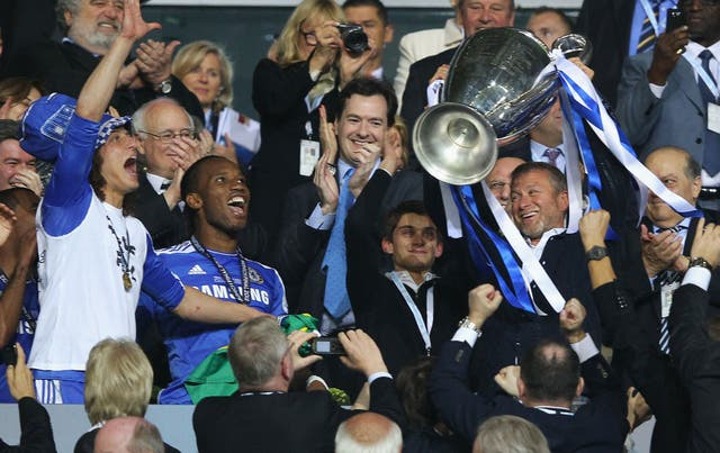
All of this underscored the need for change, as Leeds United exemplified through the financial free-fall caused by reckless overspending. Meanwhile, Roman Abramovich's takeover of Chelsea in 2003 introduced an entirely new type of pressure on the system. Even Ferran Soriano, the current CEO of Manchester City, described it as "tremendous chaos," triggering "absurd inflation rippling through the entire system." The cascading effect from the top meant wages rose across the entire pyramid.
Other clubs not only had to pay players more money but, more importantly, had to pay far more to retain them.
Those involved in drafting FFP were well aware of stories from the Irish and Czech leagues, as well as English lower divisions, where players couldn't be paid their wages in time to buy Christmas presents. This is about far more than whether clubs actually broke the rules, particularly in an industry where such enormous sums are involved. One official said: "Those stories have always stayed with me."
Some form of cost control was essential, especially if you believe in a pyramid system. And all of this happened before state-linked wealth brought even greater accelerated inflation.
The inherently competitive nature of sport means this will always be a problem, as everyone wants to win.
However, there is a fundamental inconsistency. German clubs have long complained to UEFA that they are regulated far more strictly than English or Spanish clubs.
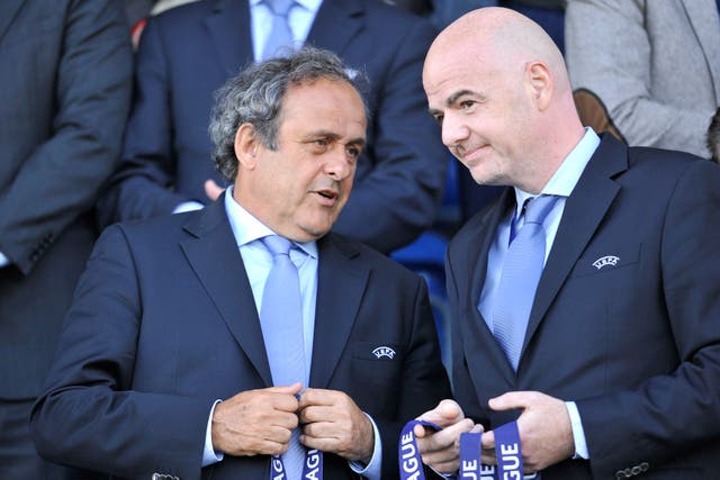
They found an ally in Michel Platini, who became UEFA president in 2007. The French midfielder had long been aware that his country possessed stricter regulation than any other (the DNCG—Direction Nationale du Contrôle de Gestion).
The desire to replicate this model at European level, combined with wage cap projects, eventually evolved into FFP—an indirect wage cap. This move toward regulatory prudence made logical sense, especially given that football generates substantial revenue, by linking expenditure to income. Platini also gained crucial support from EU Competition Commissioner Joaquín Almunia, a fan of Athletic Bilbao, which operates on a self-sustaining model.
When FFP was finally implemented by UEFA, it was logical for the Premier League to follow suit, as these clubs compete in the same competitions. The Premier League did somewhat relax its own rules regarding owner investment to ensure UEFA prize money didn't lock certain clubs in or out.
All of this has led to an obvious counterargument widely discussed today. UEFA senior officials have repeatedly heard strong assertions that all of this carries an inherent risk of permanently preserving the status quo and keeping the highest-earning clubs at the top forever.
This argument has merit, but it is misdirected. It is not a criticism of rules as a necessary cost-control mechanism. Rather, it is a criticism of the economic system and how money flows.
Ultimately, sport itself already generates sufficient wealth. Particularly at the level of the Premier League or Champions League, more owner investment is not actually needed.
In this regard, what big clubs should really be questioning is how, over the past 40 years, almost every other decision in football—from TV broadcasting rights to Champions League prize money—has meant they earn more money. That is how real "vested interests" operate.

In reality, FFP regulations should have been accompanied by a better redistribution mechanism from the start. The fact this issue has never been addressed is absurd, especially considering that English football served as the model for most of its history until before the 1990s.
A similar situation exists today. The Premier League's new squad cost ratio rules lack a decisive anchoring mechanism preventing the wealthiest clubs from spending multiples of what the weakest clubs spend.
Addressing this issue and ensuring broader talent distribution would benefit not only a handful of individual clubs with wealthy owners but the wider football sport itself.
If someone designed sport from scratch, no one would think outsourcing competitiveness to oligarchs, sovereign wealth funds, or private equity firms—essentially, winning the owner lottery—was a good idea.

In other words, taking a shortcut.
This is also why it's useful to imagine alternatives. What would sport look like without this kind of regulation or with it greatly relaxed? Competition would decrease, not increase, because it would depend more on the wealthiest. Everyone else would go bankrupt trying to keep up.
In other words, it would resemble the pre-2006 era but with far higher inflation and significantly greater risks.
While this was not the original intent of the rules, attempting to regulate the kind of resources that football may not be able to sustain is clearly rational. Otherwise, who could compete with state funding?

An important point often overlooked in these discussions emerges from a group of clubs pursuing organic growth: Brighton, Athletic Bilbao, and even Tottenham Hotspur.
While Tottenham Hotspur is often ridiculed as one of the "Big Six" in these debates, the club entered that group through years of sound financial management.
They also provide an epilogue. Such steady effort could have enabled Tottenham Hotspur to exceed expectations and even claim titles. However, they were thwarted by cheating. In the 2016-17 season, they lost to Chelsea, who were later punished for breaches. In many other seasons included in the Manchester City investigation, Tottenham Hotspur missed out on Champions League qualification. How different might their recent past and future have been had they been regular Champions League participants?
All of this makes these rules worthy of examination from various angles.
AI 번역.
AF PC사이트가 오픈했습니다! 컴퓨터에서 전체 뉴스, 댓글, 경기 상세 정보와 데이터를 확인하세요. 방문하기: www.allfootballapp.com
 Chelsea
 Tottenham
 Man City
Tất cả bình luận