
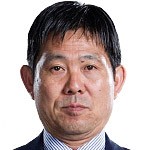
Japanese media outlet Gendai published an extensive article on Hajime Moriyasu's Japan national team, in which Moriyasu denied rumors that Hidemasa Morita was excluded from the squad due to his criticism of the coach.

According to reports, the challenge of integrating diverse personalities while achieving results is a common problem facing all modern organizations. This is precisely the situation facing head coach Hajime Moriyasu, who leads Japan's national team. Additionally, he must manage formidable players competing in Europe's top leagues—a group of strong-willed individuals who frequently assert: "Give me playing time" or "Pass me the ball."
Moreover, considering the players called up for the squad heading toward the 2026 World Cup, there is a wide age gap, ranging from veterans like Yuto Nagatomo (FC Tokyo), who turned 40 on September 12, to young talents like Ryunosuke Sato (Valencia), 18, who made his national team debut at the 2025 EAFF E-1 Championship. Sato, born in 2006, is even younger than Moriyasu's third son, Riku, born in 2000. The wider the generational gap, the more challenging it becomes to build interpersonal relationships.
"My primary responsibility is player selection. As a human being, it's inevitable to have personal preferences, but I consciously approach selection as objectively as possible. I don't rely solely on my own judgment; I select players after considering input from the entire coaching staff.
My evaluation criterion is current ability. Of course, I also consider growth potential. Some players may show signs of decline with age, while others are on an upward trajectory; I assess all of this. The contexts in which players perform vary, making direct comparisons difficult, but I try to watch many matches and make the best decisions after repeated discussions. While I cannot guarantee every decision is correct, I believe generally there are no errors."
Once national team activities begin, players must respect team rules. Regular camp activities last around 10 days, but during the World Cup or Asian Cup, they can sometimes extend beyond a month. Creating an atmosphere where everyone strives toward a common objective while respecting one another over such extended periods is delicate work. Things go well when victories are achieved, but without results, opinion conflicts or a suffocating atmosphere can easily emerge. The coach constantly monitors these risks while taking them into account.
"Now, with social media, it's an era where everyone can be a media outlet. I make one request: 'You can express yourself, but please consider how it might affect your teammates before doing so.' If a personal statement causes problems, I address it directly."
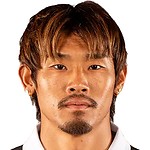
Regarding outspoken players, a controversial example was Hidemasa Morita's (Hull City) statement after Japan's quarter-final loss to Iran at the 2024 AFC Asian Cup in Qatar. He expressed a desire for "more outside suggestions on how to improve," which was interpreted as criticism of the head coach. Some believed this was a factor in his omission from the 2026 World Cup squad.
However, the coach firmly denied this, stating: "That's not the case." He added of his own accord: "I've continued to call him up since then."
"I viewed that as constructive criticism, and of course, I verified directly with the player. At the time, I understood that among the players, the general consensus was: 'It's probably better not to say such things in front of the media.'"
"I've only played and coached at the national level, so I'm not entirely certain, but I think internationally, people tend to express themselves more freely. So I generally overlook players' comments. However, sometimes coaching staff or other players might feel uncomfortable. In such cases, I always communicate and resolve it, and it was the same at that time.
After that, Morita was selected for the national team through March 2025, when he suffered an injury. During his recovery year, other players developed, and that's the nature of professional football. I think everyone understands that."
Regarding the rumor of "discord" with Hidemasa Morita, he firmly denied it, stating: "I've continued to call him up since then."
There are players like Morita who speak up, and others who don't; that's what makes a team. Young players born after 2000 are generally more reserved. During 2026 World Cup preparations, Junnosuke Suzuki (Copenhagen), then 22 years old, didn't speak much, and Nagatomo, unable to bear it, frequently urged him: "Junnosuke, speak from your diaphragm." That scene was memorable. However, even in terms of improving team atmosphere, methods and awareness vary. Integrating them could be a very demanding task.
"What Yuto said to Junnosuke might be scrutinized by society at large (laughs). But actually, I do similar things. Before training, players casually walk onto the pitch, and I urge young players: 'You, call for a huddle.' The player mumbles 'Huddle' quietly, and I joke: 'Hey, I didn't hear you!' This could even be considered harassment (laughs).
In our group, everyone understands that, though it's obvious, if the person being addressed feels uncomfortable, then it constitutes harassment at that moment. I think that's genuinely difficult."
Coach Moriyasu focuses not only on the national team but also on issues arising in modern society, while appreciating the high level of motivation and professionalism his players display.
"As times change, those who grew up without receiving criticism might fail to perform when it matters, hit a wall, or even become emotionally frustrated. That would truly be a shame. In our environment, everyone accepts others' feedback openly and transforms it into something positive, so I'm very grateful."
Even Junnosuke Suzuki, urged on by Nagatomo, expressed his positive attitude to media at the time:
"I'm naturally the type to get too emotional (laughs). I express myself during matches, but I think there are all kinds of people. I'm still young, so I want to give everything, and feedback is important to me, so I want to seriously work on this going forward."
Coach Moriyasu also adopts a warm and thoughtful approach.
"Not speaking up doesn't mean it's bad. If players can master team tactics, group tactics, and individual tactics, and play boldly, then voice might not be so crucial. Of course, it's better to be able to express yourself, and I think such people are more communicative, but individuality must be recognized."
Encouraging initiative and independence in young players, communicating at critical moments, and fostering their growth—this is probably the "Moriyasu style."
While enduring harsh external criticism, he remains sincere, sometimes responding to interviews with a smile.
In this growth process between players and coach, the addition of young legends such as coaches Shunsuke Nakamura and Makoto Hasebe, as well as active supporting players like Maya Yoshida (LA Galaxy), who captained the previous tournament, and Takumi Minamino (Monaco), who wasn't called up due to injury, also proved invaluable to Coach Moriyasu.
"I didn't bring them in to control the players, but rather because I believed it would have a very positive effect on both sides. First, Shunsuke and Hasebe are close to the active players. They can give good advice, and I think the players can learn much from these legends.
It's the same with Maya and Takumi; the goal is to create an environment where players naturally draw inspiration from their senior peers, fostering the transmission of history, and they've done excellent work."
Coach Moriyasu appears adept at leveraging his surroundings' strengths to ensure the organization functions well and maximizes its potential.
Though they ultimately didn't win the championship, Japan's national team's sense of unity and disciplined play earned worldwide praise. His management style likely offers valuable lessons even for business professionals.
Traduit par IA.
Le site web d'AF est désormais en ligne ! Actualités complètes, commentaires, détails des matchs et statistiques sur votre ordinateur. Visitez : www.allfootballapp.com
 Hull City
 Japan
Japan
 Hajime Moriyasu
 Hidemasa Morita
All Comments