
The accusations against Manchester City have recently become the most pressing topic in world football. On the morning of September 29, British newspaper The Independent published an article analyzing the root causes of Manchester City's financial irregularities.
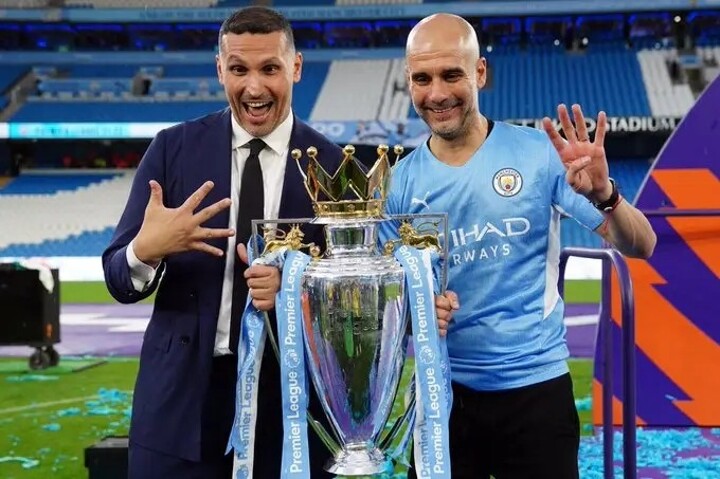
After the initial shock, the reverberations continue. Typically, by the third phase of each new chapter in Manchester City's eight-year saga, the debate shifts from the events themselves to a discussion of the rules that were broken. Some argue these rules are "unfair"; others claim they are designed to prevent challengers from disrupting "the established order"; still others contend they were created by a "cabal of vested interests".
These currently widespread opinions have long been shaped by public opinion campaigns, and team owners eager to demonstrate their "ambition" have continually fueled this sentiment.
As a result, numerous rumors and misconceptions have circulated about regulations initially known as Financial Fair Play (FFP), with people viewing them almost entirely from a top-down perspective: concerned only with who wins trophies.
Because of these myths, it is all the more important to understand the reality – these rules actually originated in football's environment at the turn of the century, and this history carries a significant warning for today. At that time, clubs' unlimited spending placed enormous pressure on the football system, with many clubs on the brink of collapse, and ordinary workers not even receiving their salaries. The real impact went far beyond who won trophies.
In the years following the Bosman ruling in 1995, more responsible UEFA officials were deeply concerned. Unregulated spending in an open market triggered an arms race, pushing more and more clubs toward ruin. Player wages as a percentage of revenue were alarming. Many clubs across Europe defaulted on transfer payments and even player salaries, with the situation at the time described as the "Wild West".
Solving this problem was the original driving force behind "fairness".
UEFA's initial response was an attempt to introduce strict salary caps in 1999, but this violated European labor laws. The organization's technocratic leadership, primarily from Northern Europe, also realized the need to establish a legal framework first. They began gathering information, which eventually led to the Club Licensing Regulations and Financial Fair Play. These were essentially conditions clubs had to meet to participate in European competitions, thereby encouraging prudent management.
While all this was happening, Leeds United began a financial collapse precisely because of the kind of excessive spending UEFA was trying to prevent, further highlighting the need for change. Meanwhile, Chelsea's acquisition by Roman Abramovich in 2003 introduced entirely new pressures on the system. Even Manchester City's current CEO, Ferran Soriano, called this move a "huge disruption" that led to "rampant inflation spreading throughout football". Pressure from the top triggered wage increases that rippled through the entire pyramid.
Other clubs not only had to spend more to buy players, but crucially, had to spend far more to keep them.
Those involved in drafting FFP recall stories from leagues in Ireland, the Czech Republic, and lower leagues in England, where players couldn't even afford Christmas gifts because they weren't being paid. For this reason, the significance of these rules extends well beyond the actual bankruptcy of a club, especially in an industry where enormous sums of money circulate. As one official put it: "Those stories have always stayed with me."
Some form of cost control was essential, especially if one accepts the idea of the football pyramid. All of this happened before state-backed capital created even greater inflation. The competitive nature of sport means this will always remain a challenge, as everyone simply wants to win.
But there is an inherent contradiction here. German clubs complained to UEFA that they were subject to much stricter regulations than their counterparts in England or Spain.
Michel Platini, who became UEFA president in 2007, understood German clubs' concerns. The legendary French midfielder recognized early that France's DNCG (Direction Nationale de Contrôle de Gestion) possessed the strictest financial regulatory system.
The desire to extend this approach across Europe, combined with the salary cap proposal, ultimately led to FFP – an indirect salary cap. This move toward prudent regulation also made it reasonable to link spending to revenue, especially given the massive funds generated by football itself. Platini also received crucial support from EU Competition Commissioner Joaquín Almunia, a fan of Athletic Bilbao, a club that served as a model of self-sufficiency.
After UEFA eventually implemented FFP, it was natural for the Premier League to follow suit. After all, clubs compete in the same competitions. The Premier League even slightly relaxed its rules concerning owner investment to ensure UEFA's regulations wouldn't permanently block certain clubs from or within the elite.
All of this leads to an obvious counterargument, one frequently raised today. As some have repeatedly and forcefully pointed out to UEFA officials, this inherently carries a risk: perpetually maintaining the status quo, keeping the highest-revenue clubs at the top.
This argument is not without merit, but it is misapplied. It doesn't actually criticize the rules – which are essentially necessary cost-control mechanisms. It truly criticizes the economic system and flow of money.
After all, the sport itself generates more than enough money. It doesn't really need additional investment, especially at the Premier League or Champions League level.
What big clubs should really be questioned about is that for 40 years, almost every decision in football has allowed them to earn more money, from broadcasting rights to Champions League payments. That is the true "established order".
In fact, FFP should have been accompanied by far more comprehensive redistribution mechanisms from the start. It is absurd that this issue was never properly addressed; all the more so because English football was once a model in this regard for much of its history before the 1990s.
Today, there is even a pale imitation: the Premier League's new "Squad Cost Ratio" rule, which lacks a crucial anchoring mechanism – meaning the spending of the richest clubs can only be tied to a fixed multiple of the poorest clubs.
Finding a way to address this problem and ensure more balanced distribution of talent would benefit the entire sport, not just a handful of clubs with wealthy owners.
If someone designed a sport from scratch, no one would think it a good idea to outsource competitiveness to oligarchs, sovereign wealth funds, or private equity groups; no one would think you need to find a rich "patron" to win. In other words, it's just a shortcut.
This also shows it would be useful to consider an alternative scenario. What would the sport look like without such rules, or if they were significantly relaxed? You wouldn't see more competition, but less, because football would be even more dependent on the richest. Everyone else, to avoid being left behind, would go bankrupt.
In other words, it would be like the situation before 2006, but with even greater inflation and higher risks.
Although it wasn't the original intention of the rules, it is clearly reasonable to try to control resource scales that football simply cannot sustain. Otherwise, who can compete with state capital?
Another crucial perspective comes from a group of clubs often overlooked in such discussions. They pursue organic growth, like Brighton, Athletic Bilbao, and even Tottenham Hotspur.
Tottenham Hotspur may be part of the "Big 6" often criticized in these discussions, but they earned their place through years of sound financial management.
With this diligence, Tottenham Hotspur could have challenged expectations and even won titles, but was hindered by cheating. In the 2016-2017 season, they lost to Chelsea, which has since been punished for its actions. In many other seasons covered by Manchester City's investigation, Tottenham Hotspur was repeatedly pushed out of the top four. How different might their recent trajectory and future prospects have been if they had consistently qualified for the Champions League?
All of this prompts us to examine these rules from a different angle.
Traduit par IA.
Le site web d'AF est désormais en ligne ! Actualités complètes, commentaires, détails des matchs et statistiques sur votre ordinateur. Visitez : www.allfootballapp.com
 Tottenham Hotspur
 Manchester City
All Comments