
Recently, Manchester City has faced over 100 charges and the club's difficulties have become a hot topic in the football world. On September 29, 2023, at 6 a.m. CEST, British media outlet The Daily Telegraph reported that Liverpool and other clubs had expressed concerns about Manchester City for some time.
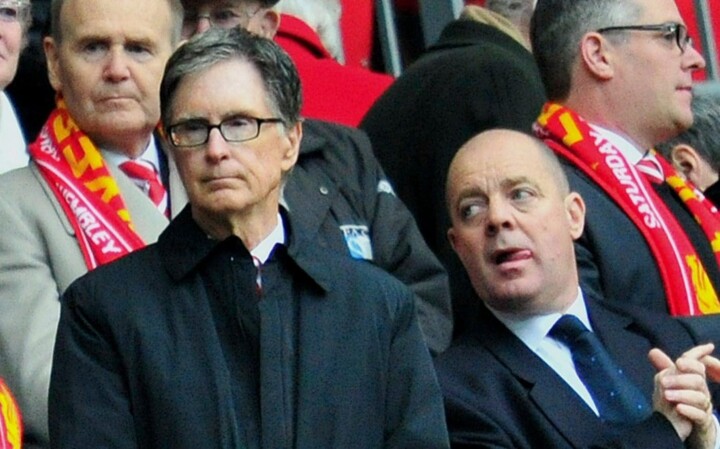
Although John W. Henry has not made further public statements, the Liverpool owner's comments at the time stirred up controversy.
July 13, 2011, was one such occasion. At that time, Henry wrote on social media: "The best players at a club should be worth at least 10% of a stadium naming rights deal. Mr. Wenger spoke forcefully about what everyone was thinking."
Looking back 15 years later, this statement carries different and weightier meaning. Initially, many thought it was simply the grumbling of an owner frustrated at not getting what he wanted, and that Manchester City was furious at his veiled criticisms. But has the "what everyone was thinking" ever been confirmed as of last Friday?
Henry's post at the time included a link to a newspaper article. The previous day, Wenger had spoken with many reporters in Qatar, and we learned what he considered remarkable comments about what we now recognize as a defining moment in Premier League history.
On July 8 of that year, Manchester City announced a naming rights agreement for their stadium, previously known as "Eastlands." It was a 10-year partnership with Etihad Airways worth £400 million, and no matter how analysts across the sports world calculated it, the value seemed disproportionate.
It must be acknowledged that the figure did not seem enormous at the time. This is because Liverpool had recently signed a deal with Turkish Airlines, which will make them their shirt sponsor starting in 2027 for five years. Anfield will receive £300 million from this agreement, which set a benchmark for such partnerships.
However, in the summer of 2011, a £400 million naming rights fee struck Manchester City's rivals as incredible. Wenger raised what he called "genuine questions about the integrity of Financial Fair Play (FFP)," which he termed the "biggest test" for then-UEFA President Michel Platini.
"Normally, if Financial Fair Play is to succeed, sponsorship fees should match market value," Wenger said. "You can't triple or quadruple the price. Why? Because if you do, you're essentially saying anyone can do whatever they want without consequences. That approach is logical, but once rules are established, they must be followed."
For reference, in 2011, the largest stadium naming rights deals in the United States were led by the New York Mets (Citi Field, $400 million for 20 years) and the NFL's Houston Texans (Reliant Stadium, $300 million for 30 years). Both were smaller than Manchester City's and Etihad's agreement.
As a strong proponent of Financial Fair Play, Henry watched these circumstances unfold with skepticism, like everyone at Anfield. Wenger and Arsenal departed for China, and within days Liverpool received a warm welcome in Malaysia.
The club's then-Chief Executive Ian Ayre had worked in Qatar during earlier periods of his career, but there was no time to reminisce about memories while everyone sat in a hotel in the city. There was only one thing to discuss, and when his comments are revisited 15 years later, it is remarkable that they have withstood the test of time.
"These figures astonished me for several reasons," Ayre said. "First, I don't think it makes common sense. A football club in Europe has never done something like rename an existing stadium to genuinely increase its value."
"For the past nine years, it was called Manchester City Stadium, or 'Eastlands.' But now they're going to change the name and someone is going to pay a huge amount for it. I find that rather strange. Because no one has ever done this before."
"In Europe, particularly in football, there is no precedent for renaming a stadium to increase its value to that extent. Someone tried. Mike Ashley attempted it at Newcastle. But no one called it the 'Sports Direct Arena,' and it wasn't worth that much. I was very surprised."
"Second, earlier this year when I spoke at SoccerEx, I was part of a group discussing Financial Fair Play. We believed that UEFA, which is overseeing this process, would have a rigorous and systematic approach to transactions involving related parties."
"Are Etihad, Manchester City, and Sheikh Mansour related parties? If they are, then UEFA would have to make a determination. But that's not our concern. We have our own brand. And we have to be accountable for it. If this deal is legitimate, that's good for them. It's good for them. But I think these are questions UEFA needs to answer."
He continued: "Our approach to generating revenue at Liverpool is somewhat different from other clubs. When we choose sponsors, we select partners. We try to work with people who share our values and will treat the Liverpool brand appropriately."
Henry, who led Fenway Sports Group's acquisition of Liverpool in 2010, had once believed that under his team's leadership, Liverpool would progress through the "right method." This involved using data, making smart signings, and investing available funds in a timely manner.
If Henry had known at the time that circumstances might arise where Financial Fair Play could be circumvented and where players who should command transfer fees elsewhere could be acquired to strengthen teams, would he have bought Liverpool? It is a fair question.
Within a year, in a private room at Fenway Park in Boston, Henry was asked why Liverpool could not buy three players at £25 million each during one summer.
"Is UEFA really enforcing Financial Fair Play?" Henry replied with a question of his own. "We don't know. Spending patterns haven't slowed anywhere. And I think the leagues need to revisit this."
He continued: "From our perspective, I want to say that it is very important for UEFA to succeed in implementing Financial Fair Play. It's a crucial point. Roughly 50% of European clubs are losing money — and I'm talking about the top clubs."
"About 20% of them are facing serious financial difficulties. I think the leagues, FIFA, and UEFA need to consider relevant measures and implement them. I don't mean that UEFA having its own rules means the Premier League and other leagues should accept similar terms."
"I know the English football league is setting its own rules. That's actually a very important part. Not just for Liverpool, but for football as a whole."
Manchester City continues to believe it can clear its name, and as of last Friday, neither the Premier League nor Henry has commented on the matter. Even Roberto Mancini, who was Manchester City's manager at the time and now leads an Italian national team, said it was not his concern.
However, the events of July 2011 appear to have concerned many people in the football world. Henry has not posted on his social media accounts since June 11, 2021. Considering recent developments, one wonders if he might break his silence, and if so, it would be interesting to see what he has to say.
AI ဘာသာပြန်ဆိုသည်။
AF ၏ PC ဝဘ်ဆိုက် စတင်ထွက်ရှိပြီ! သင့်ကွန်ပျူတာမှ သတင်းများ၊ မှတ်ချက်များ၊ ပွဲစဉ်အသေးစိတ်နှင့် စာရင်းဇယားများကြည့်ရှုနိုင်သည်။ ဝင်ရောက်ရန်: www.allfootballapp.com
 Liverpool
 Manchester City
 Arsène Wenger
All Comments