
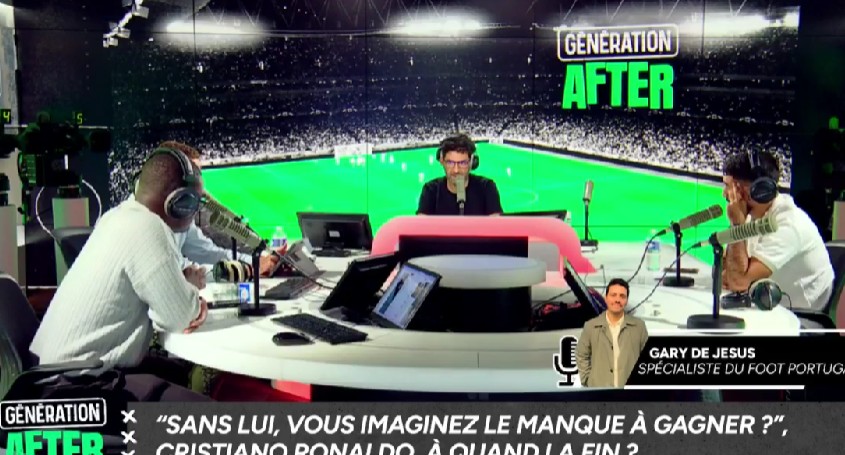
On September 28, RMC discussed the starkly different late-career paths of Ronaldo and Messi on its program "Génération After." RMC's discussion revolved around their current situations, suggesting that beyond differences in age, athletic condition, and national team environments, their contrasting personalities and understandings of their careers are also influencing their choices for this final stage.
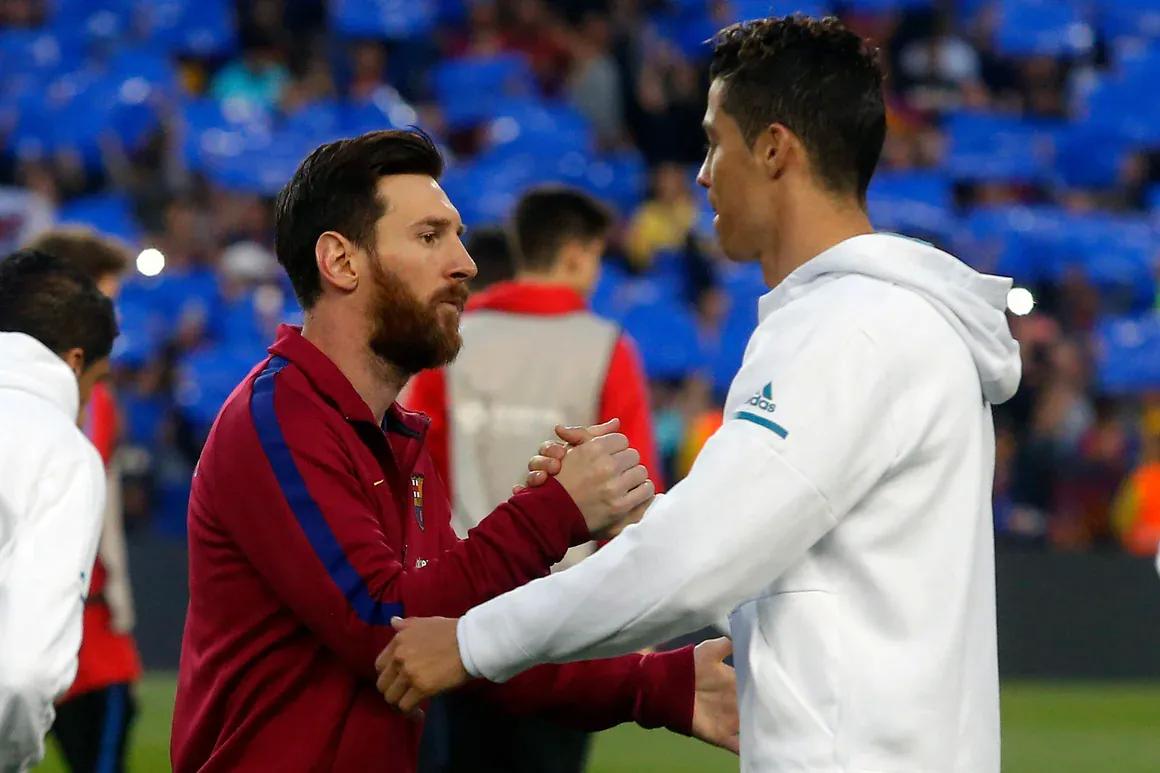
Messi appears to be leaning towards proactively planning his departure after achieving a complete array of honors, while Ronaldo is still pursuing personal goals like 1,000 career goals, hoping to continue proving himself and extend his national team career as long as possible.
During the program, the hosts and guests specifically addressed Ronaldo's current position in the Portuguese national team, the differing opinions within Portugal regarding his continued presence, and issues such as his commercial value and the national team's future plans. These two superstars, who once dominated world football for so long, are now in the latter stages of their careers, but the discussions surrounding them have taken entirely different directions: Messi is preparing to bid farewell to the Argentine national team, while the 41-year-old Ronaldo still hopes to continue playing for Portugal and views reaching 1,000 career goals as one of his current important objectives.
Messi: Enjoying the final glory, then leaving
The program stated that over the past few years, Messi's career has already provided sufficiently complete answers.
Eight Ballon d'Or awards, the 2022 World Cup title, and two Copa América titles mean he has achieved what most professional players only dream of.
Especially after the 2022 World Cup, Messi's historical standing in the Argentine national team has been further solidified.
After joining Inter Miami, there was once a sentiment that Messi had entered the "enjoyment phase" of his career. However, the 2026 World Cup once again proved that he can still perform at the highest level of international competition.
The Argentine captain led his team all the way to the final, scoring 8 goals throughout the tournament, ultimately losing to Spain in the final.
After the World Cup, the altercation involving the Argentine team after the final whistle sparked much discussion, and some players close to Messi also drew public attention. However, these controversies did not fundamentally change Messi's status in Argentine football.
And now, he is preparing to proactively end his national team career.
This does not mean that Messi is no longer capable of playing, but rather that he seems to have begun to accept the fact that his national team era is coming to an end.
Messi lost his father, Jorge Messi, this summer, and now he will play his last game for the Argentine national team on October 6 at the Monumental Stadium in Buenos Aires.
This will be Messi's 208th and final appearance for Argentina. At that time, Argentina will also hold a farewell ceremony for their national team legend.
This friendly match between Argentina and Benin has garnered extremely high attention, with all 80,000 tickets selling out in just 90 minutes. The Argentine Football Association also specially produced a commemorative jersey and hopes that Messi will continue to be involved with the team in another capacity after ending his national team career.
From this perspective, Messi's farewell is not a sudden decision, but rather a curtain call that has been gradually planned.
This is also related to his personality and career experiences.
Messi has experienced a long period of low points at the national team level in the past, and has also faced immense pressure after continuously losing finals. Ultimately, he won the Copa América in 2021 and completed the final piece of the puzzle with the World Cup in 2022.
Therefore, when a player has achieved the championships they most desired, and has also built a sufficiently complete professional resume, choosing to leave while still able to maintain competitiveness becomes a possibility.
The RMC program's discussion also touched on this: while both Messi and Ronaldo highly value their professional achievements, their approaches to the final stage of their careers differ. 50
Ronaldo: Still not giving up on his national team career
In the RMC program, the host first mentioned that Ronaldo is currently 41 years old, yet still an important figure in the Portuguese national team.
The program noted that Ronaldo has already made 234 appearances for Portugal and still serves as captain. He is 21 goals away from 1,000 career goals, a figure that has become a significant topic of discussion surrounding the end of his career.
The program host stated that the media often describes Ronaldo's current pursuit of 1,000 goals as an "obsession," but there are clearly different views on this in Portugal.
RMC guest Gary said that Portuguese society is "very divided" on the issue of Ronaldo remaining in the national team.
He believes that some fans who genuinely focus on the competitive aspect of football are starting to hope for change, wanting the Portuguese national team to gradually enter a new phase. These fans are not denying Ronaldo's past achievements, but believe that as he ages, the team should start considering the future.
However, the attitude of the general Portuguese public towards Ronaldo is different.
In the eyes of many Portuguese, Ronaldo is no longer just a footballer, but part of Portugal's sports and national image.
Gary specifically mentioned Jorge Jesus's previous speech at an event. At that time, Jorge Jesus spoke about Ronaldo's symbolic significance for Portugal and cited an example of a match in Hong Kong: without Ronaldo participating, there were only about 3,000 spectators, but when Ronaldo played, the audience reached 55,000.
This remark was met with applause.
Gary believes that this scene itself illustrates that, in Portugal, Ronaldo's influence extends far beyond the purely competitive level.
Ronaldo's special status still exists
The program also discussed Jorge Jesus's attitude towards Ronaldo.
Jorge Jesus coached Ronaldo at Al Nassr last season, so there was a prior coaching relationship between them.
When the Portuguese national team squad was announced, Jorge Jesus had stated that Ronaldo would not get playing time if he was not in form. However, when he appeared at a press conference with Ronaldo, his description of Ronaldo was clearly more gentle.
Program guests noted that at that press conference, Ronaldo sat next to Jorge Jesus, and the cameras repeatedly captured their interactions.
RMC believes that this relationship also makes Ronaldo's current position in the Portuguese national team even more special.
However, the program also pointed out that this does not mean Ronaldo can be completely unaffected by competitive factors. In fact, Ronaldo has recently been seen on the bench, and Portuguese fans have also begun to discuss what role he should continue to play in the national team.
1,000 goals has become a major objective for Ronaldo in the final stage of his career
In addition to his national team position, Ronaldo's 1,000-goal target was also a key focus of the program's discussion.
Ronaldo is currently 21 goals away from 1,000, and he himself has repeatedly spoken about this goal.
Program guests believe that if Ronaldo can reach 1,000 goals, it will likely be one of the important milestones that will lead him to decide to end his career.
However, the question of whether Ronaldo should continue to occupy a place in the Portuguese national team to achieve this goal has become part of the domestic debate in Portugal.
On the one hand, Ronaldo can still create records through scoring and still possesses enormous personal influence; on the other hand, Portugal currently has a group of young players like Vitinha and Gonçalo Ramos, and the team also needs to consider the renewal of talent in the coming years.
Some on the program even suggested that Portugal is not a team that must rely on a single superstar to maintain competitiveness.
Portugal has a large number of excellent players, and its youth teams have achieved many successes in recent years, so how the national team manages the transition between old and new generations is an unavoidable issue.
"Money" is also an undeniable factor
The RMC program's discussion about Ronaldo did not entirely stay at the competitive level.
Guests particularly mentioned the commercial value that Ronaldo brings.
They believe that for the Portuguese Football Federation, Ronaldo is not only a national team player but also has immense commercial appeal.
Sponsors, match attention, fan numbers, and related commercial activities could all be affected by whether Ronaldo continues to represent Portugal.
Program guests stated that if Ronaldo retires from the national team, the Portuguese Football Federation might face changes in sponsorship and commercial value.
Therefore, in their view, whether the Portuguese Football Federation is willing to keep Ronaldo in the squad cannot be explained solely from a competitive perspective.
Some guests on the program also mentioned that some of the Portuguese Football Federation's infrastructure development in recent years is related to Ronaldo's commercial influence.
However, the program guests also emphasized that this does not mean all responsibility should be attributed to the Portuguese Football Federation.
They believe that Ronaldo himself also needs to face the competitive changes brought by aging.
Is Ronaldo aware of his own changes?
The program also addressed a more direct question: Is Ronaldo truly aware of the changes in his physical and athletic condition?
A reporter once asked Ronaldo if he could play multiple consecutive matches and maintain 90 minutes of intensity in each.
Ronaldo then asked the reporter in return: "Have you watched Al Nassr's games?"
After the reporter replied "Yes," Ronaldo said that if the other party had watched the games, they should be able to answer the question themselves.
This exchange became an example for the program's discussion of Ronaldo's physical condition.
However, the program also mentioned that Ronaldo has recently indicated his willingness to accept a substitute role.
For the 41-year-old Ronaldo, this might mean he is gradually accepting the reality that he no longer needs to start every match.
But at the same time, he clearly still hopes to continue representing Portugal in major tournaments.
Should Portugal start nurturing a new number 9?
In the RMC program, a Portuguese fan named Nilton also participated in the discussion.
He said that he grew up with Ronaldo, so he is very clear about what Ronaldo means to Portuguese football.
However, he believes that the Portuguese national team must also start considering the era after Ronaldo.
He mentioned Gonçalo Ramos.
In the 2022 World Cup match against Switzerland, Gonçalo Ramos scored a hat-trick and was subsequently considered an important option for Portugal's future attack.
In addition, young attackers like André Silva, Fabio Silva, and Rodrigo Mora were also mentioned on the program.
Nilton believes that Portugal's youth teams have performed well in recent years, with competitive U21, U19, and U17 squads, so the national team can gradually give more opportunities to young players.
This is also a relatively important point in the program: the issue with Ronaldo is not just "can he still score goals," but how the Portuguese national team should manage the relationship between a legendary player and the next generation of players.
The arrival of Jorge Jesus further complicates the issue
The program also talked about Jorge Jesus.
He is a very influential coach in Portuguese football, having previously coached teams like Benfica and Sporting CP, and also coached Al Nassr in the Saudi League.
Therefore, when Jorge Jesus became the head coach of the Portuguese national team, his existing club relationship with Ronaldo naturally became part of the public discussion.
Program guests believe that this combination makes it easier to understand why the Portuguese national team continues to use Ronaldo.
However, they also pointed out that Portugal still needs to resolve a question in the future: should the team continue to be built around Ronaldo, or should it gradually enter a new cycle?
Two legends heading towards different endings
Returning to Messi and Ronaldo, the latter stages of their careers are presenting different pictures.
Messi has achieved major career goals such as the World Cup title and significant national team honors, and is now preparing to bid farewell to the Argentine national team.
Ronaldo is still looking for his next step.
For him, 1,000 goals is still a realistic target, and his Portuguese national team career is far from officially over.
The RMC program even featured a representative discussion: if Ronaldo ultimately reaches 1,000 goals, then the discussion surrounding him might gradually shift from "should he continue or not" to "when will he officially retire."
But currently, that answer has clearly not emerged.
Ronaldo himself previously stated that after the World Cup, he considered whether he should end his national team career. But after speaking with the president of the Portuguese Football Federation and the new head coach, they told him the team still needed him, so he ultimately decided to continue.
This also means that Ronaldo is not unilaterally deciding to stay; the Portuguese Football Federation also wants him to remain.
Therefore, rather than simply understanding this issue as Ronaldo "unwilling to leave," it is more accurate to say it is the result of multiple factors working together: the player's personal wishes, the team's competitive plans, national team tradition, and commercial value.
And this is precisely one of the biggest differences between Messi and Ronaldo today.
Messi is embracing his farewell moment.
Ronaldo, however, is still chasing the next number, the next match, and the next major tournament.
They once competed for a long time in multiple areas such as the Ballon d'Or, Champions League, national team honors, and individual scoring records. Now, both of their careers have entered the final stage, but one is heading towards a farewell, while the other still hopes to continue forward.
The RMC program guests concluded at the end of the program that for football, this might be the most special end of an era for this generation of fans: Messi and Ronaldo are still playing, but the question they face is no longer "who is stronger," but "how should a legend ultimately conclude their career."
AF's PC site is now live! Browse full news, comments, match details and stats on your computer. Visit: www.allfootballapp.com
 Argentina
 Portugal
 Al Nassr FC
 Messi
Messi
 Ronaldo
 Inter Miami CF
All Comments (2)
Today 02:05
Today 02:01